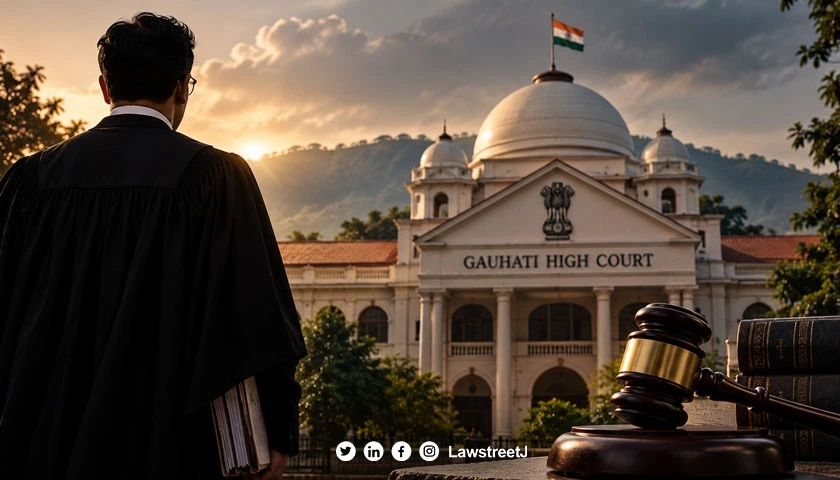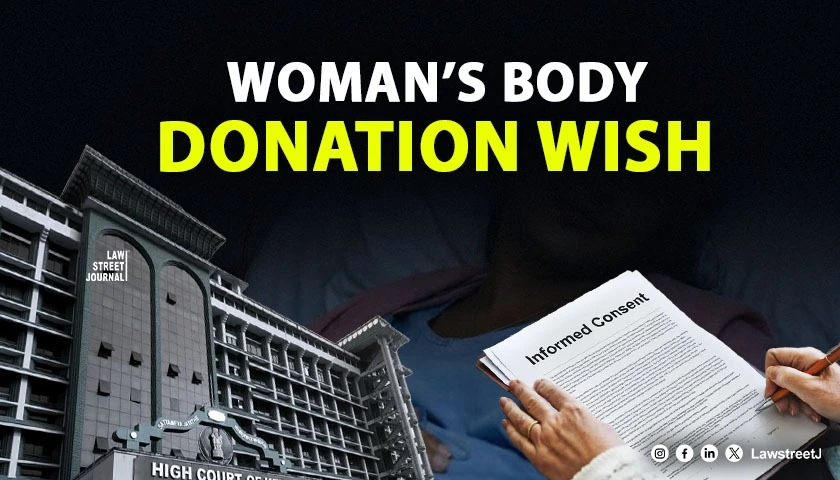
Kerala: The Kerala High Court has upheld a deceased woman's written consent to donate her body for anatomical purposes, holding that the right of a person to decide the fate of her body after death forms part of her posthumous bodily integrity, and that such a wish, lawfully expressed during her lifetime, cannot be defeated by the objections of her surviving legal heirs.
A Division Bench of Dr. Justice A.K. Jayasankaran Nambiar and Justice Preeta A.K. delivered the ruling while dismissing a Writ Appeal filed by three children of the deceased against the judgment of a Single Judge dated 10 April 2026 in WP(C) No. 12792 of 2026.
The deceased, Mary, wife of John, died on 23 February 2026. On the date of her death, three of her children and her son-in-law, who were respondents in the proceedings, took custody of her body and transported it to the Government Medical College Hospital, Kalamassery, representing to the hospital authorities that the body was being donated for medical purposes. The hospital received and shifted the body to the mortuary. The appellants, also children and legal heirs of the deceased, then approached statutory authorities seeking the release of the body to conduct last rites and burial in accordance with their religious customs, contending that they had not consented to the donation.
The respondents countered that the appellants and one other sibling had not been on good terms with their parents, who were, during their lifetime, looked after by their eldest daughter Elizabeth and her husband. They further contended that a dispute caused by two of the appellants at the time of the deceased's husband's death had delayed the funeral, prompting the deceased to execute a written consent under Section 4A of the Kerala Anatomy Act, 1957, for the donation of her body to the Medical College.
The learned Single Judge upheld the donation, finding that Ext.R5(a), an undisputed written expression of the deceased made in her lifetime in the presence of two of her children, constituted an unequivocal direction that her body be used for educational purposes at Ernakulam Medical College. The Single Judge held that the wishes of the children who objected could not override the explicit intention of the deceased herself.
Before the Division Bench, the appellants argued that as legal heirs of the deceased who had not consented to the donation, they retained a right to insist upon burial in accordance with their religious rites.
The Division Bench acknowledged that the case engaged two competing interests: the right to posthumous bodily integrity of the deceased, and the right of the family to find closure on the loss of a near and dear one. Drawing on the locus classicus Salmond on Jurisprudence, the court observed that while a person's legal personality ordinarily ceases at death, the law does, to some extent, recognise and take account of a person's desires and interests after death. Three matters, it noted, are specifically protected in this regard: a person's body, reputation, and estate, given that a living person naturally concerns herself with what shall become of her and her affairs after she is gone.
The court held that the right of a living person to decide the fate of her body remains a component of her posthumous bodily integrity, and that this interest is reflected in the law's unconditional recognition of a will, in the Transplantation of Human Organs Act, 1994, and in the Kerala Anatomy Act, 1957. Section 4A of the Kerala Anatomy Act specifically provides for the use of a deceased person's body for anatomical dissection where that person has expressed an unequivocal request to that effect during her lifetime, subject to the conditions stipulated in the provision.
Since the appellants had not challenged the genuineness of Ext.R5(a), the consent letter, the court found no illegality in the act of donating the body to the Government Medical College, Kalamassery, which had been done in conformity with the deceased's own wishes. The Writ Appeal was accordingly dismissed with no order as to costs.
Case Title: Greeny Tomy and Others v State of Kerala and Others (WA No. 1090 of 2026)



![Kerala HC Quashes 498A Dowry Harassment Case Against Live-In Partner, Citing Lack of Relative Status [Read Order]](/secure/uploads/2023/08/lj_5693_1057c042-1e57-4e27-8c9e-25af0ec38ec4.jpg)
![Watching porn on mobile: Kerala HC highlights importance of mother cooked meals, outdoor sports [Read Order]](/secure/uploads/2023/09/lj_9155_Parental_supervision_of_mobile_phone_usage.jpg)
![Lakshadweep MP Mohammed Faizal Disqualified from Lok Sabha After Conviction Suspension Plea Rejected by Kerala High Court [Read Notice]](/secure/uploads/2023/10/lj_9640_87b5fd97-0e05-4ff8-9a99-3be1e4446192.jpg)