New Delhi: The Supreme Court has acquitted Bharat Raj Meena, a former Divisional Security Commissioner of the Railway Protection Force at Palakkad, of all charges in two corruption prosecutions arising from a CBI investigation, setting aside his conviction under the Prevention of Corruption Act, 1988 and holding that the prosecution had failed to prove demand and acceptance of bribes through intermediaries beyond reasonable doubt.
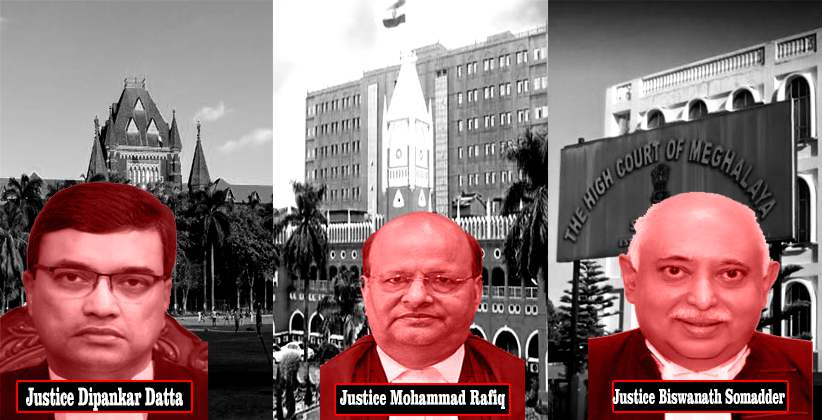
The bench of Justice Nongmeikapam Kotiswar Singh and Justice Dipankar Datta, was hearing two connected criminal appeals against Kerala High Court judgments dated 24.05.2024 which had substantially upheld the appellant's conviction by the Special Judge (SPE/CBI)-III, Ernakulam, in C.C. No.2 of 2014 and C.C. No.3 of 2015, arising out of an FIR registered in 2005 alleging that the appellant, while heading the Palakkad Division of the RPF, ran a system of collecting illegal gratification from personnel seeking transfers and postings, using subordinate officials as intermediaries.
The prosecution's case rested on twelve alleged transactions of gratification, collected through two intermediaries, Constable Anantha Narayanan and Head Constable Abdul Gafoor, who represented to RPF personnel that they had direct access to the appellant and could secure favourable postings in exchange for payment. The two appeals before the Court concerned convictions relating to complainant Nandakumar and three further complainants, of whom the High Court had already acquitted the appellant in relation to two, leaving convictions surviving only in respect of one transaction in each case.
Tracing the settled law on proof of demand under the Prevention of Corruption Act through C.M. Girish Babu v. CBI, B. Jayaraj v. State of Andhra Pradesh, P. Satyanarayana Murthy v. District Inspector of Police and the Constitution Bench decision in Neeraj Dutta v. State (NCT of Delhi), the Court reiterated that mere recovery of tainted money, without proof that it was demanded and voluntarily accepted as illegal gratification, cannot sustain a conviction, and that the statutory presumption under Section 20 of the Act arises only once the prosecution first establishes these foundational facts.
Examining the evidence transaction by transaction, the Court found significant infirmities: the principal intermediary, Anantha Narayanan, himself an approver, gave testimony that did not clearly establish demand and acceptance on the appellant's behalf and required independent corroboration that was largely lacking; there were material contradictions between the approver's account and that of the official trap witnesses; and, in respect of the surviving transaction involving complainant Gopi Kumar, the Court noted that another prosecution witness relied upon for corroboration had himself been acquitted on trial, undermining the reliability of the chain of proof.
Holding that these infirmities gave rise to genuine and lingering doubt rather than merely technical lapses, the Court concluded that "the charge against the appellant could not be said to have been proved with certain element of definitiveness as contemplated under the principle of proof beyond reasonable doubt."
The Court noted the appellant's contention, raised in his statement under Section 313 of the Code of Criminal Procedure, that the prosecution was the product of a conspiracy by a rival officer who was subsequently posted to the appellant's position, but found it unnecessary to examine this or the appellant's separate challenge to the validity of the prosecution sanction, given its conclusions on the merits of the evidence.
Both appeals were accordingly allowed, and the appellant was acquitted of all charges in both cases, with his bail bonds discharged and any fine amount deposited by him directed to be refunded.
Case Title: Bharat Raj Meena vs. Central Bureau of Investigation, Criminal Appeal Nos.4732-4733 of 2024, 2026 INSC 999