New Delhi: The Supreme Court has held that a miscellaneous application in a finally decided writ petition cannot be used to claim a substantive relief arising from a fresh cause of action, but that a claim for interest on delayed salary, arising from litigation delay after the writ was decided, is not barred by constructive res judicata or Order II Rule 2 of the Code of Civil Procedure. Invoking Article 142, it directed Central Bank of India to pay a further Rs 5,00,000 to its former employee as full and final settlement.
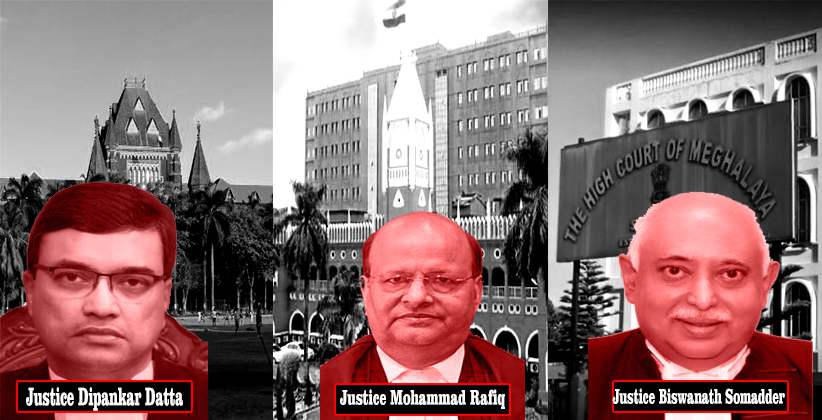
A Bench of Justice Dipankar Datta and Justice Sheel Nagu was hearing the appeal of Ashok Kumar, who appeared in person, against the Punjab and Haryana High Court’s judgment of 09.05.2024. The Division Bench had dismissed his intra-court appeal and upheld the dismissal of his miscellaneous application, CM-4377-CWP-2024, in his earlier writ petition. Mr. Gopal Jha assisted as amicus curiae,.
Kumar joined the Bank on 01.03.1969 and was suspended on 22.11.1978, after which an FIR was registered on 24.11.1978 under Sections 409, 420, 465, 468, 471 and 120B of the Indian Penal Code, 1860 for alleged defalcation. He was acquitted on 15.07.1983, and the acquittal became final when the High Court dismissed the appeal and revision against it on 27.05.1991. The Bank initiated departmental proceedings on 16.05.1990, which Kumar challenged in CWP-8983-1991, filed on 11.06.1991. The High Court allowed that petition on 12.10.2007, quashed the inquiry, and directed reinstatement if he had not retired, with consequential benefits.
The Bank’s intra-court appeal failed on 20.12.2007, and its special leave petition was dismissed by the Supreme Court on 26.07.2011. Kumar had retired on 31.03.2009 while under suspension. After he initiated contempt action, the Bank paid him over Rs 42 lakh on 01.12.2011 and later, which the High Court recorded as compliance on 28.10.2013. In 2015 he filed a fresh writ petition (CWP-11438-2015) for interest on delayed salary, which the Single Judge dismissed on 11.12.2023, saying interest had not been sought earlier. He did not appeal, and instead filed the miscellaneous application on 26.02.2024, around 17 years after the earlier writ was decided.
The Bank relied on CIT v. T.P. Kumaran, (1996) 10 SCC 561, to argue that the claim was barred by constructive res judicata. The Court disagreed. It held that res judicata and Order II Rule 2 apply only to claims that could have been raised when the earlier petition was filed, and that on 11.06.1991 Kumar “had no claim for interest, having not foreseen that it would take years for the proceedings to conclude”. The claim arose from the delay between 12.10.2007 and 26.07.2011, a subsequent cause of action, and needed adjudication of disputed facts such as the period of delay attributable to each party and the rate. A fresh proceeding was therefore the correct remedy, and the Single Judge dismissed it on an “untenable ground”.
On the miscellaneous application, however, the Court held against Kumar. It said:
“A miscellaneous application in a finally decided writ petition is not an independent proceeding. It has a narrow scope, deriving its sustenance from the main proceeding and can be maintained only for matters ancillary to the disposal.”
Such an application can be used for matters like correction of clerical errors, clarification of an ambiguity, modification of the mode of compliance, extension of time or recall of an order of dismissal. It cannot be used for reopening proceedings on a fresh cause of action, a substantive relief not granted earlier, recall on merits except in limited cases, or a review that circumvents Order XLVII CPC. Relying on State of U.P. v. Brahma Dutt Sharma, K.A. Ansari v. Indian Airlines Ltd. and Government of NCT of Delhi v. K.L. Rathi Steels Ltd., it found that this was a substantive claim for interest “dressed as a miscellaneous prayer”. Once the claim in the subsequent writ petition failed, he should have filed an intra-court appeal, so the High Court was right to dismiss the application.
The Court nevertheless observed that interest is “not a penalty or punishment at all” but a normal accretion on capital, citing Alok Shanker Pandey v. Union of India, (2007) 3 SCC 545, and that Kumar was “shown the door by the High Court without justification”. Invoking the maxim actus curiae neminem gravabit and Jeypore Sugar Co. Ltd. v. Sales Tax Officer, (1998) 9 SCC 358, it noted that he had contested criminal proceedings for about a dozen years and writ litigation for over three decades, and was kept away from duty from 22.09.1978 till 31.03.2009.
Under Article 142, the Court directed the Bank to pay an additional Rs 5,00,000, as full and final settlement of his dues, within two months of production of a copy of the judgment before the competent authority of the Bank. The appeal was disposed of accordingly.
Appearances:
For the Appellant: Appellant-in-person; Mr. Gopal Jha, Amicus Curiae.
For the Respondent (Central Bank of India): Mr. R. Basant, Senior Advocate.
Case Title: Ashok Kumar vs. Central Bank of India & Ors., Civil Appeal arising out of SLP (C) No. 29916 of 2024, 2026 INSC 1242