New Delhi: The Supreme Court has held that even in cases under the Prevention of Money Laundering Act, 2002 (PMLA), a Special Court is bound by the first proviso to Section 223(1) of the Bharatiya Nagarik Suraksha Sanhita, 2023 (BNSS), which mandates that no cognizance of an offence shall be taken without first giving the accused an opportunity of being heard.
The Court ruled that failure to comply with this requirement is not a mere irregularity that can be cured; rather, it is an illegality that vitiates the entire cognizance order from its very inception.
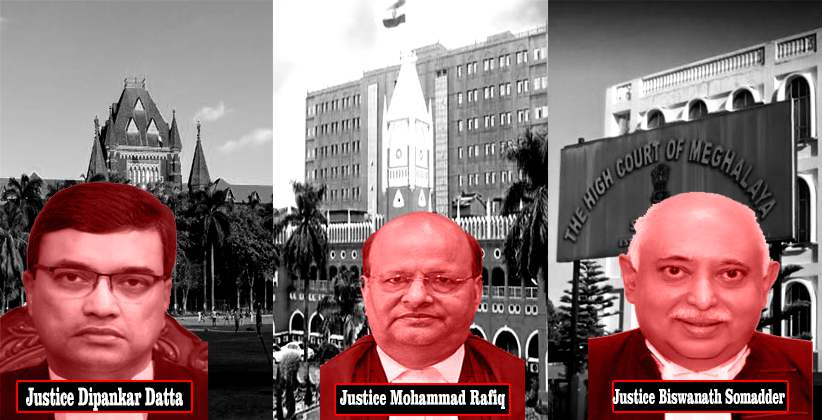
The judgment was delivered by a Bench comprising Justices M.M. Sundresh and Nongmeikapam Kotiswar Singh in an appeal arising from a money laundering case registered against the appellant, Parvinder Singh, by the Directorate of Enforcement.
An ECIR was registered against him in July 2023. He was arrested in April 2024, and within two months, a prosecution complaint was filed before the Special Court in June 2024. The Special Court directed that the complaint be numbered as a miscellaneous case and fixed the matter for hearing on cognizance on June 28, 2024.
When the case came up on that date, it was adjourned for a few days because the Presiding Officer was on recess. In the intervening period, the BNSS replaced the Code of Criminal Procedure, 1973 (CrPC). When the matter was taken up thereafter, the Special Court took cognizance of the offence under the PMLA. The appellant was produced from judicial custody through video conferencing. However, it was pointed out that the accused had not been given an opportunity to be heard before cognizance was taken.
About five months later, the appellant filed an application before the Special Court seeking recall of the cognizance order, contending that the first proviso to Section 223(1) of the BNSS had not been complied with. The Special Court dismissed the application, holding that it was merely a dilatory tactic and that once cognizance is taken, the same court cannot reconsider it. Simultaneously, it framed charges against the appellant. The appellant then challenged both the cognizance order and the dismissal of the recall application before the Uttarakhand High Court.
The High Court took the view that since the prosecution complaint under the PMLA had been filed before the BNSS came into force, the entire proceedings were governed by the old CrPC by virtue of the savings clause contained in Section 531(2)(a) of the BNSS, which preserves proceedings initiated prior to its commencement. It, therefore, dismissed the challenge to the cognizance order, though it partly allowed the other revision petition by quashing the framing of charges and remanding that issue for fresh consideration.
Before the Supreme Court, the Enforcement Directorate advanced two primary arguments. First, it contended that the PMLA is a standalone enactment and that proceedings under it are not governed by the BNSS at all. It further argued that the earlier decision in Kushal Kumar Agarwal v. Directorate of Enforcement required reconsideration. Second, it argued that the Special Court’s act of directing the complaint to be numbered and fixing it for a cognizance hearing constituted an “inquiry” within the meaning of Section 2(1)(k) of the BNSS. Therefore, according to the ED, the savings clause under Section 531(2)(a) would apply, requiring the proceedings to continue under the CrPC.
The Supreme Court, however, rejected both arguments. On the first issue, it affirmed the consistent position taken in Tarsem Lal v. Enforcement Directorate and Yash Tuteja v. Union of India, holding that once a complaint is filed before the Special Court under Section 44(1)(b) of the PMLA, the procedural provisions governing complaints under the CrPC — now mirrored in Sections 223 to 228 of the BNSS — apply in full, since nothing in the PMLA is inconsistent with them.
The Court also observed that if the Enforcement Directorate’s argument were accepted, it would lead to absurd consequences. The Special Court would then have no power to dismiss a complaint for lack of evidence, no power to postpone issuance of process, and no power to dispense with the personal appearance of an accused — all of which are powers recognised under established law.
On the second issue, the Court held that merely directing a complaint to be numbered and listed does not amount to an “inquiry” under Section 2(1)(k) of the BNSS. It observed that an inquiry begins only when the court applies its judicial mind, which first occurs at the stage of taking cognizance. Since cognizance was taken on July 2, 2024, after the BNSS came into force, the savings clause was held to be inapplicable.
Further, the Court held that the right to be heard before cognizance is a substantive safeguard under Article 21 of the Constitution and not merely a procedural requirement. It ruled that the use of the word “shall” makes the proviso mandatory, and any cognizance taken without complying with it is void ab initio. The Court added that such a defect goes to the root of the proceedings and cannot be treated as a curable irregularity.
Accordingly, the Court set aside both the Uttarakhand High Court’s judgment and the Special Court’s cognizance order dated July 2, 2024.
The Court directed the Special Court to afford an opportunity of hearing to the appellant and proceed afresh from the stage of taking cognizance. This exercise was directed to be completed within eight weeks from receipt of the judgment. The appeal was accordingly allowed.
Appearances: Mr. Sidharth Aggarwal, Senior Advocate, along with Mr. Ayush Kaushik, Ms. Shubhangni Jain, Mr. Sahil Dhingra, Mr. Karan Dhalla, and Mr. Abhay Pratap Singh, Advocate-on-Record, appeared for the petitioners. Mr. Suryaprakash V. Raju, Additional Solicitor General, assisted by Mr. Zoheb Hussain, Mr. Annam Venkatesh, Mr. Samrat Goswami, Mr. Sai Shashank, Mr. Rohan Wadhwa, Mr. Vittal B, and Mr. Monu Kumar, Advocates, appeared for the respondents, with Mr. Arvind Kumar Sharma and Mr. Ayush Anand acting as Advocates-on-Record.
Case Title: Parvinder Singh v. Directorate of Enforcement