New Delhi: The Supreme Court has set aside the acquisition of land in Sundergarh, Odisha, for a limestone mining project of Dalmia Cements (Bharat) Limited, holding that the prior consent of the Gram Sabha under Section 41(3) of the Right to Fair Compensation and Transparency in Land Acquisition, Rehabilitation and Resettlement Act, 2013 is mandatory for acquisition in Scheduled Areas, and that the Orissa High Court’s reading of it as directory was “wholly erroneous”.
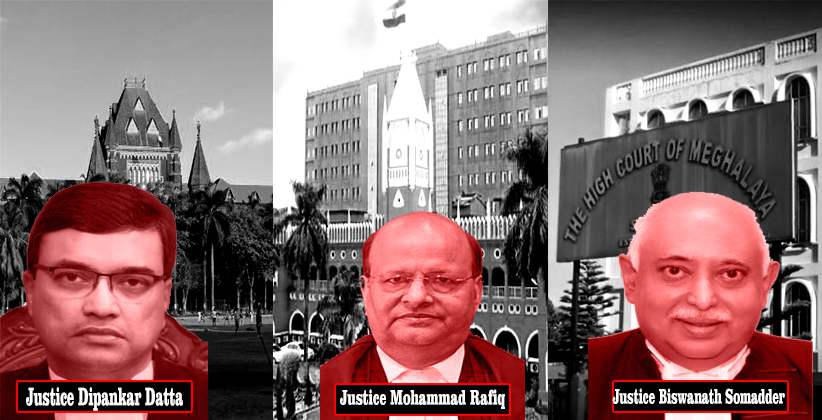
A Bench of Justice Dipankar Datta and Justice Satish Chandra Sharma, in a reportable judgment authored by Justice Sharma, allowed the appeal on 18 November 2026 (2026 INSC 1244), while leaving the State at liberty to begin a fresh acquisition in accordance with law.
The appeal (Civil Appeal No. 8294 of 2026, Bibol Toppo and others v. State of Odisha and others) was filed by residents of Kukuda, Bihabandha and Lanjiberna villages against the High Court’s judgment dated 06.09.2024, which dismissed their writ petition. The company held a mining lease over about 873 hectares until 2040, and sought surface rights over about 273.57 acres of agricultural land in the three villages for further mining, for which the State began acquisition under the 2013 Act on the company’s proposal of 09.12.2015.
The record shows that, in January 2020, the Gram Panchayats of Kukuda and Katang unanimously passed resolutions rejecting the proposal, and that the State issued a fresh notification under Section 4(1) on 24.02.2020. A public hearing on the draft Social Impact Assessment (SIA) was scheduled for 16.04.2021, but the Gram Panchayats informed the Collector that it could not be held due to Covid-19. The final SIA report was submitted in June 2021, and a declaration under Section 8(2), preliminary notifications under Section 11 and a final notification under Section 19 on 03.11.2021 followed.
The High Court had held that the appellants lacked locus standi, that the mining rights made the acquisition merely complementary to the lease, that the consent of 80% of affected families under Section 2(2)(b) was “a continuing process” (535 persons having consented by 2024), that Section 41(3) was only directory because the Act did not provide a consequence for non-compliance, and that the composition of the Expert Group was not rigid. It invoked a “doctrine of compliance” to hold that there had been substantial compliance.
The Supreme Court held that the acquisition for a private company requires the prior consent of at least 80% of the affected families, to be obtained along with the SIA study, and that treating consent as a continuing process throughout the acquisition was contrary to the statute and rendered a mandatory participative provision otiose. It said that the Act’s scheme, under which the Collector’s report, the Expert Group’s report and the SIA are to be considered before the government recommends acquisition, requires this consent at the start.
On Section 41(3), the Court held that the High Court’s “novel interpretive technique” of reading the words “as far as possible” in sub-section (1) and “demonstrable last resort” in sub-section (2) into sub-section (3) was unsustainable. It said that sub-sections (1) and (2) are of guiding value, whereas sub-section (3) lays down a mandatory requirement of prior consent of the Gram Sabha for acquisition in Scheduled Areas under the Fifth Schedule, as in this case, which cannot be avoided by reading words from other sub-sections. It added that the High Court’s view had the effect of “reducing a mandatory statutory requirement into a paper formality”, particularly where, as here, the Gram Panchayats had rejected the proposal, and that the Act’s silence on consequences does not make a provision directory.
The Court also found that the public hearing on the draft SIA was never conducted, since the RTI replies indicated that no hearing was held due to Covid-19 and the respondents could not counter this. It said that the hearing must take place in the affected area and that a scheduled meeting that did not occur cannot be treated as compliance.
Rejecting the respondents’ reliance on the MMDR Act, 1957, the Court held that Section 24A, which provides for compensation for loss or damage during mining, does not allow a lessee to mine any land merely by paying compensation to the occupier, without acquiring it under the 2013 Act, whose Section 2 itself covers acquisition for mining. It said that, having chosen to proceed under the 2013 Act, the respondents could not defend an illegal process by saying that acquisition was not required under other laws, and that the Court was only dealing with the legality of the process under the 2013 Act.
On locus standi, the Court said that the State, having failed to update the record of rights during the acquisition, could not question the appellants’ locus, and that the High Court should have allowed the one appellant named in the record to file a fresh affidavit, instead of rejecting his challenge on a curable technical defect. It decided the appeal on merits, set aside the acquisition along with the notifications and orders and the High Court’s judgment, and clarified that the respondents may start a fresh acquisition in accordance with the law and the findings in the judgment.
Case Title: Bibol Toppo and Others v. State of Odisha and Others, Civil Appeal No. 8294 of 2026