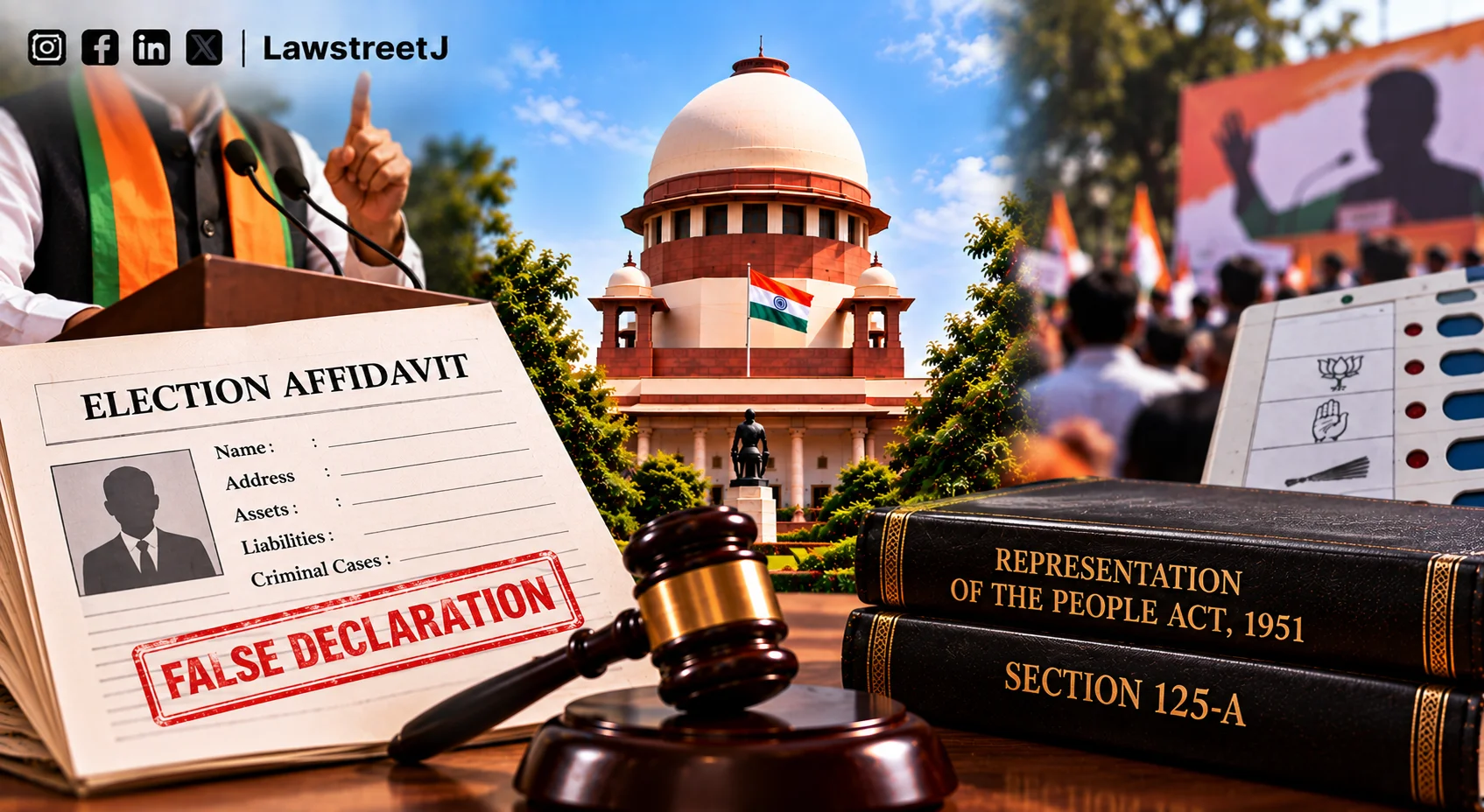
New Delhi: The Supreme Court has held that a private person can file a complaint under Section 200 of the Code of Criminal Procedure, 1973 against a returned candidate for furnishing false information in an election affidavit, an offence under Section 125-A of the Representation of the People Act, 1951, ruling that such a complaint need not pass muster the rigours of Section 195(1) of the Cr. PC.
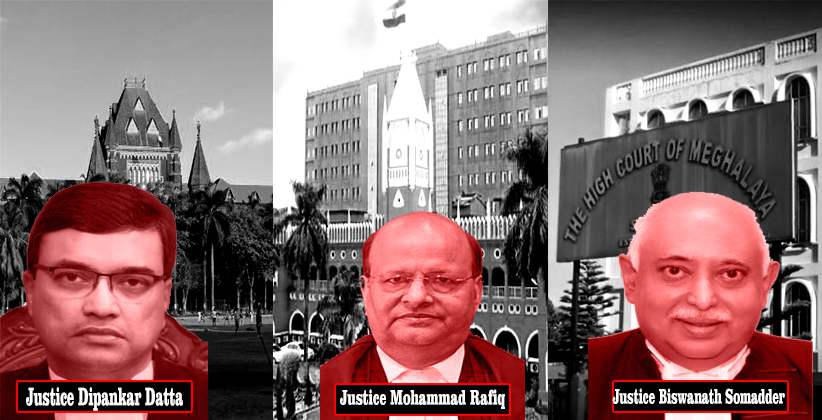
A Bench of Justice Dipankar Datta and Justice Sheel Nagu was hearing an appeal, by special leave granted on 20 July 2026, against a judgment dated 7 March 2025 of the Karnataka High Court at Bengaluru. The High Court had allowed a writ petition by a member of the Karnataka Legislative Assembly, elected from Bidar constituency in 2023, and quashed a complaint dated 21 August 2023 lodged by the appellant before the 42nd Additional Chief Metropolitan Magistrate, Bengaluru. The complaint alleged that the legislator had made a false disclosure about his residential address in the affidavit accompanying his nomination paper.
The High Court had reasoned that Section 125-A must satisfy the requirements of Section 195(1) of the Cr. PC, so that the offence could be complained of only by the Election Commission, and that a voter's remedy lay solely in an election petition rather than a private criminal complaint.
Senior counsel for the respondent argued that Section 125-A, inserted in the Act with effect from 24 August 2002 after the Supreme Court's decision in Union of India v. Association for Democratic Reforms, is a non-cognizable and bailable offence triggered when the nomination and affidavit are submitted to the Returning Officer, a public servant. It was contended that the offence resembles Section 177 of the Indian Penal Code, so that only a public servant could complain, and that allowing private complaints would encourage frivolous litigation against returned candidates. Reliance was also placed on a Press Note of 16 June 2020 in which the Election Commission said it would take cognizance of complaints indicating serious omissions and refer them to investigating authorities.
The Court framed the question as whether Section 125-A of the RoP Act must pass muster the rigours of Section 195(1) of the Cr. PC, or in other words, whether a private person can file such a complaint. Noting that the question was hitherto undecided by it, the Court nevertheless found that continuing the trial proceedings would be futile. The allegation of a false residence declaration had, prima facie, been more than effectively rebutted on the documents placed on record, and the Court observed that the possibility of a conviction is remote. The quashing of proceedings was therefore left undisturbed, but the legal finding of the High Court was examined to settle the law in the absence of any authoritative ruling.
Turning to the statute, the Court noted that clause (a) of Section 195(1) bars cognizance of offences under Sections 172 to 188 of the Indian Penal Code, and of abetment, attempt or conspiracy to commit them, except on the written complaint of the public servant concerned. Section 125-A of the RoP Act finds no place in that provision. The Court observed that Section 125-A was inserted in 2002, while Section 195 was amended thereafter in April 2006, and the legislature is presumed to have been conscious of the earlier insertion. It therefore concluded that omitting Section 125-A from Section 195 was deliberate.
The Court added that no enactment stipulates that a complaint for an offence under Section 125-A can be lodged only by a public servant, and that the provision itself operates notwithstanding anything contained in any other law for the time being in force. On this basis, the rigour of Section 195 does not apply to a private complaint under Section 200 of the Cr. PC alleging this offence, and the High Court was held to be clearly in error.
Having decided the issue on a plain construction of the statutory provisions, the Court said it need not rely on the Election Commission's clarifications. While acknowledging that the Commission is supreme in its own sphere, it stressed that interpretation of statutes is primarily the task of the courts and that such guidelines or press notes do not bind it.
Addressing concerns of misuse, the Court observed that where a complaint is lodged to harass an elected candidate or contains frivolous allegations, the laws of the country equip competent magistrates to pass appropriate orders according to the facts of each case.
The Court upheld the High Court's decision closing the proceedings before the trial magistrate, but for reasons different from those assigned by it. The appeal was disposed of, with the parties directed to bear their own costs.
Appearances:
For the Appellant: Ms. Meenakshi Arora, Senior Advocate, assisted by Mr. Kamat, Senior Advocate.
For the Respondent: Mr. Anand Sanjay M Nuli, Senior Advocate, assisted by Ms. Akhila Wali, Advocate.
Case Title: Sri. Rajkumar Madki vs. Dr. Shailendra Beldale, Criminal Appeal No. 3387 of 2026