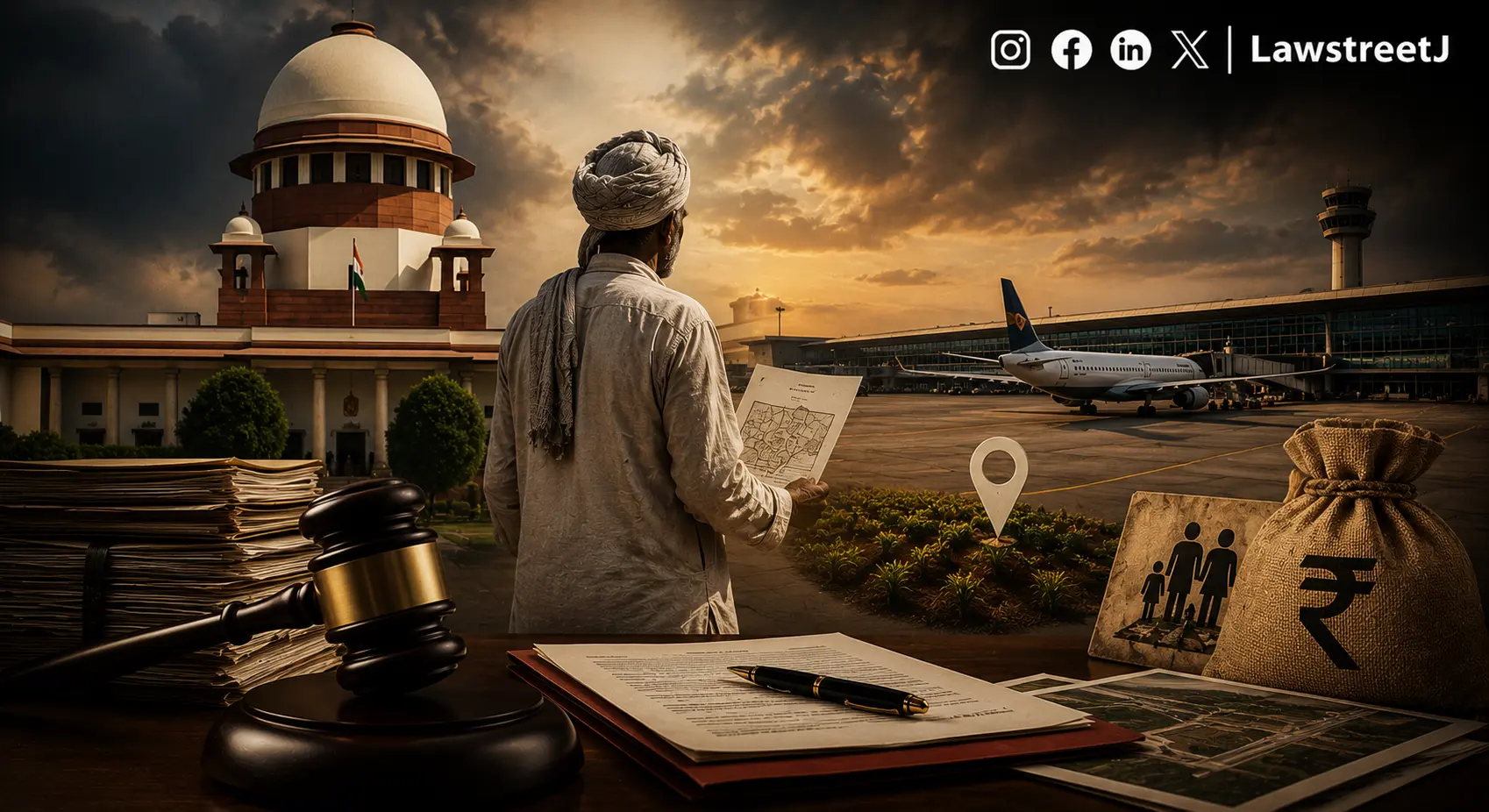
New Delhi: A significant legal dispute has reached the Supreme Court of India involving a claim by a Chhattisgarh farmer over the land currently occupied by the Swami Vivekananda Airport in Raipur. Ashwani Bandhe, a 53-year-old farmer, has filed a petition asserting that nearly 30 acres (approximately 34.35 hectares) of the airport’s premises, including the current terminal building and gardens, are his ancestral property. The petitioner is seeking a compensation of ₹3,500 crore from the concerned authorities, citing decades of unpaid rent and the current market value of the land.
The issue centers on historical land acquisitions made during the colonial era. According to the petition, the British administration took possession of the land in 1942 under the Defence of India Act to establish the "Mana Airfield" for military purposes during World War II. Bandhe argues that this acquisition was intended to be temporary and was essentially a lease agreement. Historical documents allegedly indicate that the colonial government had agreed to pay his family an annual rent of ₹1,300 and return the land once the war concluded.
The petitioner contended that the promised rent was never paid, and the land was never restored to his family after the war ended. Furthermore, he argues that the Defence of India Act, under which the land was originally seized, ceased to operate after its repeal in 1946. He further asserted that subsequent legislative changes failed to legally recognize or restore his family’s rights over the property, leading to the current dispute over what has now become the principal airport serving Chhattisgarh.
Bandhe has reportedly spent nearly 35 years pursuing this claim across various government offices, record rooms, and courts. He estimates that he has spent approximately ₹20 crore in his efforts to collect historical records and archival documents to substantiate his ownership. A major breakthrough for his case occurred when he discovered official government documents regarding the land acquisition during an exhibition held by the State Culture Department in Raipur.
The Culture Department has confirmed the existence of these 1942 revenue records, which detail the acquisition of lands in Baroda, Ramchandi, and surrounding villages for the airfield. While officials acknowledge the records exist and mention Bandhe's ancestors, they have not expressed an opinion on the legal validity of his current ownership claim. Using these certified copies, Bandhe has strengthened his case before the highest court, claiming that his family’s rights have been ignored for 84 years.
Prior to moving the Supreme Court, the Chhattisgarh High Court had reportedly directed a fresh inquiry into the dispute. However, Bandhe has requested the Supreme Court to grant compensation directly instead of initiating another inquiry, arguing that the matter has already been sufficiently examined by competent authorities over the years. His compensation demand of ₹3,500 crore is calculated based on the present-day value of the airport land, accumulated interest, and unpaid rent since the 1940s.
Case title: Ashwani Bandhe v. Union of India & Others