New Delhi: The Supreme Court has delivered a landmark judgment holding that reserved category candidates who secure marks higher than the general category cut-off at the preliminary/screening stage must be treated as open category candidates from that stage itself, and not merely at the final selection stage, thereby clarifying that no “migration” is involved when merit alone determines placement.
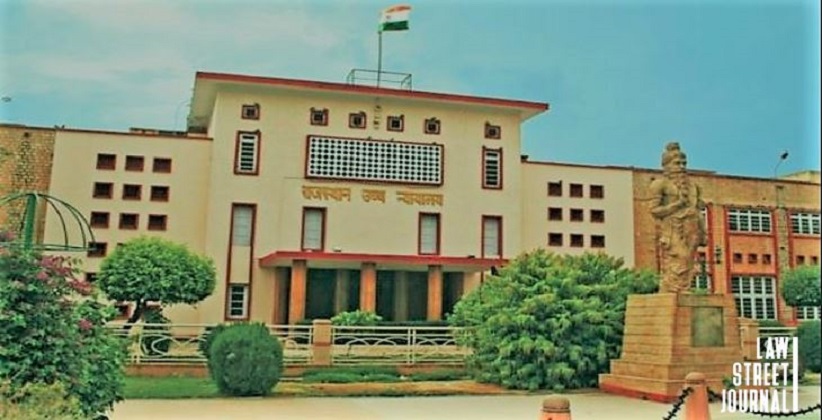
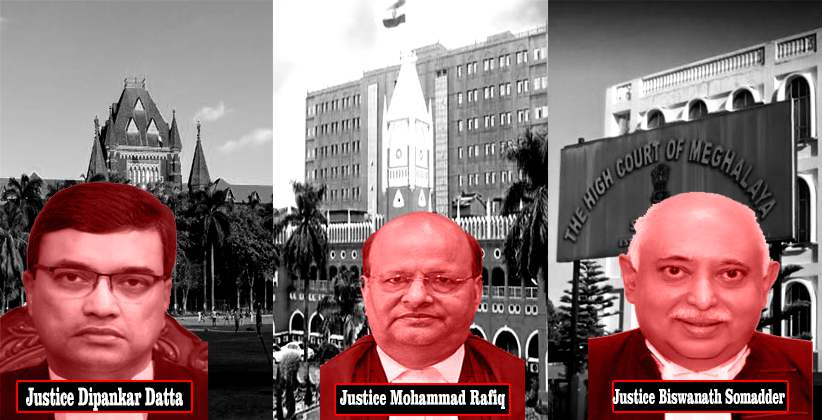
The Division Bench of Justice Dipankar Datta and Justice Augustine George Masih dismissed appeals filed by the Rajasthan High Court administration challenging a judgment directing the inclusion of meritorious reserved category candidates in the general merit list for shortlisting to the typewriting test.
The case arose from recruitment to 2,756 posts of Junior Judicial Assistant/Clerk Grade-II through a two-stage process: a written test of 300 marks followed by a computer typewriting test of 100 marks. The controversy emerged when several reserved category candidates (SC, ST, OBC, MBC, EWS) secured marks exceeding the general category cut-off of 196.3451, but fell short of the cut-offs prescribed for their respective reserved categories, which ranged as high as 230.4431 for OBC-NCL.
Despite scoring above the general cut-off, these candidates were confined to competing only within their reserved categories and were consequently excluded from the typewriting test when they failed to meet the higher reserved category cut-offs. Meanwhile, general category candidates with lower absolute marks were shortlisted.
The Rajasthan High Court’s Division Bench held this approach to be constitutionally infirm, directing that reserved category lists be prepared only after first creating a general/open merit list that included all candidates, regardless of category, who scored above the general cut-off, provided they had not availed any special concession.
The Supreme Court upheld this reasoning, rejecting the administration’s argument that “migration” should occur only at the final merit stage after completion of all examination tiers.
On the threshold issue of estoppel, the Court held that candidates who participated in the selection process could not be barred from challenging illegalities that were not apparent from the advertisement. While the advertisement indicated that category-wise lists would be prepared, it gave no indication that meritorious reserved category candidates scoring above the general cut-off would be denied treatment as general candidates. Since this illegality surfaced only after the declaration of results, the principle of estoppel did not apply.
The Court firmly rejected the “double benefit” argument advanced by the administration. It held that the assumption that reserved category candidates would receive benefits at multiple stages was erroneous. A reserved category candidate competing purely on merit, without availing any concession at any stage, does not draw upon reservation benefits at all. Such candidates are entitled to be considered against unreserved posts solely on the basis of merit demonstrated at each stage.
In a crucial clarification on terminology, the Court emphasized that “open,” “unreserved,” or “general” category posts are exactly what those terms suggest—open to all candidates regardless of caste, tribe, class, or gender, with merit as the sole criterion. These are not compartments reserved exclusively for candidates not belonging to any reserved category.
The Court distinguished its landmark precedent in Chattar Singh v. State of Rajasthan, which held that migration occurs only at the final stage. In that case, preliminary examination marks were explicitly excluded from final merit determination, making it genuinely preliminary. In contrast, in the present case, the written examination carried 300 out of 400 total marks (75% weightage) and constituted a substantive component of assessment rather than a mere screening test.
Most significantly, the Court held that inclusion of a reserved category candidate in the open merit list based purely on marks secured without availing any concession cannot be termed “migration” at all. There is no shift or adjustment involved when a candidate belonging to a reserved category outscores general candidates purely on merit. Such a candidate must be treated as competing in the open category from that stage itself.
The Court articulated the proper methodology: when preparing shortlists after the written examination, recruiting authorities must first arrange all candidates, regardless of category, in strict descending order of merit. For the general/open category shortlist, merit alone is the criterion. If a reserved category candidate outscores general candidates, that candidate must be included in the general/open shortlist. At this stage, there is no question of migration.
This treatment continues through subsequent stages. If the candidate maintains excellence in the second-tier examination (typewriting test) and figures within the number of general category vacancies in the combined merit list, the candidate is appointed against a general post. If performance declines such that the candidate falls outside the general zone but within the reserved category zone, only then is the candidate considered for appointment under the reserved category.
The Court emphasized that no “migration” occurs in this process, as the candidate is treated as a general candidate throughout, unless and until merit positioning necessitates recategorization. This approach respects constitutional principles of equality and merit while preserving the purpose of reservations.
However, the Court introduced an important caveat to address a potential anomaly. Where a meritorious reserved category candidate, if counted in the general category, would be displaced from a preferred service or post that remains available within the reserved quota, fairness requires that such a candidate be permitted to opt for consideration against the reserved quota. This ensures that merit is preserved both across and within categories, and that reservation functions as a tool of inclusion rather than disadvantage.
The Court rejected the administration’s reliance on multiple precedents, clarifying that cases such as Vikas Sankhala, Gaurav Pradhan, and Nirav Kumar Dilipbhai Makwana involved candidates who had availed concessions such as age relaxation or reduced qualifying marks, justifying restrictions on migration. In the present case, no such concessions were availed.
The Court also distinguished Deepa E.V. v. Union of India, noting that it recognized an exception where governing rules expressly bar adjustment of reserved candidates to unreserved vacancies after availing benefits. No such express bar existed in the Rajasthan recruitment rules.
Drawing upon Jitendra Kumar Singh v. State of U.P., the Court reiterated that relaxations in age and fee are merely eligibility concessions enabling participation and do not disturb the “level playing field” or amount to relaxation in selection standards based on merit.
Emphasizing that its observations apply to selection processes where recruitment rules do not provide otherwise—subject to constitutional validity—the Court held that any contrary rule would prevail only if it withstands constitutional scrutiny.
Upholding the principles laid down in Indra Sawhney and reaffirmed in Saurav Yadav—particularly Justice S. Ravindra Bhat’s observation that “the open category is open to all, and the only condition for inclusion is merit”—the Court held that confining meritorious reserved category candidates to reserved slots solely because of their category amounts to impermissible discrimination violative of Articles 14 and 16 of the Constitution.
The Court appreciated the High Court’s “proactive stance” in correcting a situation where the High Court administration itself was found to be acting contrary to constitutional ideals. It dismissed the appeals, granted two months’ time for compliance, and directed that while implementing the judgment, efforts should be made, as far as possible, not to dislodge employees already in service.
Case Title: Rajasthan High Court & Anr. v. Rajat Yadav & Ors.