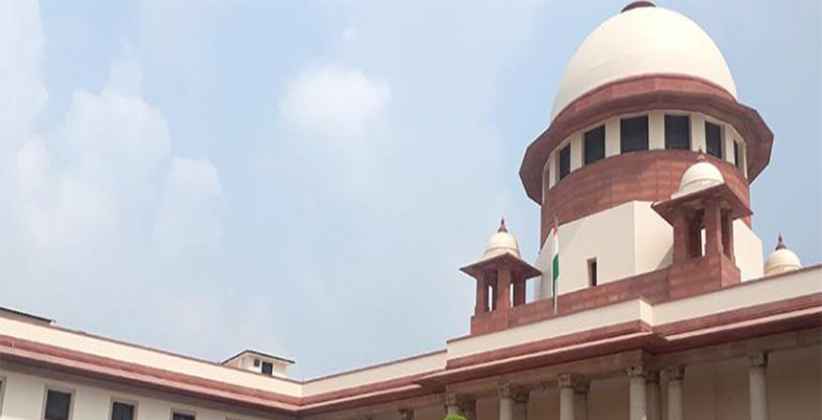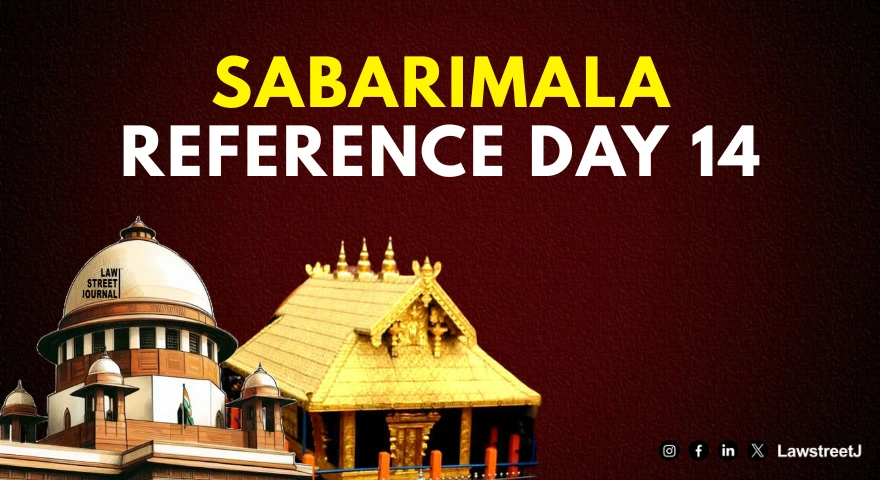
New Delhi: The Supreme Court on May 12, 2026, continued hearing the Sabarimala reference matter for the fourteenth day, with the respondents expected to conclude their arguments during the day’s proceedings. Senior Advocate Jaideep Gupta, appearing for the State of Kerala, continued his submissions before the nine-judge Constitution Bench, addressing questions concerning essential religious practices, the scope of Article 25, and the interplay between social reform and religious freedom. A delegation from the Supreme Court of Bhutan, including four Royal Judges, the Registrar General, the Chief IT Officer, two Assistant Judges, and other members, was also present in the courtroom and was welcomed by Solicitor General Tushar Mehta.
The Bench hearing the reference comprises Chief Justice of India Surya Kant, Justice B.V. Nagarathna, Justice Joymalya Bagchi, Justice Ahsanuddin Amanullah, Justice P.B. Varale, Justice M.M. Sundresh, Justice Aravind Kumar, Justice A.G. Masih, and Justice R. Mahadevan.
Senior Advocate Gupta addressed the essential religious practices doctrine, submitting that the determination of whether a practice constitutes an essential religious practice must be ascertained in accordance with the doctrines of the religion concerned. He referred to the Adi Shiva judgment, which observed that “often occasions will arise when it may become necessary to determine whether a belief or a practice claimed and asserted is a fundamental part of the religious practice of a group or denomination making such a claim before embarking upon the required adjudication,” and that “a decision on such claims becomes the duty of the Constitutional Court.”
He also referred to the observation in the judgment that “any apprehension that the determination by the court of an essential religious practice itself negatives the freedoms guaranteed by Articles 25 and 26 will have to be dispelled on the touchstone of constitutional necessity,” and that “a just balance can always be made by holding that the exercise of judicial power to determine essential religious practices, though always available as an inherent power to protect the guarantees under Articles 25 and 26, must always be restricted and restrained.”
Gupta submitted that utmost restraint must be exercised while dealing with matters of religious practice, as citizens’ emotions are deeply involved. He argued that the Court, while adjudicating such matters, does not substitute its own views but instead evaluates the evidence and either accepts or rejects the material placed before it. To illustrate the application of the doctrine, he cited a case in which a procession involving the Tandav dance was served with a notice under Section 144 CrPC, and the Court held that while the dance formed part of an essential religious practice, performing it in public was not essential.
On the question of whether a conflict under Article 25 concerns a religious or secular activity, Gupta submitted that the only applicable test is the one laid down in the Ratilal judgment, which requires the application of common sense, and that the balance must be drawn on a case-by-case basis without applying any universal standard. Referring to the Shirur Mutt case, he submitted that the issue there concerned how much ghee should be used, and observed that those relying on scripture would draw the balance in favour of religion, while those focusing on secular aspects might draw it differently.
He also addressed the Seshammal judgment, submitting that although there had been calls for it to be overruled, it was not wrongly decided. He argued that the Court may reconsider Seshammal only in the factual context of that case and not while examining a broader legal proposition. Gupta further addressed the appointment of archakas, during which Justice Nagarathna observed that while the process of appointment may be secular, the qualifications are strictly religious, and that methods of worship are entirely religious in character, thereby requiring a clear line to be drawn.
Background
The present hearing forms part of a prolonged judicial exercise stemming from the landmark 2018 judgment in Indian Young Lawyers Association v. State of Kerala, in which a Constitution Bench comprising Chief Justice Dipak Misra and Justices R.F. Nariman, A.M. Khanwilkar, D.Y. Chandrachud, and Indu Malhotra, by a 4:1 majority, held that the Sabarimala Temple’s custom prohibiting the entry of women between the ages of 10 and 50 years was unconstitutional. The majority held that devotees of Lord Ayyappa did not constitute a separate religious denomination, that the exclusionary practice was not an essential religious practice, and that Rule 3(b) of the Kerala Hindu Places of Public Worship (Authorisation of Entry) Rules, 1965 violated the fundamental right to freedom of religion of female worshippers under Article 25.
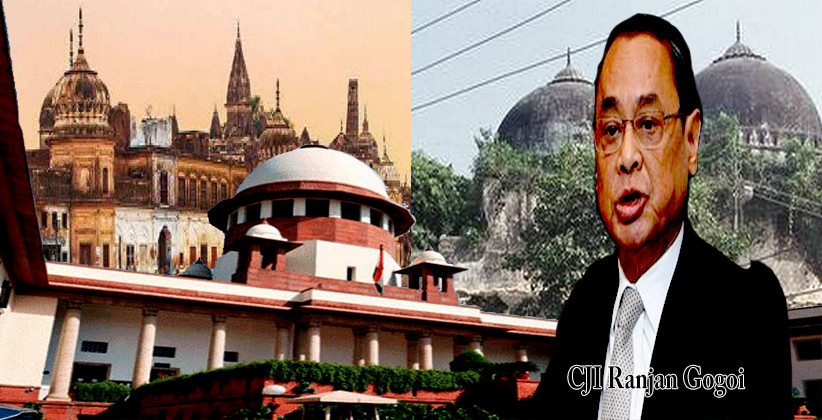
More than 50 review petitions were subsequently filed by various individuals and organisations, including Kantaru Rajeevaru, the Chief Priest of the Sabarimala Ayyappa Temple, the National Ayyappa Devotees (Women’s) Association, the Nair Service Society, and the All Kerala Brahmins’ Association. The review petitions were heard on November 13, 2018, by a Bench led by CJI Ranjan Gogoi, and on November 14, 2019, a 3:2 majority decided to keep the review petitions pending while referring overarching constitutional questions to a larger Bench, observing that the Sabarimala judgment would have a bearing on other freedom of religion cases. Justices Nariman and Chandrachud dissented, holding that the reference exceeded the narrow scope of a review petition.
On January 13, 2020, a nine-judge Bench led by CJI S.A. Bobde commenced hearing the reference. On February 10, 2020, the Bench upheld the referral order and held that the Court possessed the power to refer a point of law to a larger Bench in a review petition, with the detailed judgment being published on May 11, 2020. The present nine-judge Bench, constituted under CJI Surya Kant, was listed for arguments from April 7, 2026, pursuant to an order dated February 16, 2026.
Key Issues Before the Nine-Judge Bench
The reference before the Court involves several constitutional questions, including: the scope and extent of judicial review concerning religious practices under Article 25; the meaning and scope of the term “morality” under Articles 25 and 26, including whether it encompasses constitutional morality; the ambit of the right to freedom of religion under Article 25; whether the rights of a religious denomination under Article 26 are subject to other provisions of Part III beyond public order, morality, and health; the meaning of the expression “sections of Hindus” under Article 25(2)(b); and the interplay between the rights of individuals under Article 25 and the rights of religious denominations under Article 26.
The larger reference also encompasses issues arising from restrictions on the entry of women into dargahs, the practice of female genital mutilation in the Dawoodi Bohra community, and the excommunication of Parsi women after marrying non-Parsi men.
Note: Hearings are still underway.
Case Details
- Case Title: Kantaru Rajeevaru v. Indian Young Lawyers Association and connected matters (Sabarimala Reference)
- Court: Supreme Court of India
- Bench: Chief Justice Surya Kant, Justice B.V. Nagarathna, Justice M.M. Sundresh, Justice Ahsanuddin Amanullah, Justice Aravind Kumar, Justice A.G. Masih, Justice P.B. Varale, Justice R. Mahadevan, and Justice Joymalya Bagchi
- Date of Hearing: 12.05.2026
Appearances:
- For Respondents: Senior Advocate Raju Ramachandran; Senior Advocate Siddharth Luthra; Senior Advocate Jaideep Gupta (for the State of Kerala)
- For Review Petitioners: Advocate Nizam Pasha