New Delhi: Continuing from Day 6, Senior Advocate Gopal Subramanium advanced a four-dimensional framework for religious freedom under Article 25(1), while Justices Nagarathna and Bagchi pressed counsel on the essential religious practice test, the scope of ‘manage’ under Article 26, and the limits of constitutional morality as a ground for judicial review.
The nine-judge Constitution Bench hearing the Sabarimala reference continued on Day 7, with Senior Advocate Gopal Subramanium completing his arguments, followed by brief submissions from Senior Advocates Sundaram, Rakesh Dwivedi, and Mukul Rohatgi. The day’s proceedings centred on the proper scope of individual religious freedom under Article 25(1), its relationship with denominational autonomy under Article 26, the utility of the essential religious practice test, and the role of constitutional morality in judicial review of religious practices. The Bench rose at the end of the session, with the matter to resume the following day.
SUBRAMANIUM’S FOUR-DIMENSIONAL FRAMEWORK FOR ARTICLE 25(1)
Continuing his arguments from Day 6, Senior Advocate Gopal Subramanium urged the Bench to adopt a wide and expansive reading of the words ‘profess, practice, and propagate’ in Article 25(1), describing them as foundational to individual religious autonomy. He submitted that religion itself has four distinct components, all of which fall within the protection of Article 25(1): first, the doctrinal or philosophical content of a faith; second, the practices associated with that philosophy; third, the right of worship; and fourth, the extent of belief, which he emphasised is left entirely to the individual.
Subramanium argued that the right to profess encompasses both private and public profession of faith. The right to practice similarly extends across private and communal settings. The right to propagate, he submitted, includes the freedom of a person with sufficient knowledge and scholarship to share their understanding of faith—through lectures, speech, or other means—all protected under Article 25(1). However, all of these rights are subject to public order, morality, and health, as well as to the other provisions of Part III, precisely because the exercise of individual freedoms must remain mindful of the equal rights of others.
“No two individuals may practice the same faith in exactly the same way, even if they belong to the same religion, yet both have complete freedom to practice as they see fit. That autonomy is protected under Article 25.”
— Senior Advocate Gopal Subramanium
He further distinguished freedom of conscience from freedom of religion, describing conscience as a more detached faculty through which a person absorbs religious philosophy and truths independently of organised doctrine. He submitted that the freedom of religion is closely connected with the inner dignity of the person and, to this extent, falls within the realm of individual autonomy. The right includes not only the right to actively engage in religion but also the right to define for oneself the extent to which that engagement will be carried.
ARTICLE 26: DENOMINATION AS A COLLECTIVE EXPRESSION OF INDIVIDUAL FREEDOM
Turning to Article 26, Subramanium submitted that a denomination is where individuals come together collectively to express their worship and faith. He argued that the freedom under Article 26 is not entirely divorced from the rights exercised by members of a denomination, because within an institution, members continue to exercise their Article 25(1) rights individually. A denomination, he submitted, is not a monolith: it can contain proponents and opponents, and there can be internal debate, deliberation, and eventual consensus. This process of internal dialogue is itself a protected freedom under Article 26.
He located this right to internal debate within the word ‘manage’ in Article 26(b), a position Justice Bagchi engaged with directly. The judge asked whether the word ‘manage’ was capacious enough to include internal dialogue within a denomination. Subramanium answered in the affirmative, submitting that ‘manage’ would include debate over the affairs of the denomination. He added, however, that once a person adopts a creed or philosophy and becomes an adherent of a denomination, that person operates within the framework of Article 26 and cannot seek to alter the doctrine of the denomination while remaining within it.
On the relationship between Article 25(2)(b) and Article 26, Subramanium argued that the expression ‘all classes and sections of Hindus’ in Article 25(2)(b) addresses not only exclusion on the basis of caste but also includes denominations, and that access to temples must accordingly be open across denominations. He submitted that this creates an organic relationship between Articles 25(1), 25(2)(b), and 26, and that Article 26 does not exist in isolation but operates through Article 25 and in the context of individuals coming together to form an organisation for the purposes of practice and propagation.
THE ESSENTIAL RELIGIOUS PRACTICE TEST: ASSISTIVE, NOT DETERMINATIVE
Justice Nagarathna raised the question of whether the essential religious practice test remains valid or necessary, observing that the impression has been created that only essential religious practices are protected and nothing else. Subramanium responded that no judgment, properly read, goes so far as to suggest that a practice which is not essential degenerates into a non-religious practice or becomes freely regulable. He submitted that the essential religious practice test, if it has any legitimate function, is purely assistive in character—a tool to help discover the true components of a particular religion. That inquiry, he argued, is well within the competence of courts. Justice Nagarathna responded sharply that courts cannot sit in judgment as to what constitutes an essential religious practice.
Subramanium also addressed the scope of judicial review, urging the Bench to take the view that nothing below the level of a devotee’s personal faith in a philosophy or deity is non-justiciable. The only truly non-justiciable area, he submitted, is the purely internal spiritual conviction of a believer. Outside that, the Court retains full competence to determine what constitutes a religion, identify its basic tenets, and examine how rights are being asserted within the constitutional framework.
CONSTITUTIONAL MORALITY: NOT A FREESTANDING DOCTRINE
On the role of constitutional morality, Subramanium responded to a question from Justice Amanullah by clarifying that constitutional morality cannot be an exclusive factor in judicial review; it cannot, standing alone, annul a statute. He drew a distinction between constitutional provisions that themselves embody moral principles—such as Article 14’s anti-discrimination guarantee, Article 23’s prohibition on begar, and Article 17’s abolition of untouchability—and the use of constitutional morality as a freestanding doctrine without reference to any specific constitutional provision. The latter, he submitted, is deeply vulnerable and cannot serve as an independent ground for judicial intervention.
SUNDARAM: ‘SECTIONS OF HINDUS’ REFERABLE ONLY TO CASTE, NOT GENDER
Senior Advocate Sundaram addressed the expression ‘sections of Hindus’ in Article 25(2)(b), arguing that it must be read in light of Article 17 and the historical context of the provision. He submitted that the reference to ‘classes and sections’ is specifically connected with those who were historically treated as untouchables, and that the phrase ‘throwing open’ in Article 25(2)(b) refers to the opening of institutions that had been closed to these groups. He contended that this provision does not extend to gender, noting that wherever the Constitution intends to refer to gender, it does so expressly, as seen in Articles 15(2) and 16(2). He also sought to distinguish what is to be ‘thrown open’—whether it is entry to the temple or access to the institution itself for purposes of management—as a vital question, on which Justice Nagarathna observed that opening the institution would not impact the religious affairs of the denomination.
JUDICIAL RESTRAINT AND THE HEDGED NATURE OF ARTICLE 25(1)
Senior Advocate Mukul Rohatgi submitted that Article 25(1), while a fundamental guarantee of freedom of conscience and the right to profess, practice, and propagate religion, is subject to a triple set of limitations: public order, morality, and health; the other provisions of Part III; and laws made by the State under Article 25(2). He observed that public order is distinct from mere law and order, and that health implies a threshold such as an epidemic, suggesting that these are not easily invoked limitations. CJI Surya Kant, during these submissions, observed that a denomination possessing a defined set of practices constitutes a religious denomination.
Senior Advocate Rakesh Dwivedi urged the Bench to be slow in exercising judicial review in matters of religion, emphasising that religion involves emotion and that courts must be cautious before entering that sphere. He submitted that religious sentiment, when touched by judicial intervention, can affect believers in a profound and lasting manner.
Case Details:
Case: Kantaru Rajeevaru v. Indian Young Lawyers Association – Sabarimala Reference
Court: Supreme Court of India – Nine-Judge Constitution Bench
Date of hearing: April 22, 2026 (Day 7)
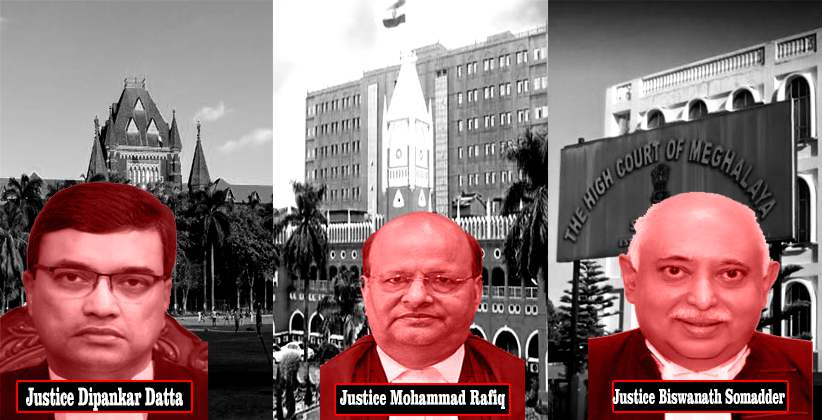
Bench: CJI Surya Kant, JJ. B.V. Nagarathna, C.T. Ravikumar, M.M. Sundresh, S.V.N. Bhatti, P.S. Narasimha, Manoj Misra, K.V. Viswanathan, Dipankar Datta
Counsel (Day 7): Sr. Advs. Gopal Subramanium, Sundaram, Rakesh Dwivedi, Mukul Rohatgi
Key issues argued: Scope of Article 25(1); Essential Religious Practice test; meaning of ‘manage’ under Article 26; role of constitutional morality; interpretation of ‘sections of Hindus’ under Article 25(2)(b)
Next date: April 23, 2026