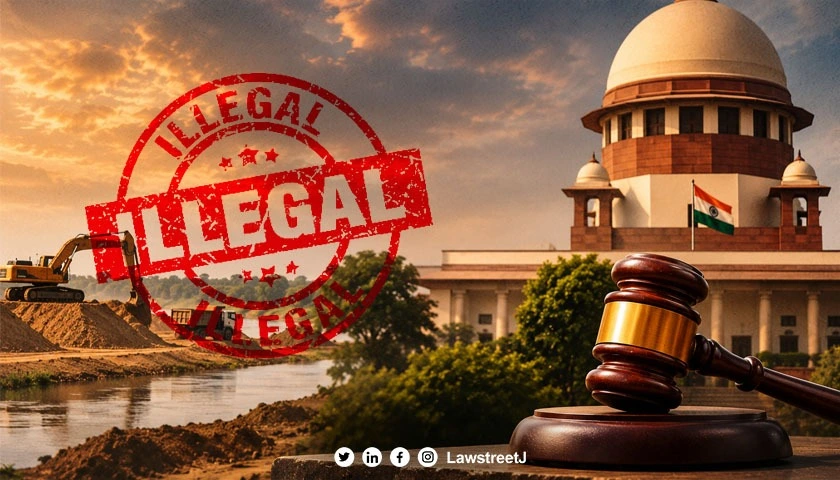
New Delhi: The Supreme Court has restrained the State of Rajasthan from granting permission for any new industrial units along or near the Luni, Jojari and Bandi rivers until the High Flood Line and buffer zones are scientifically determined, and has directed the constitution of a Special Investigation Team (SIT) headed by an officer not below the rank of Inspector General of Police to probe organised illegal bajri mining.
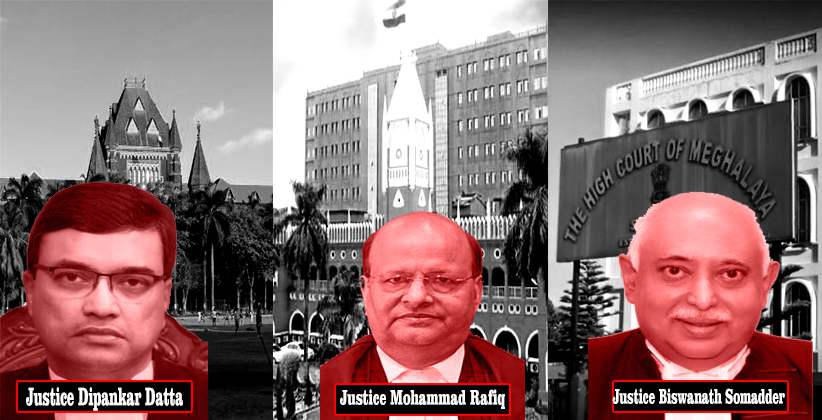
A Bench of Justice Vikram Nath and Justice Sandeep Mehta passed the order on 26 October 2026 (2026 INSC 1203) in the suo motu case “In Re: 2 Million Lives at Risk, Contamination in Jojari River, Rajasthan”, and also deprecated the Mining Department’s subsequent grant of leases in areas where illegal mining had earlier been detected.
The Court had, by order of 29 September 2026, noted continuing sources of pollution and gaps in enforcement, and asked the State to finalise a Comprehensive Resolution Plan with timelines. The High-Level Ecosystem Oversight Committee then forwarded a Note raising concerns about the Water Resources Department’s proposal to redetermine the edges and widths of the rivers on the basis of the estimated flow of sewage and treated wastewater. The Committee said that the Court had issued no such direction, and illustrated that the recorded widths at two locations on the Luni in Balotra district, about 1,172 metres and 794 metres, would be cut to about eight metres.
The Committee recommended preserving the entire river corridors as recorded by the Revenue and Water Resources Departments, an additional protective zone of 100 metres on either side, and a prohibition on Red Category industries within 500 metres. It also flagged indiscriminate bajri mining, including five contiguous plots at Village Kanana, Tehsil Pachpadra, District Balotra, spanning 458.6 hectares and about 8.1 km of riverbed, and recommended an independent investigation by a Special Investigation Team.
The Additional Solicitor General, Mr. S.V. Raju, appearing for the State, fairly submitted at the hearing on 26 October that the river-width redetermination was misconceived and could not be sustained, and that the State was willing to refrain from granting permission for new industries until the High Flood Line and buffer zones are lawfully determined. Mr. Digvijay Singh Jasol, appearing in person, raised concerns about groundwater depletion in the Balotra block, classified as over-exploited, and the functioning of effluent treatment units there.
On the State’s compliance affidavit, the Court said that initiation of administrative processes cannot be treated as fulfilment of its directions, which need effective implementation on the ground within timelines, and that the State cannot permit bureaucratic delays to frustrate them. It recorded with concern the Mines Department’s position that mining leases had been granted in areas where illegal gravel mining had earlier been detected, holding that this does not answer whether the grant is environmentally sustainable, and that accepting it would risk “reducing the problem of illegal mining to one of post facto regularisation”.
The Court said that it deprecated the apparent attempt by the State’s Mining Department to legitimise illegal mining by granting leases instead of acting against those responsible, and that it would consider directing action against officers found responsible for permitting or facilitating it. It added that the State cannot discharge its obligation merely by reporting numbers of cases, FIRs, penalties or leases, and that the test is whether the measures can prevent further degradation.
The Court directed that the State shall not grant permission for new industrial units along or near the riverine ecosystem until the High Flood Line and buffer zones are scientifically determined, with an additional 100-metre protective zone and no Red Category industry within 500 metres of the recorded outer boundaries. The SIT must be constituted within three days of receiving the order, include the Superintendents of Police of Jodhpur, Balotra and Pali, investigate the networks and beneficiaries of illegal bajri mining and the role of public officials, and file a status report by the next hearing.
The State must file a separate affidavit on the issues raised by Mr. Jasol, and the Registry must implead the Central Ground Water Authority within one week, which is to file an affidavit on groundwater availability and depletion in Jodhpur, Balotra and Pali. The public reporting mechanism ordered on 7 August 2026 must include a facility for anonymised complaints on illegal bajri mining. The State must also frame a policy for financial assistance for ZLD plants, consider applications case by case in the meantime, and prepare a time-bound plan for a redistribution pipeline network for treated wastewater and RO permeate.
The Court appointed Mr. Balbir Singh, Senior Counsel, assisted by Mr. Namit Saxena, as Amici Curiae, and listed the matters as part-heard on 27 November 2026. It also disposed of an application by Bherawa Textile Industries Pvt. Ltd., whose Consent to Operate had been revoked by the RSPCB, holding that its earlier directions do not extinguish the NGT’s appellate jurisdiction over such orders, and giving the applicant liberty to seek restoration of its appeal before the NGT, without permitting resumption of operations.
Appearances: For the State of Rajasthan: Mr. S.V. Raju, Additional Solicitor General, and Mr. Shiv Mangal Sharma, Additional Advocate General. For the Applicants: Mr. Rishabh Sancheti, Advocate. Mr. Digvijay Singh Jasol appeared in person. Amici Curiae: Mr. Balbir Singh, Senior Advocate, assisted by Mr. Namit Saxena, Advocate-on-Record.
Case Title: In Re: 2 Million Lives at Risk, Contamination in Jojari River, Rajasthan, Suo Motu Writ Petition (Civil) No. 8 of 2025, with Civil Appeal Nos. 5517-5519, 8748, 9057-9058 and 9010-9011 of 2022