New Delhi: The Supreme Court has directed the Commercial Court at Saket, Delhi, to examine whether State Bank of India (SBI) disbursed a housing loan to a developer strictly in terms of the tripartite agreement, and whether two home-buyers were actually in default, before any coercive recovery is permitted against them. The Court dismissed their writ petition under Article 32 and did not tag it with the pending Himanshu Singh batch.
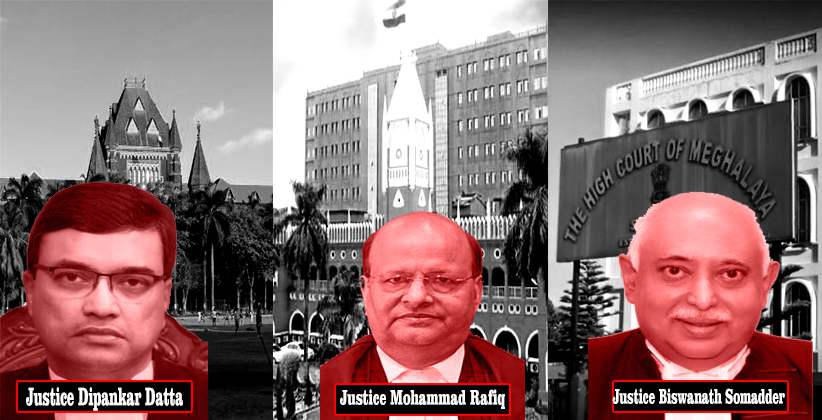
A Bench of Chief Justice of India Surya Kant, Justice Joymalya Bagchi and Justice V. Mohana passed the order on a writ petition filed by Ravi Kumar Jangra and another. The petitioners had been allotted a unit in the Krishna Housing Scheme of Raheja DevelopersLimited, in Sector 14, Sohna, Gurugram, Haryana, and had taken a housing loan of Rs 13.70 lakh from SBI. A tripartite agreement was executed between the home-buyers, the bank and the developer on 12 March 2018, and the bank’s arrangement letter recorded the disbursement stage as “BALANCE TRANSFER TO DHFL AND REST TO BUILDER”.
Possession of the unit was never delivered, and the developer entered insolvency proceedings before the National Company Law Tribunal. In those proceedings, the developer proposed to refund the home-buyers in six equal monthly instalments with interest at 9 per cent, but the petitioners received only one instalment of Rs 3,46,704 on 15 October 2025. Meanwhile, SBI instituted recovery proceedings before the Commercial Court at Saket. By an order of 01.09.2026, that court directed the petitioners to release the Rs 3,46,704 to the bank within one week, and the direction was repeated in later proceedings.
During the hearing, the Bench questioned the direct invocation of Article 32 by home-buyers for disputes from failed projects. The CJI observed, “Please appreciate, under Article 32, how many such matters are we going to resolve? Every dispute against a builder, every failed project, will end up here.” He also asked why the petitioners could not raise their objections before the Commercial Court, where SBI’s suit was pending. Counsel replied that the objections had been raised there, but recovery continued, and the developer had failed to honour the six-instalment refund.
In its order, the Court emphasised that the relationship between the bank and the developer must be examined first:
“In our considered opinion, it is the duty of the court first to determine the nexus between the builder and the bank authorities and to see whether the bank disbursed the loan amount to the builder strictly in terms of the tripartite agreement.”
The Commercial Court was accordingly directed to examine the arrangement between SBI and the developer, to verify whether the loan was disbursed strictly in terms of the tripartite agreement, and to determine whether the home-buyers were actually in default before permitting coercive recovery. The writ petition was, however, dismissed and was not tagged with the Himanshu Singh batch, and the protection granted was confined to these directions. The Court did not decide the underlying loan liability or grant a blanket exemption from repayment.
Appearances:
For the Petitioners: Ms. Avantika Chaudhary, Advocate; Mr. Piyush Singh, Advocate; Mr. Nitesh Ranjan, Advocate on Record.
Case Title: Ravi Kumar Jangra & Anr. vs. Union of India