New Delhi: The Supreme Court on Monday dismissed a public interest litigation filed by Ashwini Kumar Upadhyay seeking directions for the registration, recognition, regulation, supervision, and monitoring of all institutions imparting secular education or religious instruction to children below the age of 14 years.
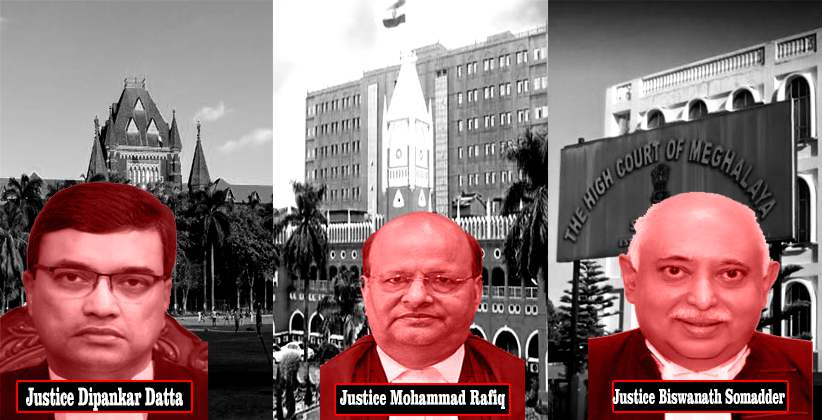
A bench comprising Justice Dipankar Datta and Justice Satish Chandra Sharma, while directing the respondents to consider the petitioner’s representation, orally remarked that justice is not a one-way street to be delivered only by courts, but that the executive is equally responsible for upholding it.
An earlier writ petition on similar issues, being WP(C) No. 143 of 2026, had been withdrawn by the petitioner on February 9, 2026, with liberty to approach the concerned authorities. Thereafter, on February 10, 2026, the petitioner submitted a representation to the Secretary, Ministry of Education, Government of India, seeking registration, recognition, supervision, and monitoring of all educational institutions imparting secular education or religious instruction to children up to the age of 14 years.
The petition, filed under Article 32 of the Constitution, sought directions to the Union Government, States, Union Territories, and the National Human Rights Commission to ensure compulsory registration, recognition, supervision, and monitoring of all institutions imparting secular education or religious instruction to children up to the age of 14 years. The petitioner contended that such regulation was constitutionally mandated under Article 21A read with Articles 39(f), 45, and 51A(k) of the Constitution.
According to the plea, the petitioner had visited several bordering districts of Uttar Pradesh, including Gonda, Bahraich, Shravasti, Balrampur, Siddharthnagar, and Maharajganj between January 23 and January 26, 2026, where he allegedly found several unregistered and unrecognised institutions. The petition alleged that similar institutions were operating across bordering regions of the country without adequate State oversight.
The plea argued that the lack of regulation affected the quality of education, curriculum oversight, teacher qualifications, implementation of welfare measures, and child safety. It further contended that institutions dealing with children below the age of 14 years formed a separate constitutional class requiring mandatory State supervision and monitoring. The petitioner also referred to Articles 23 and 24 of the Constitution while asserting that regulation was necessary to prevent trafficking and child labour.
A substantial part of the petition dealt with the constitutional interpretation of Article 30 relating to minority educational institutions. The petitioner argued that Article 30 was merely a “specific reiteration” of Article 19(1)(g) and did not confer any additional or superior rights upon minorities beyond the right available to all citizens to establish educational institutions. According to the plea, Article 30 protected only secular or professional educational institutions and not institutions imparting religious instruction.
The petition sought a declaration that institutions imparting religious instruction would fall within the scope of Article 26 of the Constitution, which governs the rights of religious denominations to establish and maintain institutions for religious and charitable purposes. The petitioner argued that once an institution imparted religious instruction, even partially, it would necessarily fall under Article 26 rather than Articles 19 or 30.
The plea further classified institutions into religious institutions, secular educational institutions, and “semi-religious educational institutions.” It contended that minority and non-minority institutions imparting religious instruction could not constitutionally be treated differently and that all such institutions ought to uniformly fall within Article 26.
The petitioner also questioned the absence of a statutory definition of “minority” and sought directions to the Union Government to frame guidelines or parameters for determining minority status. The plea relied upon constituent assembly debates and several Supreme Court decisions, including Ahmedabad St. Xavier’s College Society v. State of Gujarat, T.M.A. Pai Foundation v. State of Karnataka, P.A. Inamdar v. State of Maharashtra, St. Stephen’s College v. University of Delhi, Bal Patil v. Union of India, and State of Tamil Nadu v. K. Shyam Sunder, in support of its submissions.
Among the substantive reliefs sought in the present petition were directions to the Centre and States to register and monitor all institutions imparting education or religious instruction to children below 14 years of age, declarations that Article 30 was a reiteration of Article 19(1)(g), declarations that institutions imparting religious instruction were governed by Article 26, and declarations that Article 30 protected only secular or professional educational institutions.
Case Title: Ashwini Kumar Upadhyay Vs Union of India | W.P.(C) No. 590/2026