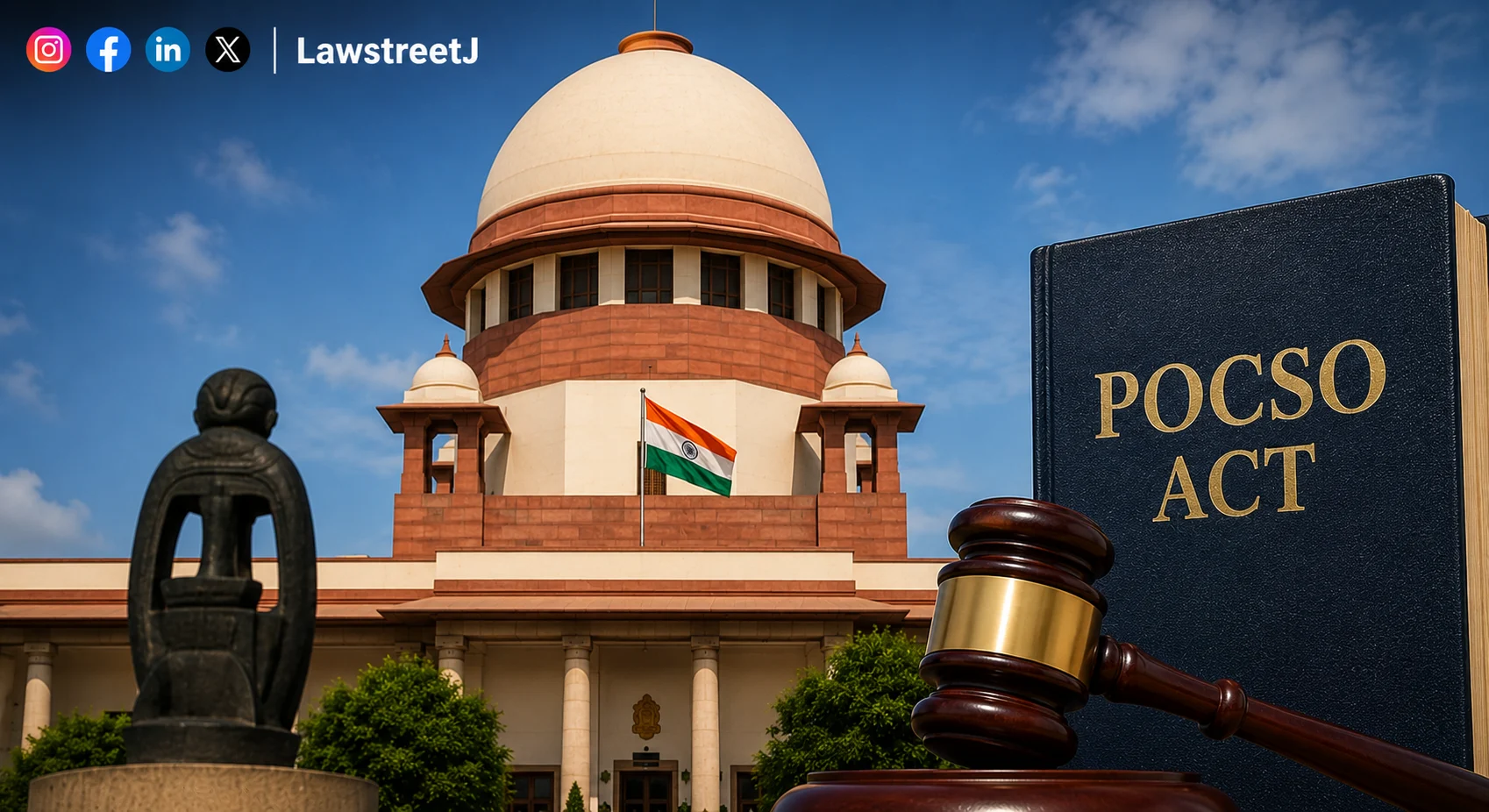
New Delhi: The Supreme Court of India on Monday raised significant concerns regarding the application of the Protection of Children from Sexual Offences (POCSO) Act in cases involving consensual relationships and elopements among adolescents.
The bench, comprising Justices BV Nagarathna and R Mahadevan, questioned whether such instances truly warrant the invocation of a law designed to prevent sexual exploitation and assault.
The court observed that the age group of 15 to 18 years is a vulnerable phase characterized by adolescent experimentation and development. During the hearing, the bench pointedly asked how the State is expected to prevent a boy and a girl from eloping, noting that such relationships existed long before the legal age of consent was raised from 16 to 18 in 2012.
A central theme of the court’s concern was the misuse of criminal proceedings by parents. The bench noted that many parents resort to the POCSO Act to protect their so-called "honour" after a teenage daughter elopes with her partner. In these scenarios, the court often finds itself in a position where it eventually has to acquit the accused because the relationship was consensual, yet the legal process itself becomes a significant burden for the teenagers involved.
This discussion arose during a suo motu case titled "In Re: Right to Privacy of Adolescents," which the top court initiated following a controversial ruling by the Calcutta High Court. The High Court had previously suggested that adolescent girls should "control their sexual urges" and not give in to "two minutes of pleasure," a judgment that the Supreme Court later set aside as it sought to protect the rights and privacy of young people.
Senior Advocate Madhavi Divan updated the court on the status of the individual case that had initially triggered the High Court's remarks. She informed the bench that the matter involving a minor girl and a 25-year-old man had reached a closure, with the girl now settled and happy with her husband and child. However, Divan highlighted a "strong report" filed by a court-appointed committee which detailed systemic failures in handling POCSO matters, particularly regarding the lack of effective rehabilitation for minors.
The counsel for the Union Government stated that recommendations for adolescent education and POCSO awareness are being developed to address these issues on the ground. These proposals include introducing awareness in a graded approach starting from Class 6 to inform students about the law and their rights. While there were suggestions for a central dashboard to monitor POCSO cases, the court noted that High Courts already have committees for child rights and that monitoring should remain with the state governments.
The Supreme Court reiterated that while the primary objective of the POCSO Act remains the safeguarding of children from abuse and exploitation, the law must remain practical in its application to everyday realities. The bench maintained that the existing committees within each High Court are well-suited to oversee child rights and the progress of cases within their respective jurisdictions. The matter is scheduled for further hearing on July 17.
Case title: In Re: Right to Privacy of Adolescents