New Delhi: The Supreme Court observed that a trade union is not obliged to serve a formal “charter of demands” on the management before approaching the Conciliation Officer under the Industrial Disputes Act, 1947. The Bench emphasized that the statute does not require the management to be approached in the first instance before invoking conciliation proceedings, particularly in cases involving apprehended disputes.
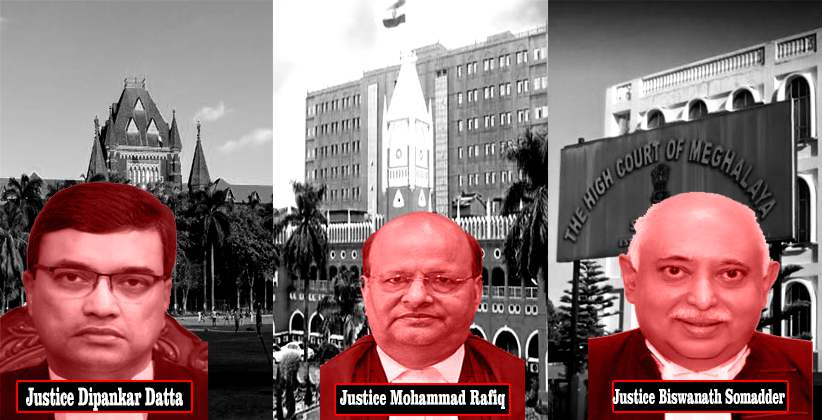
A Bench comprising Justice Pankaj Mithal and Justice S.V.N. Bhatti clarified the legal position on the initiation of conciliation proceedings and the scope of Section 10(1) of the Industrial Disputes Act, emphasizing that industrial disputes can exist even in the absence of prior formal demands to the employer.
The Court was hearing a Civil Appeal arising from SLP(C) No. 9970 of 2023, filed by M/s Premium Transmission Private Limited, challenging the Bombay High Court’s order upholding the reference of an industrial dispute to the Industrial Court. The appellant argued, “The Union approached the Conciliation Officer directly without first serving a charter of demands on the Management.”
Addressing the core legal issue, the Court observed, “Admittedly, the statute does not require moving the management at the first instance and then approaching the Conciliation Officer. The sine qua non condition is argued based on the ratio in Sindhu (supra) and Prabhakar (supra).”
The Bench emphasized the broad definition of an industrial dispute, stating, “Plainly interpreted, an industrial dispute means any ‘dispute or difference’ between employers and workmen connected with employment, non-employment, the terms of employment, or conditions of labour.”
With respect to the factual background, the Court noted, “The Management admits to the existence of registered contractors through whom the labour services of the members of the Union were availed. The contract is in compliance with the CLRA. There is no employer-employee relationship between the Management and the members of the Union. On the contrary, the Union alleges that the said contract is a sham or a camouflage.”
Distinguishing the present case from earlier precedents, the Court observed, “The two decisions relied upon by the Management, once excluded, would compel this Court to apply the principles laid down in SAIL (supra) and Shambu Nath (supra) to hold that even if an unfair labour practice is alleged, the applicable statute is the ID Act and the appropriate forum is the Labour Court.”
On the issue of apprehended disputes, the Bench held, “Sub-section (1) of Section 10 of the ID Act, from a plain reading, enables the appropriate Government to refer an industrial dispute to a Board, Labour Court, or Tribunal. Even assuming that, as per the ratio in Sindhu (supra) and Prabhakar (supra), a prior demand on the Management is essential to invoke conciliation, if a case falls within the second limb of Section 10(1), the appropriate Government is well within its jurisdiction to refer an apprehended dispute to the Labour Court.”
Emphasizing the preventive nature of the provision, the Court stated, “The power to refer an ‘apprehended’ dispute is the statutory application of the old adage ‘a stitch in time saves nine’. It enables the State to intervene before industrial peace is shattered. Permitting preliminary objections to stall this urgent process negates the preventive intent of the statute, converting a mechanism of immediate relief into an engine of delay.”
Regarding the administrative character of reference orders, the Bench observed, “The process of reference is administrative in nature and is not tested on the touchstone of a judicial or quasi-judicial order.”
The Court criticized attempts to delay proceedings through technical objections, noting, “The Management, by raising preliminary objections, seeks to nip the alleged industrial dispute in the bud on the ground that no prior demand was made before approaching the Conciliation Officer.”
Reiterating the fundamental principle of access to remedy, the Court stated, “For the rule of law to prevail, grievances cannot be wished away without adjudication. Ubi jus ibi remedium—where there is a right, there is a remedy—must be kept in perspective. Through the reference, a forum for redressal alone is provided to the contract labour.”
Addressing sham contracts, the Bench held, “As per the ratio in SAIL (supra), contract labour is entitled to question the contract as sham and nominal and seek appropriate reliefs.”
In its final directions, the Court held, “The Labour Court is directed to frame two issues: (i) whether the contracts through which employment is provided to the contract labour are sham and nominal, and (ii) whether, considering the nature of work discharged by the workmen of the respondent Union, the Management is the principal employer.”
The Court further directed that Reference (IT) No. 1 of 2021 be disposed of expeditiously, preferably within four months from the date of receipt of a copy of the judgment.
However, in the companion Civil Appeal arising from SLP(C) No. 12192 of 2023 concerning interim relief, the Court set aside the orders granting continuation of work during pendency, observing that “the interim prayer amounts to a virtual pre-judgment of the main dispute between the parties.”
Case Title: M/s Premium Transmission Private Limited v. State of Maharashtra & Ors.