New Delhi: The Supreme Court on Friday (July 31) held that interim maintenance under Section 125 of the Code of Criminal Procedure, 1973, can be denied to the wife once the husband ex facie establishes the wife's adulterous relationship at the stage of an application seeking interim maintenance.
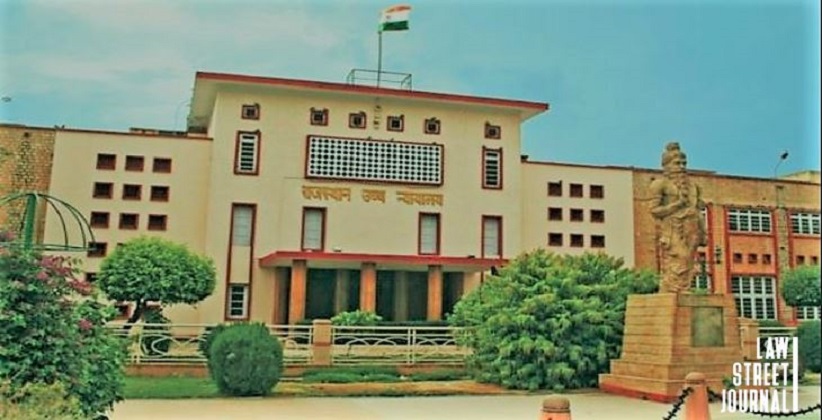
A Bench of Justices Sanjay Karol and Vipul M. Pancholi was hearing an appeal filed against a Rajasthan High Court order that had upheld the rejection of an application under Section 125(4) CrPC, which sought to resist estranged wife's claim for maintenance on the ground that she was 'living in adultery'.
The parties were married in 2014, and the wife left the matrimonial home in May 2020 along with their child, subsequently filing an application for maintenance under Section 125 CrPC along with a plea for interim maintenance. The appellant opposed the claim by invoking Section 125(4), which statutorily bars a wife from receiving maintenance if she is living in adultery, refusing without sufficient reason to live with her husband, or living separately by mutual consent. In support of his allegation, the appellant placed on record a large volume of photographic and video evidence.
The Trial Court, while granting interim maintenance of Rs. 25,000 each to the wife and child, disposed of the Section 125(4) application on the reasoning that the authenticity of the evidence could only be tested once formally exhibited during the main petition. The Rajasthan High Court upheld this approach, holding that there was 'no provision in the Cr.P.C. that mandates adjudication of such an issue before deciding an application for interim maintenance', and that the question of adultery was a disputed question of fact to be examined only at the stage of final adjudication.
Setting aside the High Court's view, the Supreme Court held that the statutory scheme under Section 125 does not permit the question of adultery to be deferred indefinitely to the final hearing. Tracing the object of maintenance law as being aimed at preventing neglect and destitution, the Court explained that an application for maintenance under sub-section (1) and an application under sub-section (4) alleging disqualification operate as distinct stages of the same proceeding. It held that if the evidence placed in support of the Section 125(4) application is either 'admitted' or establishes adultery ex facie at the very threshold, the statutory bar would operate even at the interim stage, and payment of interim maintenance would not continue to accrue merely because the main application remained pending.
"...if a husband files an application under Section 125(4) and is, at the first instance, able to establish the charge through evidence ex facie, then only, there can be said to be a bar to interim maintenance."
The Court clarified that the mere pendency of a Section 125(4) application would not, by itself, operate to suspend interim maintenance; such suspension would follow only once the husband's evidence is found, prima facie, to establish the statutory disqualification. It held that the Trial Court and the High Court had erred in treating the adultery allegation as a question that could only be gone into at the final hearing, observing that this view would render the second proviso to Section 125(1), which itself contemplates interim maintenance, otiose.
"The courts below clearly fell into error to hold that it was only at the stage of final adjudication that such a question could be decided. This view would render otiose what has been provided in the statute."
Since the Trial Court had declined to examine the appellant's Section 125(4) application on its merits, the Bench held that this constituted an error warranting interference and remanded the matter for a fresh decision, with interim maintenance to continue in the interregnum until that application is conclusively decided.
The Court also flagged a broader concern arising from the nature of the evidence relied upon by the appellant a large cache of photographs and videos apparently procured through private investigators, with no statutory body currently regulating how such material is collected, verified, or used.
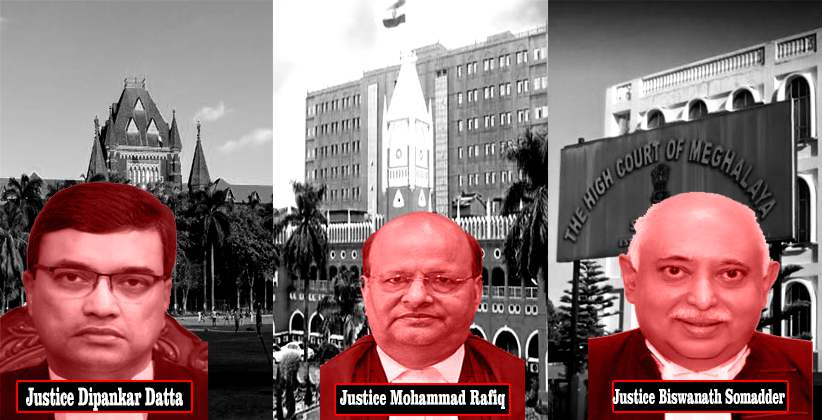
It referred to The Private Detective Agencies (Regulation) Bill, 2007, which lapsed without enactment, and to its ruling in Navinchandra N. Majithia v. State of Meghalaya, which held that private investigative material is not recognised under the Code. The Bench directed that a copy of the judgment be sent to the Secretary, Ministry of Law and Justice, and to the Chairman, Law Commission of India, to examine the need for a regulatory framework governing private investigation agencies.
Accordingly, the impugned judgment of the Rajasthan High Court was set aside and the matter remanded to the Trial Court to decide the appellant's Section 125(4) application on its merits. The appeal was allowed.
Case Title: Himanshu Chordia v. State of Rajasthan & Anr. (SLP (Crl.) No. 3171 of 2025)