38.6c New Delhi, India, Friday, May 15, 2026
Top Stories Supreme Court
Political NEWS Legislative Corner Celebstreet International Videos
Subscribe Contact Us
close
Judiciary

SC Lauds Family of Harish Rana for Organ Donation After Allowing Passive Euthanasia

By Saket Sourav      15 May, 2026 10:59 AM      0 Comments
SC Lauds Family of Harish Rana for Organ Donation After Allowing Passive Euthanasia

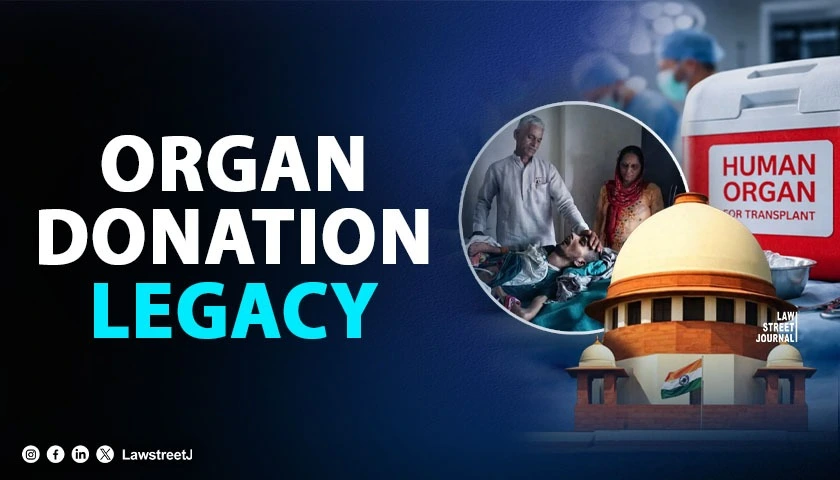
New Delhi: Months after permitting the withdrawal of life support for 31-year-old Harish Rana, the Supreme Court on May 13, 2026, commended his family’s decision to donate his organs following his death in the case of Harish Rana v. Union of India.

Rana had been left in a permanent vegetative state since 2013 following a fall from a building while he was a student at Panjab University. On March 11, 2026, the Supreme Court allowed his family’s plea to withdraw life-sustaining treatment, finding no prospect of recovery.

Rana passed away on March 24, 2026, after being shifted from his residence to palliative care at the All India Institute of Medical Sciences (AIIMS), New Delhi, pursuant to the Supreme Court’s March 11 judgment.

A Bench comprising Justices J.B. Pardiwala and K.V. Viswanathan noted that Rana’s corneas and heart valves had been donated by his family and lauded the gesture as an act of generosity in the face of personal loss. The Court observed: “Harish left this mortal world on his own terms, surrounded by love and compassion. Even in the face of their own loss, his family chose generosity through the selfless decision to donate his corneas and heart valves. His life continues in others. His legacy will live on in the lives of those he saved.”

The Bench further remarked that the case served as a reminder of the limits of medicine, observing that prolonging life in a manner a person would not choose for themselves amounts to an affront to the constitutional guarantees of dignity and autonomy. The Court stated: “In Harish’s final moments, he experienced care, comfort, and respect. His peaceful passing, free from tubes and machines, reflects autonomy and dignity in both life and death. Allowing someone to pass on their own terms and alleviating their suffering affirms their dignity and honours their ultimate control over their body and mind.”

In its March 11 judgment — a first-of-its-kind judicial order in India — the Supreme Court held that the withdrawal of clinically assisted nutrition and hydration (CANH) to avoid the artificial prolongation of the dying process would uphold the patient’s dignity and bodily integrity. The Court distinguished passive euthanasia, now termed “withdrawal of life support,” from active euthanasia, which it described as a positive overt act designed to directly cause or accelerate death. The Court reasoned that withholding treatment merely allows the natural course of life to take its inevitable course and therefore does not violate Article 21 of the Constitution.

The matter was listed on May 13 for the Court to examine compliance with the directives issued in its March 11 verdict. The Court took on record Rana’s death certificate dated April 7, 2026, directed that it be preserved with the case records for three years, and ordered that a report forwarded by AIIMS be kept in a sealed cover. Additional Solicitor General Aishwarya Bhati was directed to file a further compliance affidavit by July regarding certain earlier directions, including the constitution of district-level panels of registered medical practitioners to evaluate applications for withdrawal of life support.

The Bench expressed gratitude to the medical team and nursing staff at AIIMS for ensuring that Rana’s final days were attended with minimal suffering and acknowledged the assistance rendered by ASG Bhati and counsel for the petitioner, Advocate Rashmi Nandakumar. The Bench also remarked: “This litigation has taught many things to one and all, including the two of us as judges.”

The proceedings were conducted in accordance with the framework laid down in Common Cause v. Union of India (2018), in which the Supreme Court recognised passive euthanasia and the validity of living wills and advance directives. In its March judgment, the Court also urged the Centre to consider enacting specific legislation laying down the procedure for withdrawal of life-sustaining treatment.

Case Details: Harish Rana v. Union of India, Supreme Court of India. Before Justices J.B. Pardiwala and K.V. Viswanathan. Hearing dated May 13, 2026. Advocate Rashmi Nandakumar appeared for the Petitioner. Additional Solicitor General Aishwarya Bhati appeared for the Union of India.




Share this article:

About:

Saket is a law graduate from The National Law University and Judicial Academy, Assam. He has a keen ...Read more

Follow:
Linkedin


Leave a feedback about this
Related Posts
View All

Another CBI Officer Investigating Rakesh Asthana Moves SC Against Transfer, Makes Startling Revelations Another CBI Officer Investigating Rakesh Asthana Moves SC Against Transfer, Makes Startling Revelations

After A.K. Bassi, another CBI officer who was investigating corruption allegations against Special Director Rakesh Asthana moved the Supreme Court.

Ayodhya verdict: SC rules in favour of Ram Lalla, Sunni Waqf Board gets alternate land Ayodhya verdict: SC rules in favour of Ram Lalla, Sunni Waqf Board gets alternate land

SC bench led by CJI Ranjan Gogoi has allotted the dispute site to Ram Janmabhoomi Nyas, while directing the government to allot an alternate 5 acre land within Ayodhya to Sunni Waqf Board to build a mosque.

Supreme Court: Money Spent On Judiciary Less Than 1% In All States Except Delhi Supreme Court: Money Spent On Judiciary Less Than 1% In All States Except Delhi

The court guided all states to document their response to the commission's report within four weeks. If any of the states fail to file a response, it will be presumed that they have no objections to the recommendations made by the commission, the court said.

Supreme Court Top Panel Names Chief Justices for Bombay, Orissa and Meghalaya High Courts Supreme Court Top Panel Names Chief Justices for Bombay, Orissa and Meghalaya High Courts

On April 18, 2020, the Supreme Court Collegium recommended new Chief Justices for three High Courts. Justice Dipankar Datta was proposed as Chief Justice of the Bombay High Court, succeeding Justice B.P. Dharmadhikari. Justice Biswanath Somadder was nominated as Chief Justice of Meghalaya High Court, while Justice Mohammad Rafiq was recommended for transfer as Chief Justice of Orissa High Court.

TRENDING NEWS

no-offence-under-sc-st-act-if-alleged-casteist-abuse-occurred-inside-private-house-sc
Trending Judiciary
No Offence Under SC/ST Act If Alleged Casteist Abuse Occurred Inside Private House: SC [Read Judgment]

Supreme Court rules SC/ST Act offence is not made out if alleged casteist abuse occurred inside a private house without public view.

14 May, 2026 03:16 PM
madras-hc-bars-tiruppattur-mla-from-floor-test-over-disputed-one-vote-victory
Trending Judiciary
Madras HC Bars Tiruppattur MLA From Floor Test Over Disputed One-Vote Victory [Read Order]

Madras High Court restrains Tiruppattur MLA from floor test participation over disputed one-vote victory and alleged electoral irregularities.

14 May, 2026 03:24 PM

TOP STORIES

delhi-hc-refers-to-larger-bench-issue-on-stage-of-hearing-accused-under-section-223-bnss-before-cognizance
Trending Judiciary
Delhi HC Refers to Larger Bench Issue on Stage of Hearing Accused Under Section 223 BNSS Before Cognizance [Read Judgment]

Delhi High Court refers to Larger Bench issue on when accused must be heard under Section 223 BNSS before taking cognizance.

09 May, 2026 10:25 AM
hymen-intact-does-not-mean-no-penetration-delhi-high-court-upholds-pocso-conviction-of-tenant-who-raped-six-year-old-girl
Trending Judiciary
‘Hymen Intact Does Not Mean No Penetration’: Delhi High Court Upholds POCSO Conviction of Tenant Who Raped Six-Year-Old Girl [Read Order]

Delhi High Court upheld a tenant’s POCSO conviction for raping a six-year-old girl, holding that an intact hymen does not negate penetration.

09 May, 2026 12:42 PM
consumer-commission-directs-bus-operator-to-pay-50000-compensation-after-barat-reaches-wedding-destination-at-3-am-due-to-breakdown
Trending Judiciary
Consumer Commission Directs Bus Operator to Pay ₹50,000 Compensation After Barat Reaches Wedding Destination at 3 AM Due to Breakdown [Read Order]

Delhi Consumer Commission ordered a bus operator to pay ₹50,000 compensation after a Barat reached the wedding venue at 3 AM due to breakdown.

09 May, 2026 01:56 PM
sabarimala-reference-day-13-can-faith-justify-civil-death-and-genital-cutting-of-children-sc-bench-examines-religions-reach-over-the-body
Trending Judiciary
Sabarimala Reference Day 13: “Can Faith Justify Civil Death and Genital Cutting of Children?”: SC Bench Examines Religion’s Reach Over the Body

SC’s nine-judge bench examined whether religious practices violating dignity, bodily autonomy and conscience can claim protection under Article 26.

09 May, 2026 02:25 PM

ADVERTISEMENT


Join Group

Signup for Our Newsletter

Get Exclusive access to members only content by email