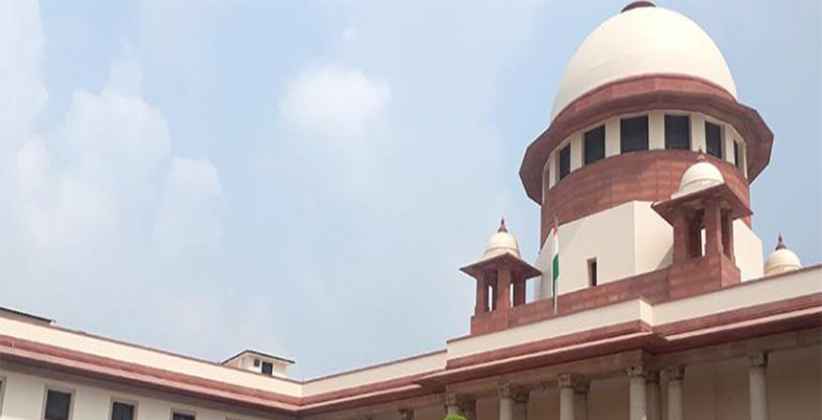
New Delhi: The Supreme Court of India on Friday raised significant questions regarding the continued extension of reservation benefits to the children of economically and educationally advanced families within backward classes.
During a hearing concerning the “creamy layer” of Other Backward Classes (OBC), a bench comprising Justice B.V. Nagarathna and Justice Ujjal Bhuyan orally observed that social mobility achieved through quotas should ideally lead to families moving out of the reservation system. The court’s remarks centered on whether the next generation should remain eligible for benefits once their parents have achieved high-ranking professional status through the existing quota system.
The bench specifically questioned the rationale behind children whose parents are both Indian Administrative Service (IAS) officers still seeking reservation. Justice Nagarathna noted that if both parents are serving as IAS officers, they are in a high tier of government service and are “very well-placed” in society.
The court observed that such a position indicates that social mobility has already been achieved through educational and economic empowerment. The bench expressed concern that if families that have already attained such advancement continue to seek reservation for their children, the nation may never move past the quota system, describing it as a situation that the court must be concerned about.
During the proceedings, advocate Shashank Ratnoo, appearing for the petitioners, argued that certain individuals are currently excluded from reservation benefits not necessarily because of their salary, but due to their professional status. He pointed out that Group A and certain Group B employees are removed from eligibility based on their category. Ratnoo contended that there should be a deeper examination of these criteria and suggested that there must be a clear distinction between the “Economically Weaker Sections” (EWS) category and the “creamy layer” of the OBCs. He argued that the criteria for the creamy layer should be more liberal than those for the EWS category, as equating them would eliminate the inherent differences between the two.
In response to these submissions, Justice Nagarathna clarified the legal nature of different reservation categories. She noted that the EWS category is based purely on economic backwardness and does not involve social backwardness. In contrast, reservation for backward classes is intended to address social and educational disadvantages. However, the bench maintained that once parents have used reservation to reach a certain professional level, their social status changes significantly. The court suggested that at this stage, the social mobility of the family is clearly established, and such advanced sections should ideally “get out of reservation” to allow benefits to reach those who are truly deprived and backward.
The bench also took note of existing government orders that already mandate the exclusion of these advanced sections from reservation benefits. It was observed that these exclusion provisions are currently facing legal challenges from those who are being left out. Justice Nagarathna highlighted that while government orders aim to redirect benefits to the truly needy, individuals with good jobs and stable incomes continue to question their exclusion. The court emphasised that a balance must be maintained between supporting the socially backward and acknowledging when a family has attained a level of advancement that precludes the need for further affirmative action.
The legal backdrop of this debate includes the landmark 1992 Indra Sawhney judgment, where the Supreme Court upheld 27 per cent reservation for OBCs while ruling that the “creamy layer” must be excluded. Currently, the government uses an annual income ceiling set at Rs 8 lakh to identify the creamy layer, though certain categories, like children of senior bureaucrats, are excluded regardless of specific income.
After hearing the initial arguments, the Supreme Court issued notices to the concerned parties, seeking their responses to the petitions.
Case Title: Raghavendra Fakeerappa Chandranavar v. Department of Backward Classes Welfare