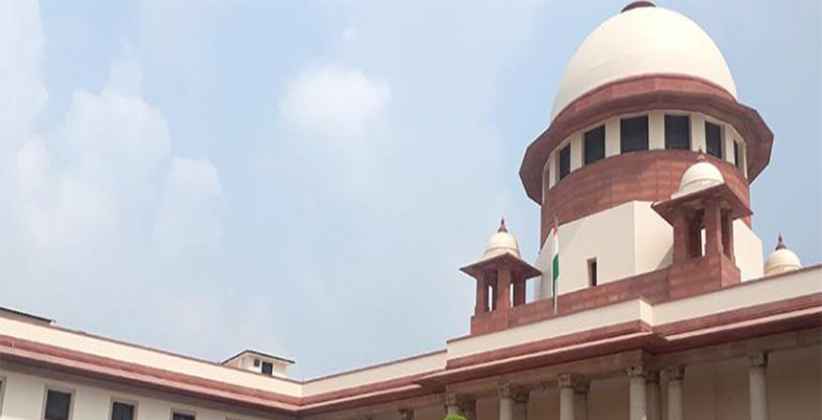
New Delhi: The Supreme Court of India on Friday, July 24, 2026, passed a significant interim order prohibiting the unauthorised extraction, editing, and dissemination of audio and video recordings of judicial proceedings. The Bench, led by Chief Justice Surya Kant and including Justices Joymalya Bagchi and V. Mohana, directed that no recordings can be uploaded, reposted, or monetised on social media or any digital platform without prior permission from the court administration.
This directive mandates that any extraction or modification of such recordings requires the express approval of the Secretary General of the Supreme Court or the Registrar General of the jurisdictional High Court. The court passed this measure while hearing a Public Interest Litigation (PIL) that highlighted the increasing misuse of courtroom clips, which are often circulated without context to sensationalise judicial exchanges.
During the proceedings, the Bench expressed grave concern over how judicial hearings are being portrayed in the digital space. Justice Joymalya Bagchi remarked that the court cannot be treated as a “24x7 entertainment channel” and emphasised the need for limited and regulated access to maintain the sanctity of the institution. He further noted that once such data enters the unregulated digital sphere, it becomes a “demon which is out of the bag” that is difficult to control.
The court clarified that this interim order is not a gag order and will not affect fair and accurate news reporting of court proceedings. The restriction is specifically aimed at the unauthorised sharing of audio-visual recordings rather than journalistic accounts of the hearings. Justice V. Mohana also stated that the direction should not be construed as a restriction on the fundamental right to freedom of speech.
The PIL, filed by journalist Harshita Grover, argued that the absence of a regulatory framework for re-publishing courtroom videos has led to widespread misinformation. The petition alleged that isolated oral observations are frequently extracted from lengthy hearings and shared with misleading captions or clickbait headlines to maximise commercial gain. Such practices, the petitioner argued, expose judges, lawyers, and litigants to trolling and reputational harm while eroding public confidence in the justice delivery system.
Senior Advocate Vikas Singh, appearing for the petitioner, clarified that he did not oppose the principle of livestreaming but flagged the dangers of edited clips going viral. He cited a recent incident where a petitioner abused the court and threw papers at the Bench, an event that was widely circulated online and, according to Singh, made the judiciary appear like a “joke” to the public.
Solicitor General Tushar Mehta supported the need for interim protection and warned the court about the sophisticated threats posed by artificial intelligence. He pointed out that AI tools can now be used to alter the words spoken by judges or lawyers while perfectly maintaining their original lip movements and voices, creating authentic-looking but entirely false narratives.
Chief Justice Surya Kant agreed that misinformation is a growing challenge, sharing his own experiences of being misquoted. He specifically dismissed recent media reports claiming he had refused an urgent hearing on student protests as “reckless,” clarifying that no such petition had even been filed at the time of the reports. The CJI noted that even in the print medium, words he never uttered had been attributed to him.
In addition to the ban, the court issued notices to the Union Government and social media intermediaries, including Meta and X (formerly Twitter), seeking their responses on the matter. The Union Government has been asked to identify nodal ministries capable of implementing a regulatory framework for digital courtroom data. All High Courts were also impleaded and directed to submit reports on the impact of continuous livestreaming in their respective jurisdictions.
The Supreme Court directed that this interim order be displayed on official court websites for public information. The Bench suggested that the indiscriminate sharing of virtual hearing links also requires stricter regulation to prevent the “collateral threat” that unregulated data poses to the justice system.
Appearance: for the petitioners: Dr. Vikas Singh, Senior Advocate, along with Mr. Md Imran Ahmad, Mr. R. Jude Rohit, Mr. Daksh Sachdeva, Ms. Deepeika Kalia, Ms. Khushi, Mr. Zeeshan Ahmad and Mr. Sudeep Chandra, Advocates, instructed by Mr. Anil Kumar, Advocate-on-Record.
For the respondents: Solicitor General Tushar Mehta for the Union of India.
Case title: Harshita Grover v. Union of India and others | W.P.(C) No. 751/2026.


.jpeg)