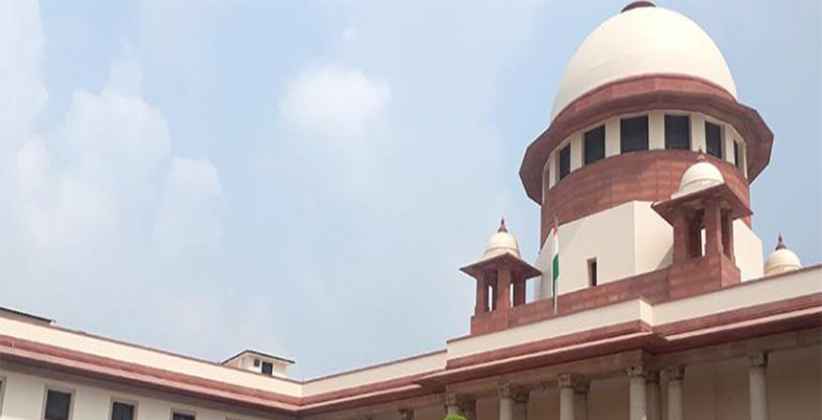
New Delhi: In a significant observation on the perceived misuse of the Right to Information (RTI) Act, the Supreme Court recently remarked that RTI activism has evolved into a “new business.” The observation came while the Court was hearing a plea for anticipatory bail filed by an activist accused of obstructing a public servant during a government road construction project.
A Bench of Justice Sandeep Mehta and Justice Vijay Bishnoi dismissed the plea for pre-arrest bail filed by Ramesh Kumar Behl and expressed strong disapproval of individuals who, under the guise of RTI activism, interfere with public works and harass government officials.
During the hearing, Justice Sandeep Mehta made sharp oral observations regarding the conduct of self-styled RTI activists. He remarked that RTI activism had effectively become a new profession and likened such conduct to “yellow journalism.”
The Bench observed that when government funds are allocated for infrastructure projects, designated authorities are responsible for monitoring and supervising the work. Questioning the petitioner’s role, Justice Mehta referred to him as a “so-called RTI activist” and observed that such individuals have no role in interfering with the execution of public projects.
Justice Vijay Bishnoi also questioned the petitioner’s locus standi to monitor the progress of the road construction work. The Court asked under whose authority the petitioner was supervising the project and whether he possessed any official role empowering him to oversee the work.
The Bench further observed that supervision and monitoring of public infrastructure projects fall within the exclusive domain of the authorities entrusted with their implementation. The observations reflect judicial concern that, in some cases, the RTI mechanism—intended to promote transparency and accountability—may be used to exert unauthorized influence over public administration.
The case arose from an FIR alleging that the petitioner and another accused obstructed an ongoing road construction project. According to the prosecution, the accused intimidated the site supervisor and labourers present at the location.
The FIR further alleged that the petitioner assaulted the supervisor, while the co-accused physically attacked the supervisor by kicking him. The prosecution also alleged that caste-based derogatory remarks were made against labourers working at the site.
Based on these allegations, an FIR was registered under various provisions of the Bharatiya Nyaya Sanhita, 2023, along with provisions of the Scheduled Castes and Scheduled Tribes (Prevention of Atrocities) Act.
The petitioner approached the Supreme Court after the Punjab and Haryana High Court rejected his application for anticipatory bail. The High Court had observed that the allegations disclosed specific involvement of the petitioner in obstructing government work and found no grounds to grant the discretionary relief of pre-arrest protection.
Upon consideration of the matter, the Supreme Court agreed with the High Court’s assessment and declined to interfere.
The Court noted that public projects are executed through established governmental frameworks and that interference by self-appointed monitors can hamper infrastructure development. By describing such conduct as a “business” and comparing it to “yellow journalism,” the Court drew a distinction between genuine efforts to promote transparency and actions that create administrative hurdles under the guise of activism.
Consequently, the Supreme Court dismissed the Special Leave Petition and permitted the investigation to proceed in accordance with law.
Case Title: Ramesh Kumar Behl v. State of Punjab | SLP (Crl.) No. 10257 of 2026