New Delhi: The Supreme Court has held that a suit under Section 92 of the Code of Civil Procedure, though representative in nature, does not confer an automatic right of impleadment on every member or devotee of the institution, and that a Special Officerappointed during the pendency of such a suit has no vested right to continue. It set aside two sets of Calcutta High Court orders under Article 227 which had stayed the Trial Court’s removal of the Special Officer and had reopened the rejection of impleadment applications.
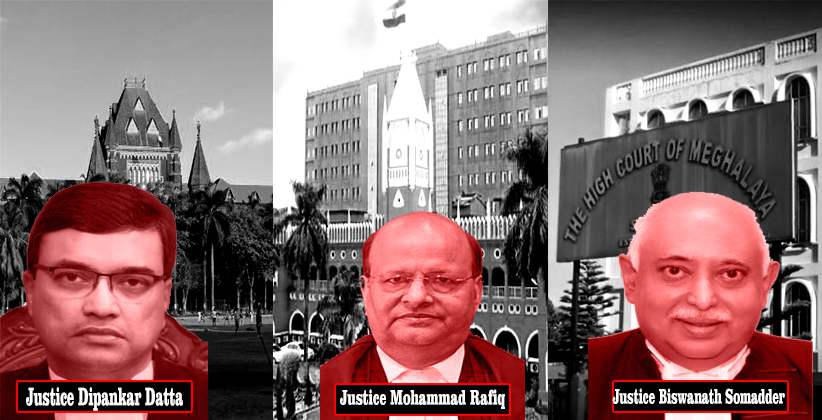
A Bench of Justice Vikram Nath, Justice Sandeep Mehta and Justice Aparesh Kumar Singh, was hearing appeals by Subhasindu Das and others, plaintiffs in Title Suit No. 105 of 2012 concerning the administration of Sri Guru Sangha, a charitable society registered under the Societies Registration Act, 1860, with its central Ashram at Kolkata. The suit seeks removal of certain office bearers, a scheme for management and appointment of a receiver.
The Trial Court had appointed Smt. Banani Ghosh as Special Officer in July 2021. After the plaintiffs alleged irregularities, it called for her written explanation, and on a joint application of the parties removed her by order of 07.06.2022 and constituted a 13-memberad hoc committee with quarterly reports and annual audits. In revisions filed by Banani Ghosh and Bachhu Ranjan Das, the High Court on 26.09.2022 stayed that order. Separately, the Trial Court on 09.09.2025 rejected impleadment applications of Bachhu Ranjan Das and Bablu Das, but the High Court on 04.02.2026 set that aside, noting that the suit was representative in nature, and granted liberty to file fresh applications.
On the removal, the Court held that the Trial Court was competent to make appropriate arrangements for the interim administration and protection of the Sangha, and that the appointment of a Special Officer “did not confer any vested right to continue in that position”. Relying on Garment Craft v. Prakash Chand Goel, (2022) 4 SCC 181, it reiterated that Article 227 jurisdiction does not correct every error of fact or law, and is invoked only for a patent jurisdictional error, perversity or grave miscarriage of justice. The High Court had proceeded on the premise that she was removed without a hearing, whereas the Trial Court order recorded that her written explanation was called for, submitted and considered. The stay was therefore held unwarranted.
On impleadment, the Court explained that Order I Rule 10(2) CPC requires the court to decide whether the proposed party is necessary or proper for effective and complete adjudication. A Section 92 suit is representative in nature, but applicants must still show sufficient grounds for separate participation and how their presence is necessary or proper. The representative character is relevant, yet it cannot by itself dispense with Order I Rule 10(2). The Court noted that the High Court identified no perversity in the Trial Court’s findings and instead gave liberty to file fresh applications without addressing the reasons for the earlier rejection. It stated:
“Although a suit instituted under Section 92 of the CPC is representative in nature and concerns the interests of persons associated with the institution, this does not confer an automatic right of impleadment upon every devotee or member of the Sangha.”
The Court declined, at this stage, to appoint a fresh administrator or committee on the allegations of financial and administrative irregularities against the ad hoc committee, which involve disputed questions, and left the parties to raise them before the Trial Court. The appeals were allowed, the High Court’s order of 26.09.2022 was set aside so that the Trial Court’s order of 07.06.2022 remains operative, and the Trial Court’s order of 09.09.2025 was restored as regards Bachhu Ranjan Das and Bablu Das. Any fresh application pending on the strength of the High Court’s liberty is to be dealt with independently, without treating that liberty as continuing.
The Court clarified that it expressed no final opinion on the merits of the suit, and that the pending revisions in the High Court shall be decided uninfluenced by its observations. The Interlocutory Applications seeking an independent administrator were disposed of with liberty to approach the Trial Court.
Case Title: Subhasindu Das & Ors. vs. Bacchu Ranjan Das & Ors. etc., Civil Appeal Nos. 841-842 of 2023 (with connected appeals arising out of SLP (C) Nos. 9345 and 9774 of 2026), 2026 INSC 1250