New Delhi: The Supreme Court has refused to interfere with the Allahabad High Court’s stay of conviction of Mohammad Azam Khan in the two birth certificates case, and has extended the same relief to his son Mohammad Abdullah Azam Khan and wife Dr. Tazeen Fatma. It held that when similarly placed convicts seek a stay of conviction, an order granting it to one and denying it to the others, without stating a distinguishing feature, is arbitrary.
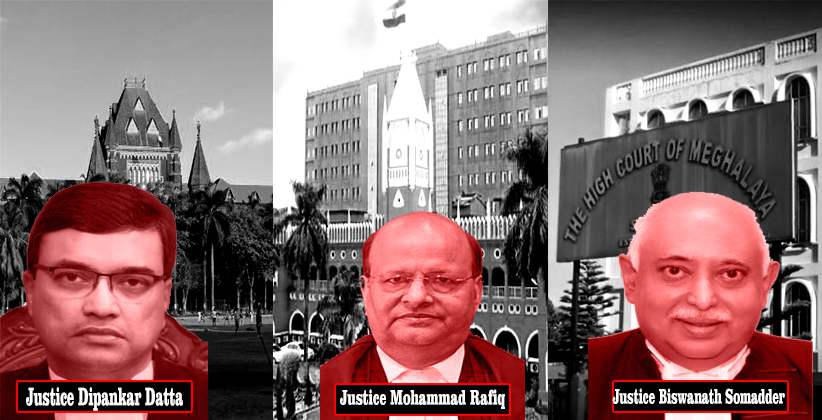
A Bench of Justice Dipankar Datta and Justice Sheel Nagu was hearing the State of U.P.’s appeals against the High Court’s judgment of 24.05.2024, and the appeals of the son and wife against the same judgment. In revision, the High Court had suspended the sentences of all three and released them on bail, but stayed the conviction only of Azam Khan under Section 389(1) read with Sections 397/401 of the Code of Criminal Procedure, 1973.
The case arose from a complaint of 17.12.2018, on which an FIR (Case Crime No. 04 of 2019) was registered on 03.01.2019 at Police Station Ganj, Rampur, under Sections 120-B, 420, 467, 468 and 471 of the Indian Penal Code. The prosecution alleged a conspiracy to fraudulently obtain and use two conflicting birth certificates issued in the name of Abdullah Azam Khan. The trial court’s conviction of 18.10.2023 was affirmed by the appellate court on 23.12.2023.
Additional Solicitor General K.M. Nataraj, for the State, argued that the High Court granted Azam Khan a stay of conviction suo motu because his revision prayed only for suspension of sentence, and that it gave no separate reasons for the stay. Senior Advocate Kapil Sibal, for all three, countered that paragraph 5 of the High Court’s judgment recorded that each convict had separately applied for stay of conviction.
The Court overruled the first objection, noting that it was “not a case where the High Court travelled beyond the prayer clauses”. On the second, it accepted that the High Court had not recorded extensive reasons for the stay, but held that the reasons for suspending sentence were valid grounds for a stay too. These included the substantial custody already undergone, his advanced age, and the absence of direct evidence that he personally executed the forged signatures on the municipal registers. The exercise of discretion did not suffer from “any manifest perversity”, and the State’s appeals were dismissed.
On the son and wife, the Court noted that the High Court had itself recorded that the offence was not heinous, that they were on bail during trial without misusing it, and that they had served about one year and four months. It found no coherent reason for denying them the stay. Observing that stay of conviction is an exceptional remedy, the Court said that the court must still maintain logical consistency among co-convicts on an identical footing, and held:
“If the court grants a stay/suspension of conviction to one convict while similar relief to other similarly situated convicts is denied, the distinguishing feature on the record must be identified and expressly stated as the reason for the departure from parity. An order silent on that point is, by itself, arbitrary.”
Parity, it said, is a facet of Article 14. The Court also stressed that a conviction affects the right to live with dignity under Article 21, and that stigma and loss of reputation cannot be “restituted in monetary terms” if the conviction is later set aside. It relied on Afjal Ansari v. State of U.P., (2024) 2 SCC 187, and on Ravikant S. Patil v. Sarvabhouma S. Bagali, (2007) 1 SCC 673, as cited there, which treats stay of conviction as an exception.
The Court added a caution that it “unequivocally” disavowed any plea for stay of conviction “anchored purely on political expediency, electoral ambitions, or the exigencies of upcoming election campaigns”. It noted that all three were charged with one conspiracy on the same two birth certificates, issued at Rampur and Lucknow, and that no separate overt act of forgery was attributed to the son or wife beyond being alleged co-conspirators and beneficiaries.
The appeals of Abdullah Azam Khan and Dr. Tazeen Fatma were allowed, and the conviction stands stayed for them during the pendency of their revisions. The High Court was asked to decide the revisions on merits, uninfluenced by these observations, as expeditiously as possible.
Appearances:
For the State of U.P.: Mr. K.M. Nataraj, Additional Solicitor General.
For Mohammad Azam Khan, Mohammad Abdullah Azam Khan and Dr. Tazeen Fatma: Mr. Kapil Sibal, Senior Advocate.
Case Title: State of U.P. vs. Mohammad Azam Khan & Ors., Criminal Appeals arising out of SLP (Crl.) Nos. 11030-11032 of 2025 (with SLP (Crl.) Nos. 15970 and 15969 of 2025), 2026 INSC 1231