New Delhi: The Supreme Court has set aside the compulsory retirement of a former Indian Trade Service officer, holding that an order under Fundamental Rule 56(j) is rendered arbitrary and vitiated by malice in law where it is passed barely months after the officer earned a merit-based promotion and where his nearly quarter-century service record shows an unbroken run of "Outstanding"/"Very Good" gradings with no meaningful adverse remark on integrity.
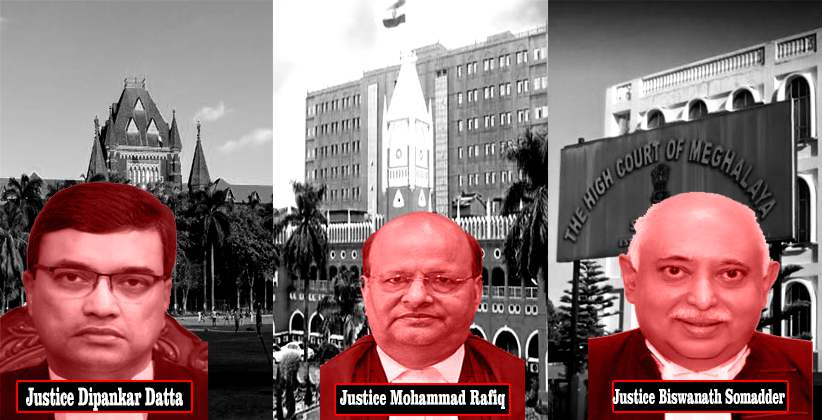
A Bench comprising Justice Dipankar Datta and Justice Sheel Nagu was hearing a civil appeal filed by S.S. Das, a 1989-batch Indian Trade Service officer, against a Delhi High Court judgment dated 18.01.2024 which had declined to interfere with an order of the Central Administrative Tribunal, Principal Bench, upholding his compulsory retirement dated 10.05.2018, ordered under FR 56(j) nearly five years before his superannuation.
The appellant had risen through the ranks since 1989, being promoted Deputy Director General and later Joint Director General of Foreign Trade, granted non-functional Selection Grade upgradations in 2006 and 2011, appointed Additional Director in the Directorate General of Anti-Dumping (DGAD) in 2014, and, on the recommendation of the UPSC and with ACC approval, placed in the Senior Administrative Grade at the level of Joint Secretary on 16.11.2017, a promotion regularised on 27.02.2018 barely about ten weeks before he was compulsorily retired.
A Review Committee had, on 27.11.2017, recommended his premature retirement on the ground that his conduct while dealing with files and clients was "obstructive and questionable" and that he did not enjoy a good reputation for integrity, citing an insubordination charge and unspecified unprofessional conduct during his DGAD tenure. His representation dated 01.06.2018 partly succeeded: the Representation Committee remanded the matter for fresh consideration, but the reconstituted Review Committee, relying principally on a confidential note dated 30.03.2017 of the then Additional Secretary & DGAD alleging that the appellant had sought "favours" from industry representatives allegations admittedly unsupported by any written complaint or evidence and on a single remark of "room for improvement" in the integrity column of his 2014-15 APAR, reaffirmed the recommendation, which the Representation Committee upheld on 28.05.2019. Both the CAT and the High Court declined to interfere, though the High Court found that the Review Committee had not been headed by the Ministry's Secretary as required.
Before the Supreme Court, the Additional Solicitor General for the Union argued that compulsory retirement under FR 56(j) is administrative and non-punitive, that principles of natural justice have no application to it, that uncommunicated adverse entries and old integrity-related material may be relied upon since the "washed-off theory" does not apply to compulsory retirement, and that judicial review of such orders is confined to examining mala fides, absence of evidence, or perversity, none of which, it was submitted, was made out on the facts.
The Court undertook a detailed examination of the appellant's Annual Confidential Reports and Annual Performance Appraisal Reports spanning 1994-95 to 2016-17, finding that he had been graded "Outstanding" or its numerical equivalent (8 and above out of 10) in virtually every reporting year, with peaks of 9.8 and 9.6, and that the only two entries touching integrity across this entire span were a 1998-99 remark that "a few complaints received no substance found" and the 2014-15 remark of "room for improvement", made in a year the appellant was still graded 8.75 out of 10 and which was followed, the very next year, by a rise to 9.6.
While accepting the Additional Solicitor General's proposition that the "washed-off theory" does not have universal application to compulsory retirement and that the entire service record may be considered, the Court held that this did not permit isolated, decades-old or equivocal entries to override a consistent and recent record of excellence, and that a promotion earned on merit shortly before an order of compulsory retirement is material the reviewing authority must meaningfully weigh, since such a promotion is itself a recent, objective certification that the officer remains fit for higher responsibility a finding fundamentally irreconcilable with a simultaneous conclusion that he has become "dead wood" or is of doubtful integrity.
Describing the confidential note relied upon as "not worth the paper it had been written on", the Bench noted that it recorded unverified oral allegations which industry representatives were themselves unwilling to reduce to writing, and questioned whether the note reflected genuine departmental concern or resentment at the appellant's refusal, evident from the file, to accept a costing principle favourable to certain firms but inconsistent with DGAD's established practice.
The Court held that the Review Committee, on remand, had selectively invoked precedents supporting reliance on past adverse material while ignoring the equally settled qualifications requiring due weight to the immediate service record and to a merit-based promotion, a selective invocation used, in the Court's words, to "justify, ex post facto, a decision already taken".
Holding that the impugned order suffered from "manifest contradiction" and was vitiated by malice in law, arbitrariness and perversity, the Court set aside the High Court's judgment, the CAT's order, and the compulsory retirement order dated 10.05.2018 itself.
Noting that the appellant had since attained the age of superannuation, making reinstatement impracticable, the Court moulded the relief: it directed that the appellant be treated as entitled to all service benefits, including notional promotion if any of his juniors was promoted during the period he remained out of service, that he be formally called back by the Director General of Foreign Trade to be given a farewell with full honour, and that the Union pay him costs of Rs. 6 lakh together with a further Rs. 9 lakh as compensation for loss of reputation, both within three months, with liberty to the Union to recover these amounts from the officers found responsible.
Case Title: S.S. Das vs. Union of India, Civil Appeal No. 3215 of 2026 (Arising out of SLP(C) No. 1265/2025)