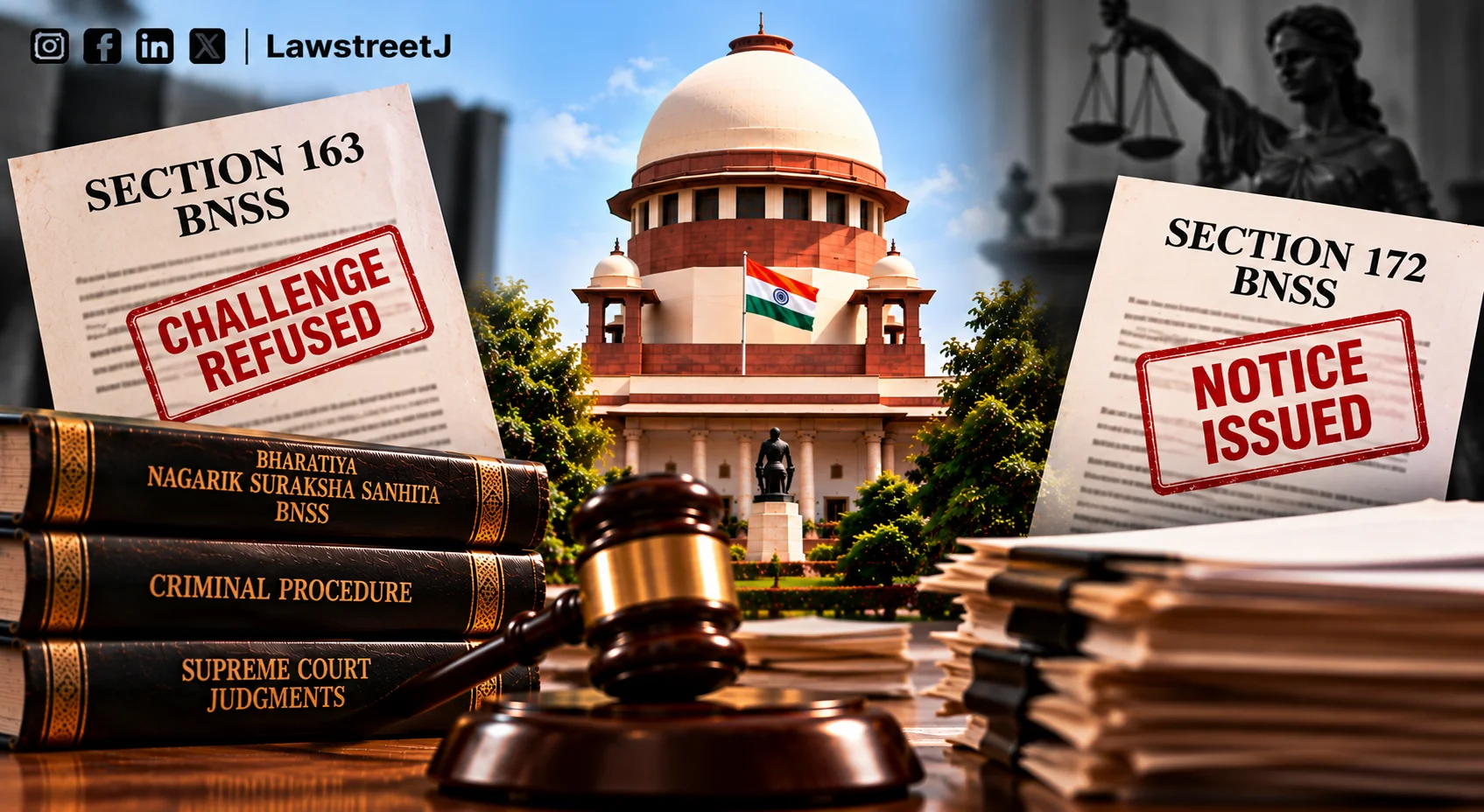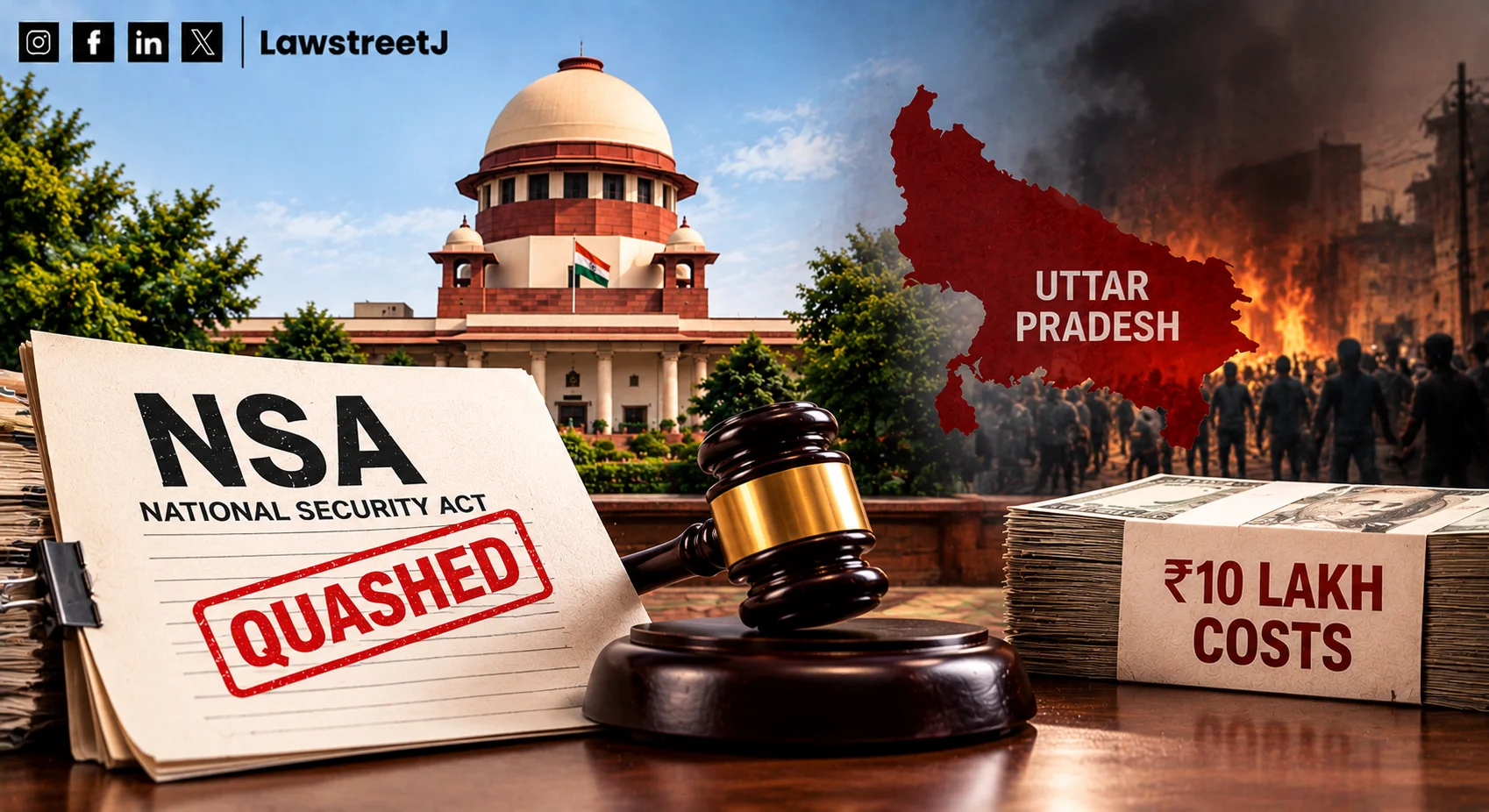
New Delhi: The Supreme Court has quashed the preventive detention of a man held under the National Security Act, 1980 in connection with the November 2024 Sambhal mosque-survey violence, holding that a mere extra-judicial confessional statement, without other substantive material, cannot by itself sustain an order of detention, and imposing a cost of ₹10 lakh on the State.
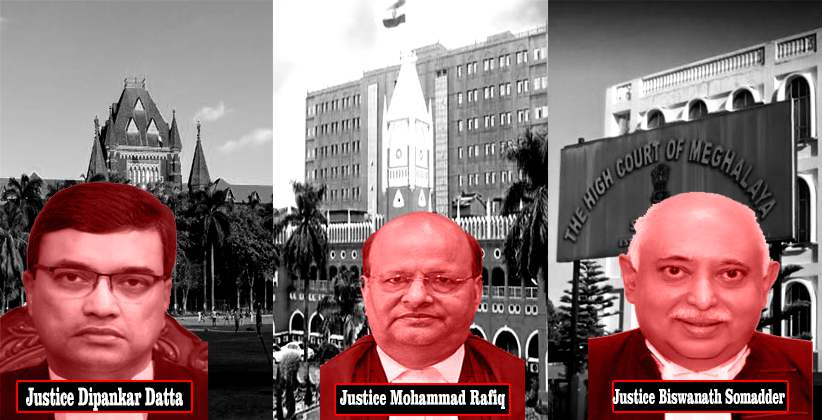
A Bench of Justice Dipankar Datta and Justice Sheel Nagu, was examining a challenge to an Allahabad High Court order that had dismissed his habeas corpus petition and upheld the detention order passed by the District Magistrate, Sambhal, after he had already secured bail in the criminal cases arising from the incident.
The Court recorded that although the appellant was not named in the principal FIR over the violence, in which four persons died, he was arrested about 54 days later, and a confessional statement was allegedly recorded during custody leading to recovery of a pistol; the detention order was passed while he remained in judicial custody on other FIRs, shortly after he secured bail in one of them.
On the first issue, the Court reconsidered its earlier ruling in Suman v. State of Rajasthan insofar as it permitted a detention order to be founded on a confessional statement, holding that this conclusion “cannot be sustained, and are accordingly overruled to that extent,” since it did not have the benefit of the later decision in Kartar Singh. The Court reiterated that “a mere confessional statement of the detenu . . . cannot be relied on as the sole ground for passing an order of detention.”
Examining the remaining material relied upon by the detaining authority, the Court found that the State had, in substance, founded the preventive detention on the very same material gathered in the ongoing criminal investigation into the same incident, so that “the distinction sought to be maintained by the State between the punitive and preventive jurisdictions has . . . become blurred.”
Quoting its earlier ruling in Ameena Begum v. State of Telangana, the Court reiterated that preventive detention, though constitutionally recognised, “has been rendered ordinary with its reckless invocation over the years,” and that the safeguards under the “golden triangle” of Articles 14, 19 and 21 must be diligently enforced.
The Court observed that although preventive detention is meant to be preventive rather than punitive, in substance a year-long detention order remains “a punishment of one year's imprisonment,” and held that where ordinary criminal proceedings are already underway on the same facts, invoking preventive detention “must satisfy a correspondingly higher degree of scrutiny.”
Setting aside the High Court's judgment along with the detention and confirmation orders, the Court directed the appellant's release forthwith, unless required in any other case, and held that “the process was made the punishment,” imposing costs of ₹10 lakh on the State to be paid to the appellant within a month.
Human life is fragile. Yet, in the ordinary course of living, we seldom pause to recognise just how fleeting it is; and when life finally confronts us with that fragility, the realisation often comes too late.
The judgment opens with an In Memoriam note dedicating the ruling to the Court's Law Clerk-cum-Research Associate, Ritwik Deswal, who passed away four days short of his 27th birthday, the date on which the judgment was pronounced, and records the Bench's appreciation for his research assistance in its preparation.
Case Title: Mulla Afroz vs. Union of India and Others