New Delhi: A two-Judge Bench of the Supreme Court has returned a split verdict on whether a batch of writ petitions challenging the constitutional validity of the Chief Election Commissioner and other Election Commissioners (Appointment, Conditions of Service and Term of Office) Act, 2023 raises a substantial question of law as to the interpretation of the Constitution requiring reference to a Constitution Bench of at least five Judges under Article 145(3), with the papers now directed to be placed before the Chief Justice of India for an appropriate order.
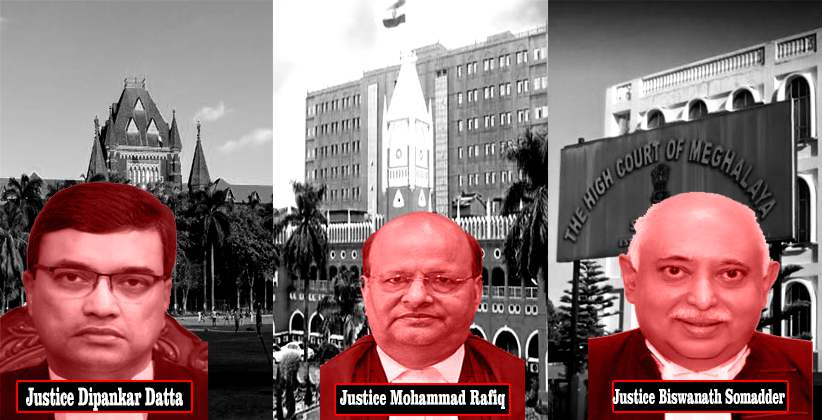
Justice Dipankar Datta and Justice Satish Chandra Sharma were hearing a cluster of writ petitions filed under Article 32 of the Constitution, questioning Sections 7, 6 and 8(2) of the 2023 Act as ultra vires Article 14 read with Article 324 of the Constitution. The principal challenge was to Section 7, which constitutes the Selection Committee for appointing the Chief Election Commissioner and Election Commissioners of the Prime Minister, the Leader of Opposition and a Union Cabinet Minister nominated by the Prime Minister, to the exclusion of the Chief Justice of India.
The petitioners relied heavily on the Constitution Bench decision in Anoop Baranwal v. Union of India, which had held that the Election Commission of India must be insulated from exclusive executive control in matters of appointment and had, pending parliamentary legislation, directed that a Committee comprising the Prime Minister, the Leader of Opposition and the Chief Justice of India make such appointments. They argued that the 2023 Act, enacted after that judgment, merely required application of this already-settled constitutional principle and that no fresh question of constitutional interpretation arose warranting a reference.
Mr. R. Venkataramani, Attorney General for India, and Mr. Tushar Mehta, Solicitor General of India, appearing for the Union of India, urged that since no prior decision of the Court had pronounced on the validity of the 2023 Act itself, and since the question of whether Parliament could validly exclude a neutral selector from the Selection Committee had never been authoritatively decided, the matter necessarily raised a substantial question of constitutional interpretation calling for a Constitution Bench.
Justice Dipankar Datta, delivering the leading opinion, held that the plea for reference was not well-founded. Undertaking a prima facie examination of Anoop Baranwal, held that the three-member Selection Committee directed therein was only a pro tem, interim arrangement made under Article 142 to fill a constitutional vacuum until Parliament legislated, and not a binding constitutional mandate that Parliament was obliged to replicate. At the same time, he observed, prima facie, that the inclusion of a Cabinet Minister nominated by the Prime Minister on the Selection Committee, bound as he would be by the doctrine of collective responsibility, failed to provide the independent counterweight of a neutral selector and rendered the presence of the Leader of Opposition largely ornamental, so that the composition of the Selection Committee under Section 7 did appear to raise a genuine question on the perception of independence essential to Article 324. Since the binding proposition that the Election Commission of India must be free of exclusive executive control already stood settled, what remained, in his opinion, was only the application of that settled principle to the 2023 Act, and not a fresh interpretation of the Constitution warranting reference to a larger Bench.
Justice Satish Chandra Sharma, in a separate and dissenting opinion, disagreed. He held that since no authoritative decision of the Court had till date pronounced on the constitutional validity of the 2023 Act, and since the question of whether Parliament was justified in excluding a neutral selector from the Selection Committee was arising for the first time, it constituted a substantial question of law as to the interpretation of the Constitution within the meaning of Article 145(3) read with Order XXXVIII of the Supreme Court Rules, 2013, which could not be finally decided by a two-Judge Bench and must be placed before a Constitution Bench of not less than five Judges.
Underscoring the constitutional stakes involved, the Bench observed that “it is a foundational principle of our constitutional scheme that ours is a government of laws, not of men, where the rulers are bound by the law; they can never be above the law.”
Faced with this difference of opinion, the two Judges directed that, rather than referring the limited question of reference to a three-Judge Bench, the papers be placed before the Chief Justice of India for constituting a Bench of appropriate strength to decide the vires of Section 7 and the other provisions of the 2023 Act.
The Bench also flagged, as a matter of serious institutional concern, the prolonged delay that has historically attended the resolution of references to Constitution Benches, citing the eight years taken to decide Anoop Baranwal after reference and the far longer pendency in State of Uttar Pradesh v. Jai Bir Singh, and requested the Chief Justice of India to explore the constitution of a permanent five-Judge Bench to decide pure constitutional questions expeditiously.
Appearances:
For the Petitioners: Mr. Vijay Hansaria, Mr. Sanjay Parikh, Mr. Gopal Sankaranarayanan and Mr. Shadan Farasat, Senior Advocates; Mr. Prashant Bhushan and Mr. Kaleeshwaram Raj, Advocates; Mr. S.N. Shukla, Advocate.
For the Union of India: Mr. R. Venkataramani, Attorney General for India; Mr. Tushar Mehta, Solicitor General of India.
Case Title: Dr. Jaya Thakur and Ors. vs. Union of India and Anr., Writ Petition (Civil) No. 14 of 2024, with connected Writ Petitions (Civil) Nos. 13, 11, 87, 191 and 272 of 2024