New Delhi: The Supreme Court has held that a temple trust does not qualify as an “industry” under the Industrial Disputes Act, 1947, while directing the trust to pay ₹12 lakh as lump-sum compensation to an accountant who was orally terminated after twelve years of continuous service without any inquiry.
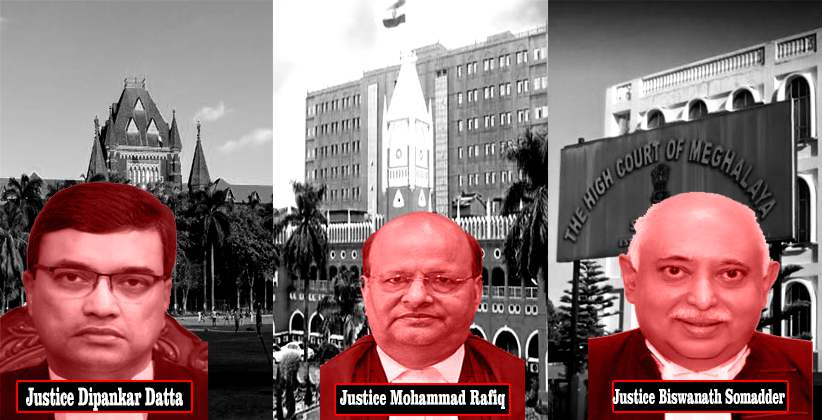
A Bench comprising Justices Aravind Kumar and Prasanna B. Varale delivered the judgment while disposing of an appeal filed by Indravadan N. Adhvaryu Pipala Fali Modhvada against the Laxminarayan Dev Trust.
The appellant was appointed as a permanent employee to the post of Accountant in the respondent Trust in 1977. After a period of twelve years, he was orally terminated on November 1, 1989. Repeated representations made by the appellant seeking reinstatement did not yield any result, and consequently, a complaint was filed before the Labour Conciliation Officer.
Thereafter, the respondent Trust forwarded a communication to the appellant on March 12, 1990, calling upon him to report to a transferred post at Vadtal or face termination proceedings. The reference was adjudicated, and by an award dated December 3, 2009, the reference was rejected. The Labour Court concluded that the respondent Trust, being a temple, was neither an organisation carrying on any manufacturing activity nor a profit-making institution and therefore did not fall within the definition of “industry” under Section 2(j) of the Industrial Disputes Act, 1947.
The Labour Court further held that the respondent Trust was a purely charity-based institution with no object of earning profit and, in other words, was not an industry. Aggrieved by this decision, the workman pursued his grievance before the High Court by filing a Special Civil Application, which was dismissed on July 27, 2010, affirming the findings of the Labour Court. The Division Bench, in an intra-court appeal, also upheld the order of the learned Single Judge and dismissed the appeal.
Senior Counsel for the appellant contended that the respondent Trust was an industry as defined under Section 2(j) of the Industrial Disputes Act, as it carried on a systematic activity organised through cooperation between employer and employee for the production or distribution of goods and services to satisfy human wants and wishes, thereby partaking the character of an industry. He placed strong reliance on Bangalore Water Supply & Sewerage Board v. A. Rajappa & Ors., contending that the presence or absence of a profit motive was irrelevant.
The Court observed that although the argument of the learned Senior Counsel appeared attractive at first blush, it was not inclined to accept it, as the Labour Court had rightly held that the respondent Trust was a temple and, as such, did not fall within the four corners of the expression “industry.”
However, the Court noted that the oral termination of the appellant was effected without holding any inquiry and that the subsequent transfer to a far-off place was unwarranted. In view of these circumstances, the Court was of the considered opinion that the matter could be resolved by directing the respondent Trust to pay lump-sum compensation of ₹12,00,000, considering that the appellant had worked continuously, uninterruptedly, and without blemish for twelve years.
Without entering into the merits of the dispute, the Court disposed of the appeal by directing the respondent Trust to pay a sum of ₹12,00,000 in full and final settlement of all claims, inclusive of interest, within four weeks. Failing compliance, the amount would carry interest at the rate of 9% per annum. The Court further clarified that the amount would be recoverable by the appellant by filing an execution petition or an application under Section 33(C)(2) of the Industrial Disputes Act before the Labour Court.
Appearances:
For the Appellant:
Mr. Nachiketa Joshi, Senior Advocate; Dr. P. V. Saravanaraja, AOR; Mr. P. Veerappan, Advocate; Mr. Shaikh Farukpasha Bashumiya, Advocate, and others
For the Respondent:
Mr. Anil Kumar Mishra-I, AOR; Mr. Supantha Sinha, Advocate; Mr. Navneet Jha, Advocate; Mr. Rahul Singh, Advocate
Case Title:
Indravadan N. Adhvaryu Pipala Fali Modhvada v. Laxminarayan Dev Trust