Nagpur: The Bombay High Court, Nagpur Bench, has held two advocates, a father and son, guilty of criminal contempt for threatening a Judicial Magistrate in open court when he declined to cancel a non-bailable warrant in the absence of the accused. The court refused to accept their unconditional apology, observing that it was not tendered at their own initiative. It imposed a fine of Rs. 2,000 and costs of Rs. 50,000 on each, and referred the matter to the Disciplinary Committee of the Bar Council of Maharashtra and Goa.
A Division Bench of Justice Urmila Joshi Phalke and Justice Raj D. Wakode was hearing Criminal Contempt Petition Reference No. 1 of 2022, forwarded by the Civil Judge, Junior Division and Judicial Magistrate First Class, Arni, District Yavatmal. The reference named advocate Sagar Durgadas Rathod and his father Durgadas D. Rathod, who was then President of the Arni Taluka Court Bar Association. Judgment was reserved on 21.09.2026and pronounced on 05.10.2026. It was authored by Justice Phalke.
According to the reference, Regular Criminal Case No. 213/2019 was fixed on 26.11.2021for return of bailable warrants. The first accused had been served but stayed absent, so the Magistrate issued a non-bailable warrant. The first advocate then told the court that the accused was present but could not enter the courtroom, and sought cancellation of the warrant. When the accused was called, he was not there. The advocate then filed a pursis saying the matter had been settled out of court and insisted that the evidence of the informant be recorded. The Magistrate declined, as the matter was fixed for return of the warrants of other accused too.
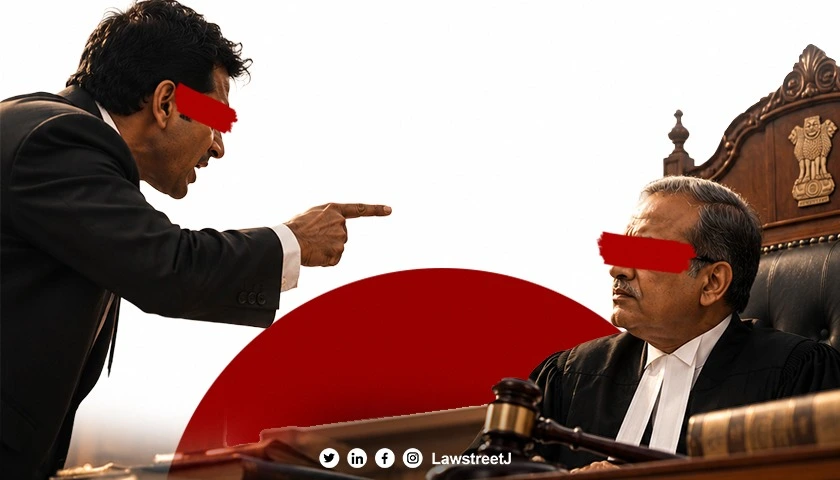
The reference alleges that the first advocate then began shouting in the courtroom. In Marathi, he allegedly said that the court wanted to trouble them, did not treat all cases alike and imposed higher penalties on their cases, that they would "see" the judge, complain against him and pass a Bar resolution to act against the court. His father then allegedly entered the courtroom while the Magistrate was dictating the order, and, pointing his fingers, said that if anything was recorded and action taken, they would not spare him and would produce evidence of corruption against him before the senior officers. A fellow advocate present tried to calm the first advocate, without success. The Magistrate recorded the gestures and statements in his order and issued show-cause notices.
The advocates did not reply for a long time, first saying they could not obtain copies of the orders, though the record section reported that no application for certified copies had been made. They filed replies by affidavit on 25.06.2024. They denied the allegations, saying the reference arose from misunderstanding and from rivals, and that the statements were made in the course of arguments and in representing the grievances of fellow members of the Bar. The father also tendered an unconditional apology. The High Court noted that they stayed away despite service of notice, so bailable warrants had to be issued against them on 25.09.2023, and appointed Mr. J.M. Gandhi as Amicus Curiae.
By orders of 12.02.2025 and 03.03.2025, the court recorded its prima facie satisfaction of contemptuous conduct, refused to accept the apology and called for explanation on a reference to the Bar Council. It framed charges, and the advocates then tendered affidavits of apology before the Magistrate on the oral instructions of the High Court. The Bench noted that the apology was therefore not tendered by the advocates of their own accord.
The advocates relied on Prashant Bhushan, In Re, 2021 (1) SCC 745, S.B. Patil v. Manubhai Hargovandas Patel (Criminal Reference No. 5/2024) and O.P. Sharma v. High Court of Punjab and Haryana, (2011) 6 SCC 86, arguing that the incident occurred in the heat of arguments and the apology should be accepted. The Amicus argued that an apology offered late is liable to be rejected and that the apology was prompted only by the court's direction.
The Bench held that the conduct was scandalous. It said that if they had a grievance against a judicial order, they could have challenged it, but threatening the Judge with action and proof of corruption was meant to pressurise and terrorise him from passing the order fearlessly. It observed that the respondents had not specifically denied the incident in their reply. Quoting O.P. Sharma and Chetak Construction, it reproduced the Supreme Court's remark that "no lawyer or litigant can be permitted to browbeat the court or malign the presiding officer with a view to get a favourable order."
The court added that threats, speaking to a judicial officer in a loud voice and preventing him from passing orders are serious acts, more so when done by an advocate who is an officer of the court. It held that obstruction in the judicial process by an advocate cannot be tolerated, and that threats of complaints and scandalous allegations demoralise a Judge in discharging his official duties. It also rejected the defence that Bar resolutions against the Magistrate led to the reference, as no material backed it.
On the apology, the court relied on T.N. Godavarman Thirumulpad v. Ashok Khot, (2006) 5 SCC 1, and Bal Kishan Giri v. State of U.P., noting that an apology must be offered at the earliest opportunity and in good grace, and that apology is not a weapon of defence to purge the guilty of their offence, but is meant to be evidence of real contriteness. It observed that the apology was not tendered when the show-cause notice was issued, nor when the High Court notice was served, but only after charges were framed on the court's oral direction. Recalling that a hollow apology is merely a "paper apology", the Bench declined to accept it.
On sentence, the Bench noted that Section 12 of the Contempt of Courts Act, 1971 allows simple imprisonment up to six months, a fine up to Rs. 2,000, or both, and that fine is the rule and imprisonment the exception. Considering that the respondents are practising lawyers and have tendered an apology, though not accepted, it held that a fine and a reference to the Bar Council would be adequate. It stressed that an advocate who has a serious complaint against a Judicial Officer has the right and duty to take it to the proper authorities, and should otherwise show respect to the court.
Accordingly, the court directed that the advocates pay a fine of Rs. 2,000 each within two weeks, and in addition costs of Rs. 50,000 each, to be deposited in the Public Welfare Account, and referred the proceedings to the Disciplinary Committee of the Bar Council of Maharashtra and Goa to initiate appropriate action. The reference was disposed of.
Appearances:
Amicus Curiae: Mr. J.M. Gandhi, Advocate (appointed).
For Respondent No. 1: Mr. Rahul Mirza, Advocate.
For Respondent No. 2: Mr. S.P. Bhandarkar, Advocate, with Mr. Atharva Khadse, Advocate.
Case Title: Sajiduzzaman Mhammad Hanif Shahid vs. Sagar Durgadas Rathod & Anr., Criminal Contempt Petition Reference No. 1 of 2022 [2026:BHC-NAG:13168-DB]



![Husband Can Also Claim Alimony/Maintenance From Wife: Bombay High Court Orders Woman To Pay Alimony To Ex-Husband [Read Order]](/secure/uploads/2022/04/lj_2823_Divorce.jpg)