


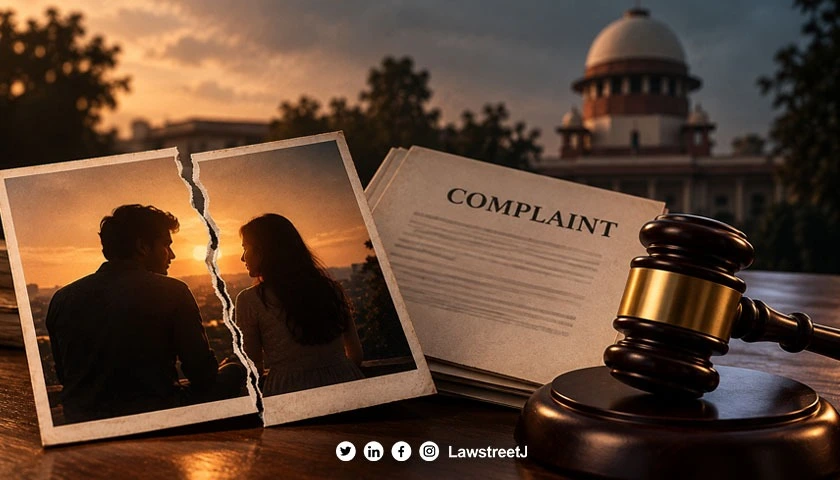
The Supreme Court’s recent ruling in Gunjan @ Girija Kumari v. State (NCT of Delhi) & Anr., 2026 INSC 468, has generated significant public criticism on the ground that it allegedly narrows the protections available under the Scheduled Castes and Scheduled Tribes (Prevention of Atrocities) Act, 1989.
Much of that criticism, however, proceeds on a misunderstanding of both the statutory text and the Court’s settled jurisprudence on the requirement that the alleged offence occur “in any place within public view.”
Within hours of the judgment becoming publicly available, sections of social media commentary characterised the ruling as a setback to Dalit rights and a dilution of the protective framework of the SC/ST Act. A close reading of the decision, however, shows that the Court neither introduced a new limitation into the law nor departed from established precedent; it merely applied statutory language that has remained part of the Act since its enactment.
A Bench comprising Justices Prashant Kumar Mishra and N. V. Anjaria set aside the charges after finding that the essential statutory ingredients of the offence were not made out. The facts were straightforward: the allegations of caste-based abuse related to an incident that allegedly occurred inside a private residential house, in the absence of any member of the public. The Court consequently quashed the charges under Sections 3(1)(r) and 3(1)(s) of the SC/ST Act, holding that the requirement that the alleged insult or intimidation must occur “in any place within public view” was not satisfied in the circumstances of the case.
The criticism that has followed proceeds on a single, factually incorrect premise: that the Court introduced a new restriction on the SC/ST Act by insisting that the offence must occur in a place “within public view.” It did no such thing because the words “in any place within public view” are not judicial invention.
They are the express language of Sections 3(1)(r) and 3(1)(s) as Parliament enacted them in 1989, and they have remained on the statute book, unaltered.
The Court did not invent a new limitation or dilute the statute through judicial interpretation. It merely applied the provision exactly as it was enacted. If there is dissatisfaction with the requirement that the alleged offence occur “within public view,” that dissatisfaction is ultimately with the legislative language chosen by Parliament, not with the Court for giving effect to it.
The provisions states:
3(1)(r) intentionally insults or intimidates with intent to humiliate a member of a Scheduled Caste or a Scheduled Tribe in any place within public view;
3(1)(s) abuses any member of a Scheduled Caste or a Scheduled Tribe by caste name in any place within public view;
Nor was this an area of legal uncertainty. The position has remained settled for nearly two decades. In Swaran Singh v. State, (2008) 8 SCC 435, the Supreme Court of India drew a clear distinction between a “public place” and a “place within public view.” The Court clarified that even a private location may fall within the statutory requirement if the incident is capable of being witnessed by members of the public, whereas an occurrence inside a building and beyond public observation would not satisfy the threshold contemplated under Sections 3(1)(r) and 3(1)(s) of the Scheduled Castes and Scheduled Tribes (Prevention of Atrocities) Act, 1989.
Further, in Hitesh Verma v. State of Uttarakhand, (2020) 10 SCC 710, the Court applied that principle to quash SC/ST Act charges where abuse was alleged to have occurred within the four walls of a house with no member of the public present. Additionally, in Karuppudayar v. State, 2025 INSC 132, the Court restated the rule in terms that left nothing open: the place must be one where members of the public can witness or hear the utterance; incidents within closed spaces, absent any public presence, do not qualify. The judgment under discussion applied this unbroken line of authority to the facts before it. There is nothing novel in the ruling, and there was nothing novel to find.
The facts, when examined against this legal framework, left the Court with little room for any other conclusion. The place of occurrence recorded in both the FIR and the chargesheet was the residential address admittedly a private house. Neither document contained any averment that the incident occurred in a place exposed to public gaze. The two witnesses, both friends of the complainant did not, in their recorded statements, establish that they had witnessed the specific incident of abuse on the relevant date.
As the Court noted, general allegations of a pattern of conduct spread over a year do not substitute for specific pleading of the statutory ingredient on the occasion forming the subject matter of the charge. A residential house, without anything more to bring it within public observation, is not “a place within public view.” The charges were accordingly quashed not because the conduct alleged was unobjectionable, but because the statutory ingredients of this particular provision were not made out from the record.
The “public view” condition is specific to Sections 3(1)(r) and 3(1)(s), which target the social dimension of caste-based humiliation. This reflects a legislative choice: the particular evil those sub-sections address is not merely insult, but the stripping of dignity before an audience. That legislative architecture is coherent, even if one might argue it should be broadened.
Some of the criticism has also come from political quarters, with the Communist Party of India issuing a statement condemning the judgment on the ground that caste discrimination frequently occurs in private spaces and that a crime does not cease to be a crime merely because it occurred away from public gaze. At the level of political observation, there is nothing objectionable in that sentiment. Caste oppression does indeed operate in private spaces, and the law’s ability to reach those spaces is a legitimate concern. Critics of the ruling have argued that caste discrimination frequently occurs in private spaces however, the judgment focuses narrowly on the statutory ingredients presently contained in sections 3(1)(r) and 3(1)(s).
The SC/ST Act is a specific statute with carefully defined ingredients, and courts generally refrain from rewriting its language to expand its reach beyond what Parliament chose to enact. That is not judicial timidity, but the rule of law functioning within its proper constitutional limits.
There is also a deeper point that the social media discourse consistently misses. The “public view” requirement is not a loophole shielding perpetrators; it is a structural feature of provisions addressing a particular form of atrocity namely, public humiliation. Sections 3(1)(r) and 3(1)(s) target not merely caste-based insult, but the added injury caused when dignity is stripped in the presence of others. The requirement therefore reflects a conscious legislative distinction, not a judicially created barrier.
The argument that courts should read the provision broadly to cover private conduct is, in effect, an argument that courts should legislate. Therefore, the textual fidelity is not a technicality that disadvantages the marginalised; it is the constraint that prevents the law from becoming whatever the powerful of any given moment wish it to be.
If the “public view” requirement in Sections 3(1)(r) and 3(1)(s) is considered inadequate and there is a perfectly respectable argument the remedy lies with Parliament. That is a debate worth having, but it is a debate to be had with legislators, not misdirected at a bench that has nothing but applied the statute to the facts.
Therefore, the Supreme Court in the present case has neither diluted the protections of the SC/ST Act nor introduced any new limitation into the law; it has merely applied the statute as enacted by Parliament and interpreted through a long and settled line of precedent extending nearly two decades. The controversy surrounding the ruling ultimately says less about the judgment itself than about the growing tendency to react to judicial decisions without close engagement with the statutory text, precedent, or evidentiary record. Hence, outrage, however strong it may be, when detached from legal foundation, risks obscuring rather than advancing the very cause it seeks to defend.




Shashi Bhushan May 18, 2026
Well said.
Tushar Azad May 18, 2026
So refreshing to read a piece which is not telecasting the public outrage, but actually diving deep inside what the law actually says. The statute may be up for debate, therefore the legislators are to be questioned. The court has merely highlighted the current legal stand. Thanks for reporting!!
Aniket May 18, 2026
Fantastic work Saket
May 18, 2026
One of the best and most sensible reads on the implementation of the SC/ST Act. It clears many common myths and misunderstandings that are often spread on social media without proper knowledge of the law or the ground reality. The online buzz around the Act is usually very ill-informed, which is why balanced and well-researched discussions like this are so important.
Mayank May 17, 2026
Very well written article. Got to know several new aspects of this draconian law.