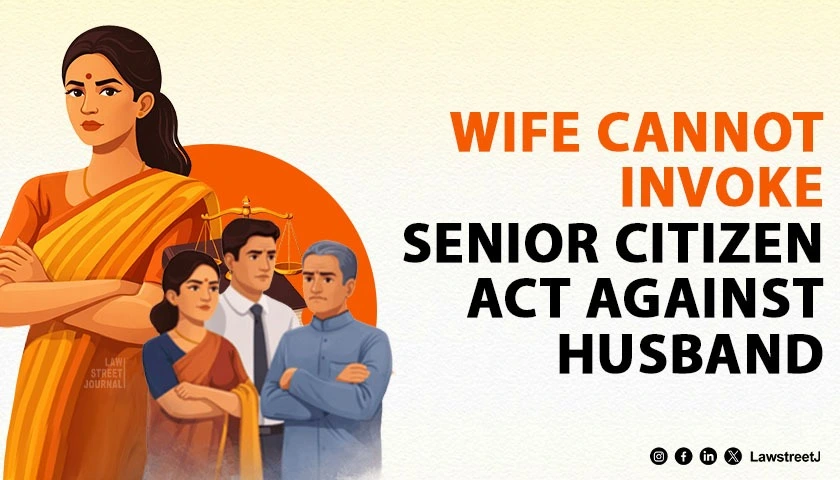
Karnataka: The Karnataka High Court has held that a wife cannot invoke the Maintenance and Welfare of Parents and Senior Citizens Act, 2007 against her husband.
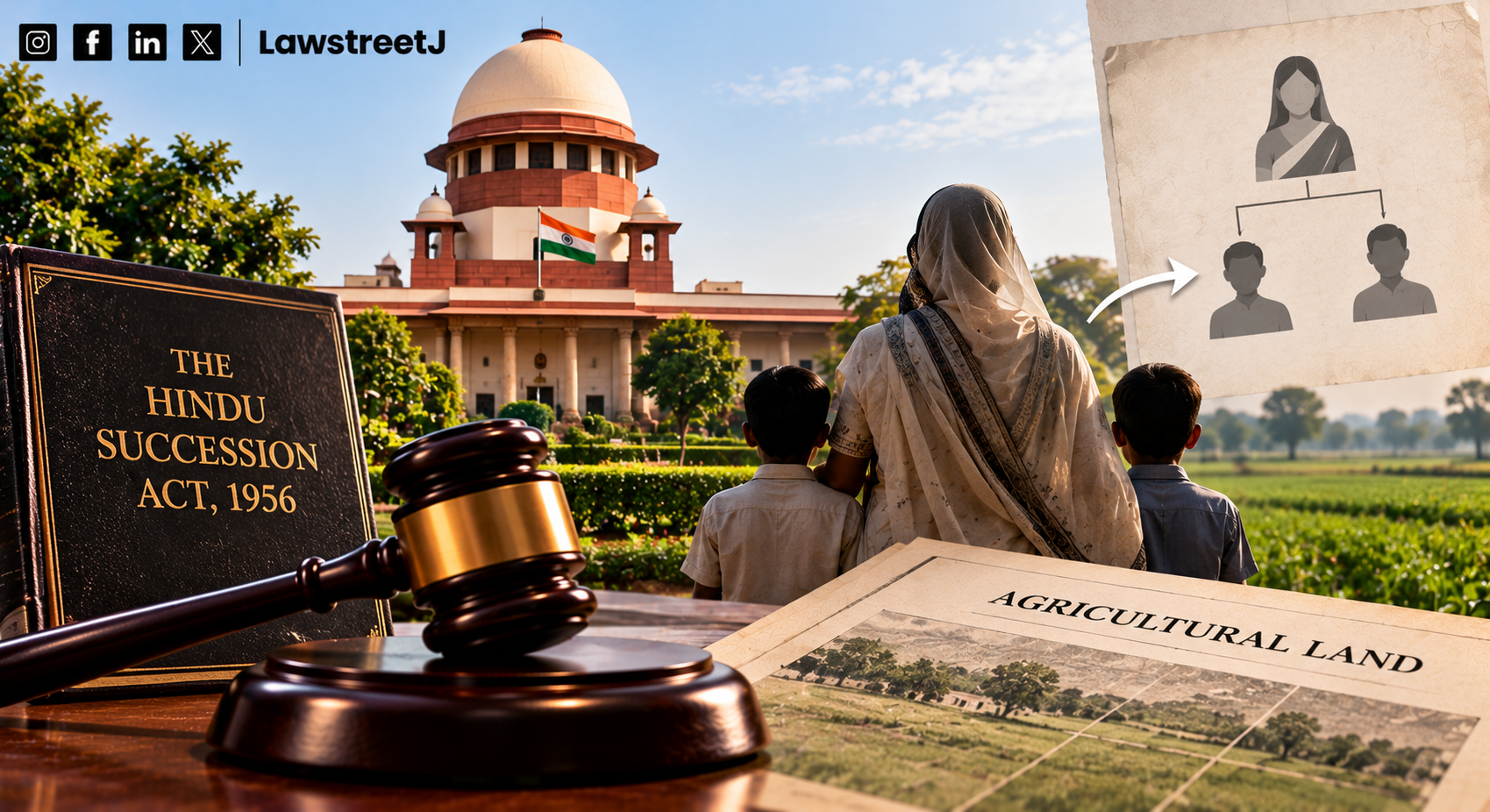
Justice Lalitha Kanneganti, presiding over the matter, held that the District and Sub-Divisional authorities had acted entirely without jurisdiction in ordering a joint khata entry in respect of an ancestral agricultural property following a complaint filed by the petitioner’s wife.
The petitioner had challenged orders passed by the Deputy Commissioner and the Assistant Commissioner, Hassan, directing that a joint khata be entered in the names of both husband and wife over a land measuring 2 acres 39 guntas in Survey No. 30/3 of Hirebelaguli Village, Holenarsipura Taluk. The wife, Nagarathnamma, is the third respondent in the proceedings.
The backdrop to the dispute spans over a decade of civil litigation. After their three children got married and moved away, Lingappa alleged that his son instigated his wife to quarrel with him, leading to him being driven out of his own home. He claimed that his retirement benefits of Rs. 12,00,000 received from KSRTC were taken away by his son and wife, leaving him penniless.
In earlier civil proceedings, a suit filed by Lingappa before the Additional Civil Judge, Holenarsipura (OS No. 350/2013) resulted in an ex parte decree initially granting a one-fifth share each to all five family members. On appeal (R.A. No. 09/2016), the appellate court modified the decree and specifically held that the wife was not entitled to any share in the properties during the lifetime of the husband. Final decree proceedings were also concluded and partition was effected accordingly.
Nagarathnamma subsequently filed a fresh civil suit (OS No. 304/2018) seeking a declaration of joint ownership over several properties, but this too was rejected at the threshold under Order VII Rule 11(d) of the Code of Civil Procedure as not maintainable. Her appeal (R.A. No. 23/2022) was dismissed with costs of Rs. 5,000. Despite these conclusive civil court findings, the wife approached the revenue authorities under the Senior Citizens Act seeking khata mutation in her name, which the authorities allowed.
The Court framed the question as to whether a complaint filed by a wife against her husband, who is a senior citizen, is maintainable under the 2007 Act. Examining Sections 2(g) and 4 of the Act, the Court found the answer unambiguous.
The Court noted that the Act was enacted to protect elderly persons from neglect and abuse by their children and relatives, and that the obligation under Section 4 runs from children or relatives towards senior citizens, and not between spouses inter se. The wife, the Court held, does not fall within the class of persons entitled to initiate proceedings against her husband under this legislation.
On the jurisdictional excess committed by the revenue authorities, the Court was unsparing:
“The jurisdiction conferred on the respondents Nos. 1 and 2 under the Act is summary in nature, confined to maintenance, protection and eviction in certain circumstances. The Act is not intended to decide complex civil or matrimonial disputes. An authority exercising powers under a particular statute must act within the four corners of the statute and cannot assume jurisdiction which is not vested in it.”
The Court further observed that the revenue officers had not only exceeded their jurisdiction but had also ignored the binding findings of competent civil courts, which had attained finality. On the misuse of welfare legislation, the Court remarked that while the Act is protection-focused, it is sometimes exploited strategically in family disputes involving property and financial conflicts, and directed authorities to remain vigilant against abuse of process.
The writ petition was accordingly allowed, and the impugned orders of the Deputy Commissioner (dated 17.10.2023) and the Assistant Commissioner (dated 28.07.2022) were set aside in their entirety.
Sri S.V. Prakash appeared for the petitioner. Sri Mahantesh Shettar, AGA, appeared for the State respondents.
Case: H.V. Lingappa v. Deputy Commissioner, Hassan District & Others (WP No. 28171 of 2023)


![Karnataka High Court: Cabinet Rank Status Not Equivalent to Ministerial Position [Read Order]](/secure/uploads/2023/09/lj_2318_fc1b99b7-aeed-472b-836e-33750bedb394.jpg)


![Woman living in adultery cannot claim maintenance: Karnataka High Court [Read Order]](/secure/uploads/2023/10/lj_3083_Women_living.jpg)