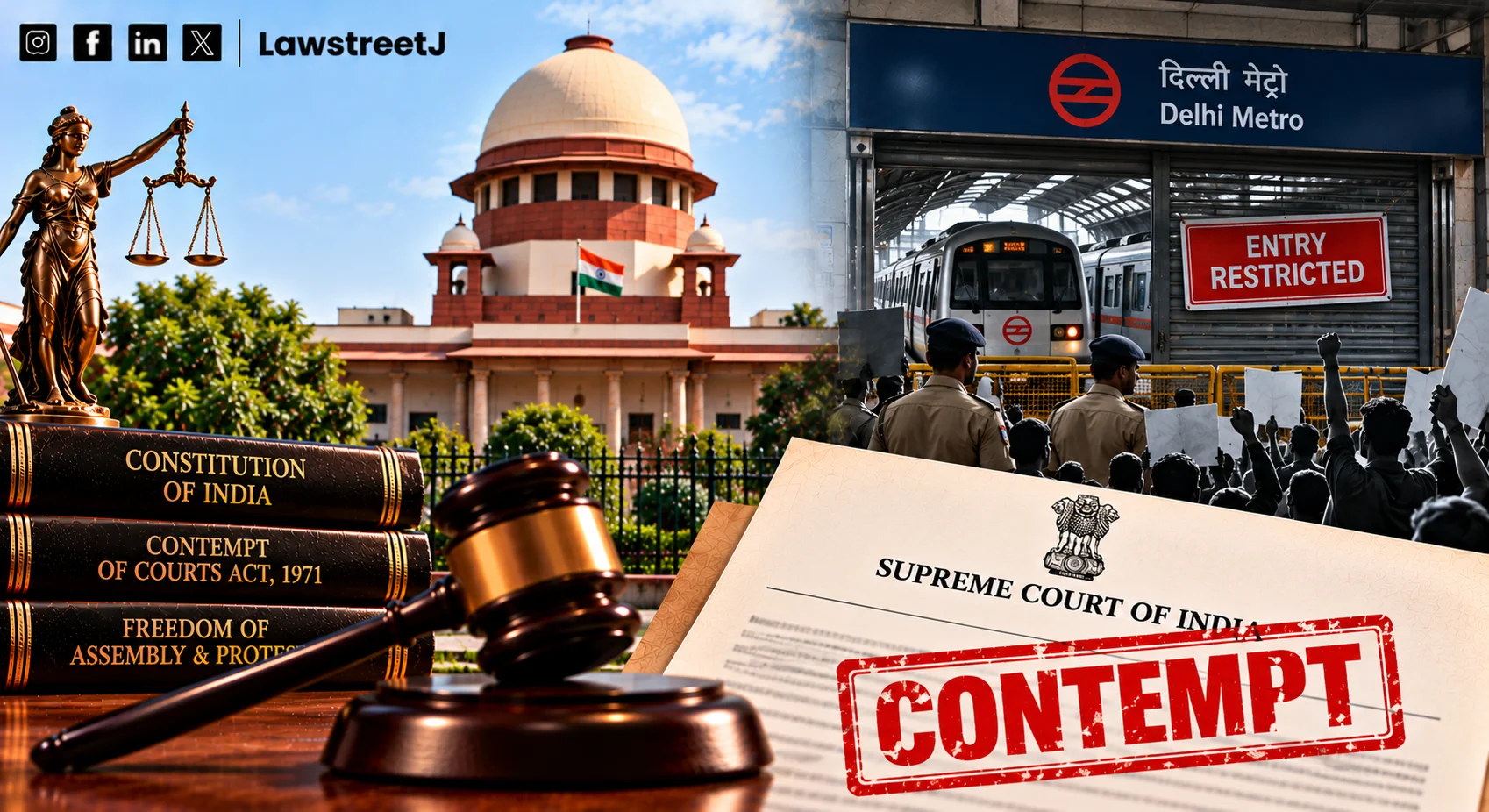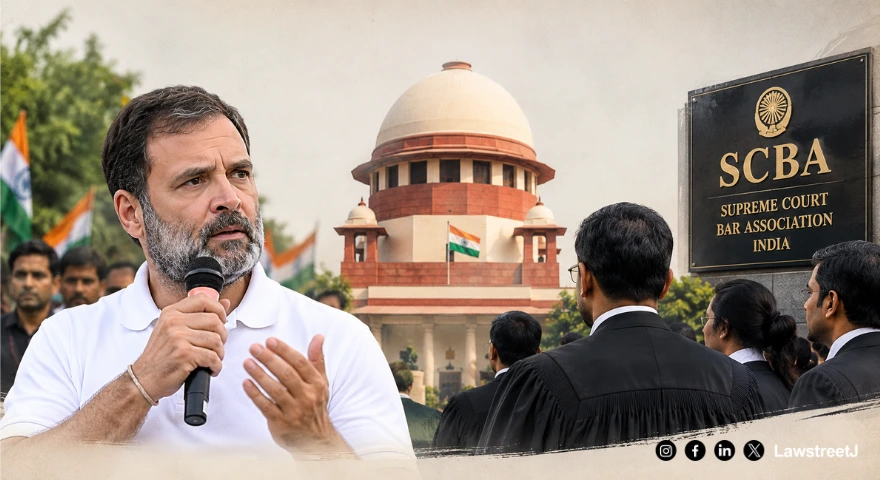
New Delhi: A group of members of the Supreme Court Bar Association (SCBA) has submitted a representation to the Association's Honorary Secretary and Executive Committee members, requesting it to adopt a resolution expressing concern and disapproval over what the signatories describe as a display of political and numerical strength outside the Supreme Court on 12.10.2026, when Mr. Rahul Gandhi, according to the representation, arrived with thousands of party workers and supporters to file Petition Diary No. 64196 of 2026, titled "Rahul Gandhi versus Election Commission of India".
The representation, dated 13.10.2026 and bearing the SCBA's received stamp of the same date, is signed by nearly 200 SCBA members, who list their membership numbers. It is titled as a representation for adoption of a resolution condemning the march and the "display of political and numerical strength/mob of thousands of supporters to pressurize the judicial process". The signatories state that every citizen has the constitutional right to approach the Supreme Court to enforce legal rights, but that the exercise of this right must be accompanied by due regard for the dignity, independence and institutional sanctity of the judiciary. According to them, the mobilisation of thousands of political supporters and a rally and street march towards the Court creates indirect pressure on Judges and is against the rule of law.
The signatories contend that the Hon'ble Supreme Court is a constitutional court and a forum for the administration of justice, not a platform for demonstrating political influence, financial power or numerical strength, and that the filing of a petition must remain a legal process governed by constitutional principles, established procedures and the merits of the case. Invoking Article 14 and the independence of the judiciary as a basic feature of the Constitution, they submit that every litigant, irrespective of political position, public stature, financial resources or the number of supporters at their command, must be treated equally before the law.
The representation warns that if such practices are allowed, influential litigants may in future arrive at court premises with convoys of vehicles and hundreds or thousands of supporters to display strength and exert indirect pressure on the judiciary, and that the filing of a petition before the highest constitutional court must never resemble the filing of an election nomination accompanied by a political procession. It adds that such practices, if not condemned at the outset, may spread to High Courts and District Courts, where rallies and mass mobilisations could be used to intimidate the judiciary and influence proceedings, and that access to justice must rest on the rule of law and constitutional principles, not on political power, public spectacle or numerical superiority.
The members request the SCBA, as a representative body of the legal fraternity practising before the Supreme Court, to adopt a suitable resolution expressing concern and unequivocal disapproval of any display of political, financial or numerical strength that may undermine, or create an appearance of undermining, the dignity, independence and impartiality of the judiciary. They state that the resolution should be framed as a matter of institutional principle and apply equally to all individuals, political parties and organisations, without discrimination or exception, and that any conduct risking an impression of pressure or undue influence over the judiciary deserves to be discouraged irrespective of the party, individual or organisation concerned.
The signatories conclude that a timely and principled stand would reinforce public confidence in the judiciary and reaffirm that no individual is above the law, no political formation is greater than the Constitution, and no display of mob or financial strength can stand above the majesty of justice.


!['Malicious, motivated and dubious attempts,' SCBA chief on letter alleging shifting of cases in SC [Read Letter]](/secure/uploads/2023/12/lj_1152_Ex_SCBA_chief_VS__SCBA_chief_.jpg)
!['Manhandled by SC lawyers', Officer of SCBA's Coop Housing Society tells Delhi HC [Read Judgment]](/secure/uploads/2024/01/lj_5753_WhatsApp_Image_2024-01-17_at_7.09.02_PM.jpeg)