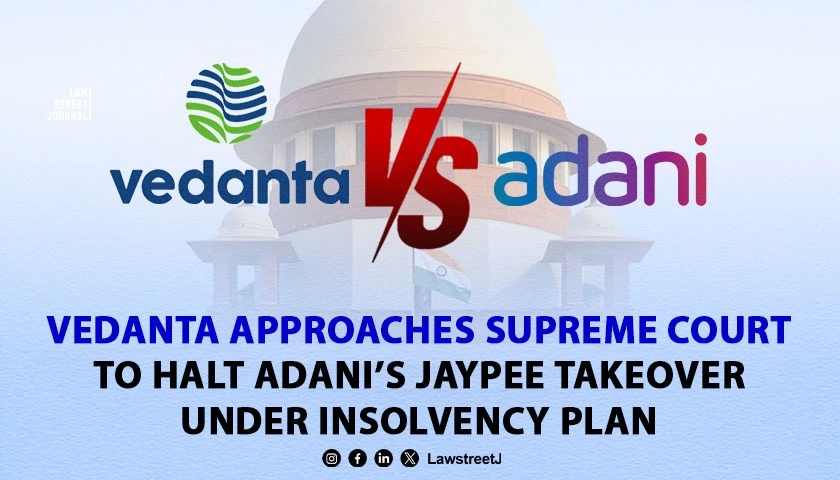
New Delhi: Mining major Vedanta Limited has approached the Supreme Court of India seeking an immediate stay on the implementation of the Adani Group’s resolution plan for the insolvent Jaiprakash Associates Limited. This move escalates one of the most high-profile corporate insolvency disputes in recent years to the country’s highest judicial forum.
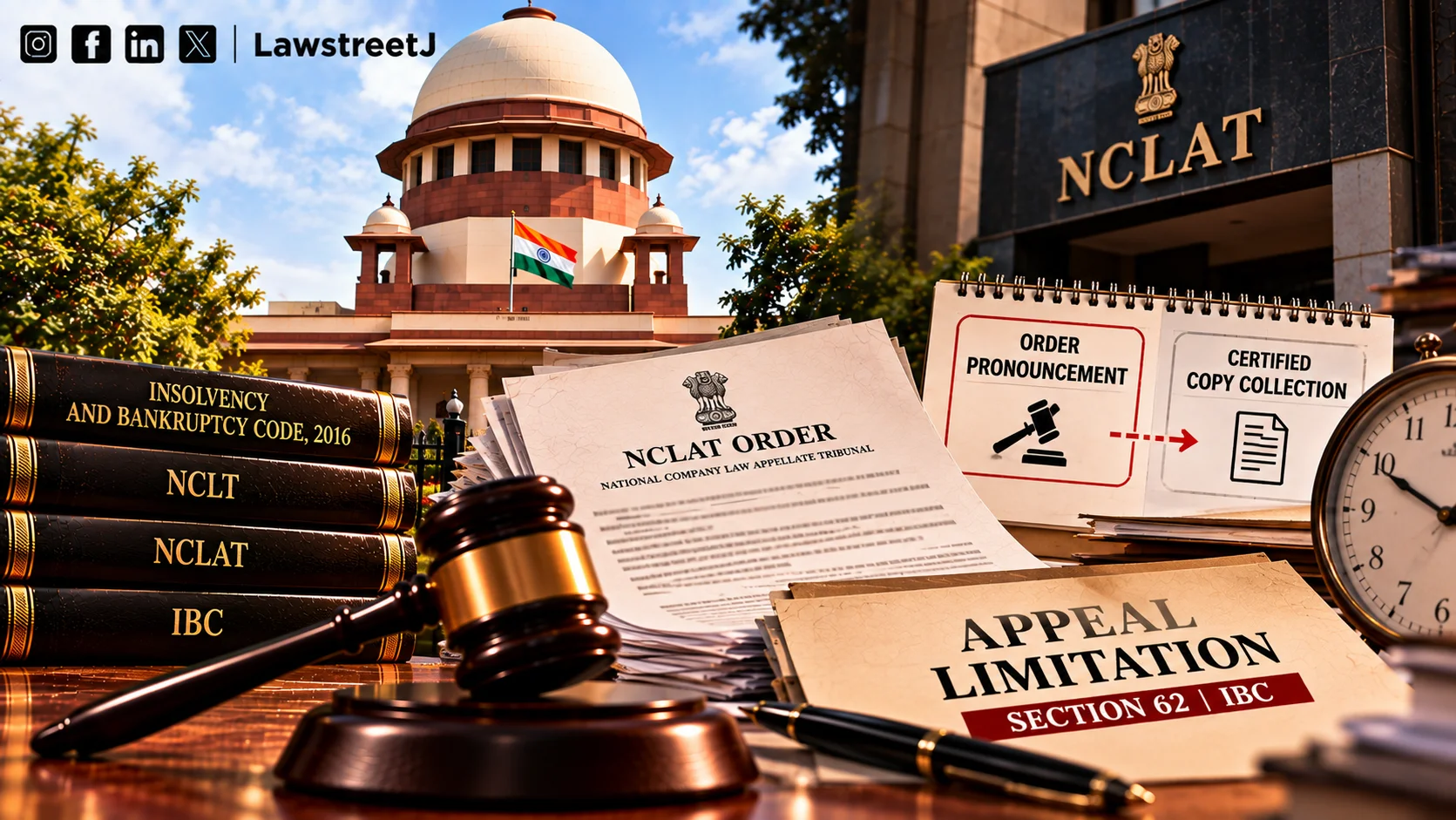
The petition challenges a March 24, 2026 order issued by the National Company Law Appellate Tribunal, which declined to grant an interim stay on the resolution plan despite admitting Vedanta’s appeal for detailed hearing.
Vedanta’s primary contention is that the current resolution plan fails to fulfill the core objective of the Insolvency and Bankruptcy Code—maximization of the value of the corporate debtor’s assets. The company argues that allowing the Adani Group to proceed with the takeover would render its legal challenge infructuous and potentially cause irreparable loss to creditors owed significant sums.
Jaiprakash Associates Limited was admitted into the corporate insolvency resolution process in June 2024 after it defaulted on loans exceeding ₹57,000 crore.
The legal battle stems from a competitive bidding process in which the Adani Group and Vedanta emerged as the two primary contenders for JAL’s asset portfolio. On March 17, 2026, the Allahabad Bench of the National Company Law Tribunal approved Adani Enterprises Limited’s resolution plan, valued at approximately ₹14,535 crore to ₹15,000 crore. This followed a decisive vote by the Committee of Creditors, with nearly 89% to 93.81% of the voting share supporting the Adani proposal.
Vedanta has alleged that the selection process was flawed and lacked transparency. It highlighted that its revised bid of ₹16,726 crore was higher than Adani’s offer and claimed its Net Present Value stood at ₹12,505 crore—at least ₹1,000 crore more than that of the successful resolution applicant. According to Vedanta, selecting a lower-value bid amounts to a failure on the part of lenders to maximize recovery.
The Committee of Creditors, led by the National Asset Reconstruction Company Limited, has defended its commercial wisdom in selecting the Adani plan. Lenders argued that their decision was based on multiple factors beyond headline value, including certainty of payment, execution feasibility, and speed of recovery. Adani’s plan offered ₹6,000 crore upfront, with the remainder payable within two years, whereas Vedanta’s earlier proposals involved lower upfront payments and a longer repayment period.
The dispute is further complicated by Vedanta’s attempt to revise its offer at a later stage. In November 2025, it submitted an addendum increasing the upfront cash component, but the Committee of Creditors refused to consider the revision, citing rules that prohibit post-process changes once the bidding framework is closed. Creditors argued that allowing such modifications would undermine the integrity of the process.
Public attention intensified following remarks by Vedanta Group Chairman Anil Agarwal, who reflected on the issue through a philosophical lens inspired by the Bhagavad Gita. He stated that Jaiprakash Gaur, founder of the Jaypee Group, had expressed his wish that the assets be entrusted to Vedanta and had written letters conveying his trust. Agarwal further claimed that Vedanta had been declared the highest bidder through a transparent process and informed in writing, but that the decision was later changed.
He emphasized that the group has no attachment to the asset, stating that if it comes, it is by grace, and if it goes, it is by divine will. However, he stressed that commitments made in good faith should not be withdrawn, underscoring that principles of truth, fairness, and promise are paramount. Invoking the teachings of the Bhagavad Gita, he added that Vedanta would continue to pursue its duty with courage, without anger or attachment, and place the facts before the appropriate forum.
The assets at the center of the dispute are strategically significant. These include nearly 3,985 acres of land in Noida and Greater Noida, major real estate projects such as Jaypee Greens and Wishtown, cement plants with a combined capacity of 6.5 million tonnes, and a stake in Jaiprakash Power Ventures Ltd. The portfolio also includes the Jaypee International Sports City near the upcoming Jewar International Airport, along with a hospitality division spread across multiple cities.
For the Adani Group, the acquisition is a crucial step in expanding its cement business through Ambuja Cements, with a target of reaching 155 million tonnes per annum by FY28. Control over JAL’s cement units and limestone mines would significantly support this expansion strategy.
The case is expected to examine whether the commercial wisdom of creditors—traditionally treated as paramount—can be questioned when a competing bid appears to offer higher financial value. The ruling is likely to set an important precedent for future large-scale insolvency resolutions.
While the NCLAT has permitted the implementation of Adani’s plan to proceed, it clarified that all actions remain subject to the final outcome of the appeals. Vedanta’s plea seeks a complete halt to implementation until the legal issues surrounding the bidding process are resolved.
The final verdict will determine the ownership of valuable infrastructure and real estate assets and provide clarity on balancing procedural finality with value maximization under the IBC framework.