


New Delhi: The Supreme Court has set aside the disposal of a bail petition by the Karnataka High Court in a case involving alleged fraudulent input tax credit of over Rs. 43 crore, holding that the accused had abused the process of law by pursuing parallel remedies and suppressing material facts, while leaving him on interim bail until the High Court decides the petition afresh.
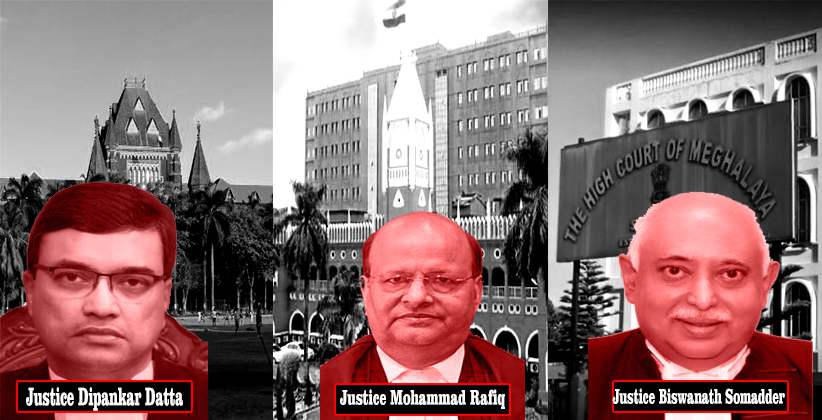
A Bench of Justice Dipankar Datta and Justice Sheel Nagu, in an order authored by Justice Datta, was hearing an appeal by the Senior Intelligence Officer, Directorate General of Service Tax Intelligence, against the High Court's order dated 26 December 2025 granting bail to Mohammed Kamran, proprietor of M/s MK Traders.
The appellant had filed a private complaint before the Special Court for Economic Offences, Bengaluru, alleging offences under Section 16(2)(b) read with Sections 132(1)(b), 132(1)(c) and 132(1)(f) of the Central Goods and Services Tax Act, 2017, punishable under Section 135. It was alleged that the respondent issued invoices without supply of goods, availed fraudulent input tax credit and falsified documents, causing a loss of Rs. 43,08,22,936. He was arrested on 16 September 2025, and successive bail applications before the trial court and the Sessions Court were rejected.
Besides challenging the grant of bail on merits, the appellant contended that it was denied a fair opportunity before the High Court. It argued that the Special Public Prosecutor was wrongly recorded as having appeared when he was not in the country, that an adjournment request was refused, and that the matter was decided hurriedly during the High Court's winter vacation. Additional Solicitor General N. Venkataraman also pointed out that the respondent never disclosed to the Single Judge that his prayer for interim release in a parallel writ petition had been refused on 22 December 2025.
Senior Advocate S. Nagamuthu, for the respondent, countered that the absence of arguing counsel was not raised before the Single Judge, that the appellant's counsel eventually argued on merits, and that the appellant failed to file its objections within the two weeks allowed. On merits, he cited the long incarceration, completed investigation, Magistrate-triable offences and a maximum punishment of five years.
After examining additional affidavits and a video recording of the 26 December 2025 hearing, the Court found merit in the respondent's submission that the appellant's counsel did advance submissions on merits. It also noted that the counsel had sought an adjournment because the Standing Counsel had been engaged, and that the appellant could not be represented by its Standing Counsel. It held that the appellant was not wholly unrepresented, but the respondent's conduct was the real concern.
The Court recorded that the respondent had sought bail before the High Court on 9 December 2025, filed a similar application before the Sessions Court the next day, and on 22 December 2025 filed a writ petition challenging his arrest and seeking quashing of the complaint, together with ad-interim release. After that prayer was refused, a memo was filed the same day seeking listing of the bail petition, which was then listed on 26 December 2025. The Court said the respondent "indulged in suppressio veri and suggestio falsi" before the High Court.
Calling the respondent's conduct "crafty and disingenuous", the Court held that there was a clear lack of uberrima fides, the foundation for invoking the equitable and discretionary jurisdiction for bail. It said pursuing parallel remedies while keeping judicial authorities in the dark must be severely deprecated, and that his forum shopping was evident. The Court also noted that the appellant had failed to place relevant material on record by not filing objections, though the time may have been too short.
On listing during vacation, the Court observed that the petition should ideally have been listed after the High Court reopened. Obtaining a listing without adequate notice to the appellant was, it held, "an attempt to steal a march by even misleading the Court." It added that it would have taken a very strict view had the arrest been for a heinous offence.
Even so, the Court said the bail need not be set aside at this stage. It set aside the part of the impugned order disposing of the criminal petition, reviving the petition before the same Single Judge, and directed that the respondent continue on interim bail on earlier terms and conditions. The appellant was granted liberty to file a counter affidavit within two weeks, peremptorily, and the respondent a week thereafter to file a rejoinder. The Single Judge was asked to decide the petition on its own merits, preferably by the end of this year. The appeal was disposed of accordingly.
The Bench also issued general observations on urgent listing during court vacations. Where a High Court directs listing "two weeks hence" and the day after that period falls within a vacation, the registry should ordinarily exclude the vacation period in computing the two weeks. If the petition is made returnable on a specific date during the vacation, or listing before the Vacation Bench is directed, it should be listed accordingly, subject to the relevant High Court rules. The Court said these observations were meant to ensure uniformity and that litigants are not prejudiced by an inadvertent act of the court.
Appearances:
For the Appellant: Mr. N. Venkataraman, Additional Solicitor General.
For the Respondent: Mr. S. Nagamuthu, Senior Advocate.
Case Title: Senior Intelligence Officer vs. Mohammed Kamran, Criminal Appeal arising out of SLP (Crl.) No. 7504 of 2026 (2026 INSC 1140)