New Delhi: The Supreme Court has set aside a Delhi High Court order that rejected a contractor’s money-recovery suit as time-barred, holding that a society’s balance sheet entries carried forward up to 2013 could amount to an acknowledgment of liability under Section 18 of the Limitation Act, 1963, and that the suit must be decided on evidence.
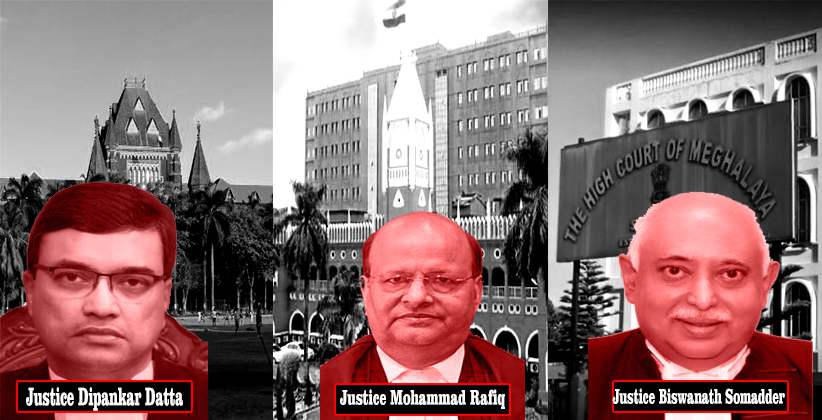
A Bench of Justice Vikram Nath, Justice Augustine George Masih and Justice Sandeep Mehta, in a judgment authored by Justice Nath, allowed the appeal of Yusuf, the legal heir of original plaintiff Wazir Hussain, against the High Court’s order of 04.11.2024 in C.R.P. No. 66 of 2020 (reported as 2026 INSC 1207).
Wazir Hussain filed a summary suit under Order XXXVII CPC in 2014 for Rs. 11,16,000 with interest of Rs. 11,04,840 at 9% per annum, based on running bills of 2000 to 2003 under a civil works contract dated 10.02.2000 for a building in Mayur Vihar, Delhi. The defendant society sought rejection of the plaint under Order VII Rule 11 CPC as barred by limitation, disclosing no cause of action and affected by alleged embezzlement.
The Trial Court refused on 06.01.2020, noting that the dues appeared in the society’s balance sheets from 2004-05 to 2013, which amounted to acknowledgment giving a fresh limitation period. The High Court reversed this, holding that the bank statements showed no acknowledgment beyond 2005, that the 31.03.2013 balance sheet showed an amount of about Rs. 21.79 lakh under sundry creditors without stating it was payable to the plaintiff, and that no other document showed acknowledgment.
The Supreme Court identified the limited question as whether, given the balance sheet entries up to 2013, the suit could be rejected at the threshold. It explained that “a written acknowledgment of a subsisting liability gives rise to a fresh period of limitation,” running from the date of acknowledgment. Relying on Asset Reconstruction Company (India) Ltd. v. Bishal Jaiswal and Axis Bank Ltd. v. Naren Sheth, it said balance sheet entries may amount to acknowledgment, but must be read as a whole, including notes and the auditor’s report.
The court noted that the 2004-05 bank reconciliation statement recorded three cheques issued to “Wazir Hussain Contractor”, and that a sum of Rs. 21,79,134 was carried forward in later balance sheets as balances pertaining to 2004-05. It held that Section 18 does not require the creditor to be named or a fixed format, so long as a subsisting liability is indicated, and that the circumstances supported a liability reflected in the society’s own accounts and carried forward to 2013, renewing limitation.
The court cautioned that this did not conclusively establish that the whole claimed amount was owed, since the link between the cheques, carried-forward sums and the claim requires evidence at trial. At the Order VII Rule 11 stage, a court need only see whether the plaint discloses a prima facie case. It also rejected the argument that a time-barred debt cannot be revived without an application for condonation of delay, saying none is needed where an acknowledgment gives a fresh period.
The High Court’s order was set aside, the suit was revived on the file of the Trial Court, and all questions on the merits remain open. The appeal was allowed and pending applications disposed of.
Case Title: Yusuf vs. Vigyapan Loke Delhi Advertising CGHS Ltd., Civil Appeal arising out of SLP(C) No. 30778 of 2024 (2026 INSC 1207)