New Delhi: The Supreme Court's Nine-Judge Bench has answered a long-standing reference concerning the meaning of “industry” under the Industrial Disputes Act, 1947, holding that the Bangalore Water Supply Triple Test continues to govern disputes pending under the repealed legislation. At the same time, the Bench has clarified that the definition of “industry” under the Industrial Relations Code, 2020 must be interpreted independently, without being controlled by the earlier jurisprudence.
Background:
A Nine-Judge Bench of the Supreme Court has held that the Triple Test for what constitutes an ‘industry’ under Section 2(j) of the Industrial Disputes Act, 1947, laid down nearly half a century ago in Bangalore Water Supply & Sewerage Board v. A. Rajappa, survives largely intact even as the nine judges wrote five separate opinions revealing deep disagreement over whether the test needed revisiting at all.
The reference arose out of appeals filed by the State of Uttar Pradesh, questioning whether its Social Forestry Department created as a welfare-oriented initiative for environmental amelioration could be treated as an ‘industry’ so as to attract the protections of the ID Act. The question triggered years of judicial back-and-forth: a Five-Judge Bench in State of U.P. v. Jai Bir Singh, (2005) 5 SCC 1, doubted the correctness of the Bangalore Water Supply Triple Test and referred the matter for reconsideration by a larger Bench; that reference eventually reached a Bench of Nine Judges, with more than three dozen connected appeals and special leave petitions, spanning two decades, tagged along with it.
By the time the matter was finally heard, the underlying statute itself had changed. The Industrial Disputes Act, 1947, stood repealed with effect from 21 November 2025, replaced by the Industrial Relations Code, 2020, which carries its own, differently worded definition of ‘industry’ under Section 2(p).
A Three-Judge Bench, by order dated 16 February 2026, framed four questions for the Nine-Judge Bench to answer: whether the Bangalore Water Supply Triple Test is correct law; whether the 1982 Amendment Act and the new IR Code have any legal bearing on the interpretation of ‘industry’ under the old Act; whether government welfare schemes can be ‘industrial activities’; and what falls within the ‘sovereign functions’ exception.
The matter was heard over three days in March 2026 and reserved for judgment.
Arguments:
Appellants the State of Uttar Pradesh, the State of Haryana and other government employers argued that Bangalore Water Supply had gone beyond filling a legislative gap and amounted to judicial rewriting of Section 2(j); that ‘industry’ ought to require a genuinely commercial objective akin to trade or business, relying on Safdarjung Hospital; and that the sweeping Triple Test needed fresh reconsideration in light of India's changed economic landscape since the 1991 liberalisation reforms.
Respondent-workmen, resisted the reference itself, contending that the majority view in Bangalore Water Supply had held the field as a decision of seven judges for close to five decades and squarely attracted the doctrine of stare decisis; that the character of the activity, not the identity or motive of the employer, was the true test; and that narrowing the definition would strip large numbers of workmen of statutory protections that ordinary civil courts could not replicate.
For the Union of India, Attorney General Mr. R. Venkataramani and Additional Solicitor General Mr. K.M. Nataraj addressed the impact of the 1982 Amendment Act and the new IR Code on pending matters, while Senior Advocates Mr. Jamshed P. Cama and Mr. Parthasarathi Sengupta assisted the Court as amici curiae on the doctrinal history of the ‘industry’ definition and the sovereign-functions exception.
Analysis:
Although all nine judges concurred in the final operative order leaving pending Industrial Disputes Act matters to be governed by Bangalore Water Supply the reasoning that took them there fractured into five distinct opinions, each worth understanding on its own terms.
The Majority Chief Justice Surya Kant (for himself and Satish Chandra Sharma, Alok Aradhe and Vipul M. Pancholi, JJ.): Writing for four of the nine judges, the Chief Justice held that the reference was validly made and answerable on merits, describing the long-running controversy as “the albatross around the mariner’s neck” that the Court hoped finally to lift. The majority found that the “essential framework” of the Triple Test “has stood the test of time,” yet went on to articulate, in admittedly “hypothetical” terms, a reformulated four-limb version of the test retaining the core requirement of systematic activity, cooperation between employer and employee, and a discernible commercial character, while sharpening the treatment of profit motive, philanthropic objects, and the sovereign-functions exception. Crucially, the majority clarified that this reformulation will not disturb pending matters: all cases currently before courts, tribunals and labour authorities will continue to be decided on the original Bangalore Water Supply test, and closed matters remain untouched. The majority further held that Bangalore Water Supply will not serve as the “sheet anchor” for interpreting the new definition of ‘industry’ under the IR Code, which must be construed independently.
Justice B.V. Nagarathna - dissent on the need for reconsideration at all: Justice Nagarathna went further than any of her colleagues in questioning the entire exercise. In her view, the reference to a Nine-Judge Bench was never necessary in the first place, and she listed ten separate reasons, from the ID Act's repeal and the coming into force of the IR Code, to the near half-century during which Bangalore Water Supply has held the field, to the fact that the 1982 Amendment Act meant to overrule it was never even notified for why the reference need not be answered at this stage. Addressing the merits regardless, she held unequivocally that Bangalore Water Supply “does not call for reconsideration” and that its majority view remains “good law and therefore, binding.” She was also unusually direct in taking issue with a proposition of Justice Narasimha that the Bench's pronouncement should not “cast its shadow” on the interpretation of the new IR Code, observing pointedly that if that were truly the governing approach, then “the entire exercise of giving a new interpretation ... is wholly unnecessary and only academic in nature.”
Justice Pamidighantam Sri Narasimha - reconsideration rendered academic by the repeal: Justice Narasimha agreed that the reference had been validly made and could be answered on merits, but took the pragmatic position that any authoritative reconsideration, however compelling it might once have been, “has now become unnecessary” because the ID Act itself stands repealed. He cautioned against the Court fashioning a fresh, modified test solely to dispose of a shrinking pool of pending cases, warning that doing so would create an unwarranted “third category” of principles applicable to no one else, and that narrowing the definition could force long-pending industrial disputants to abandon years of litigation and start afresh in civil court. His answer, in effect, was to leave Bangalore Water Supply wholly undisturbed for pending matters and to insist that the Industrial Relations Code, 2020 “should be interpreted on its own text and in its context alone,” unburdened by the old jurisprudence.
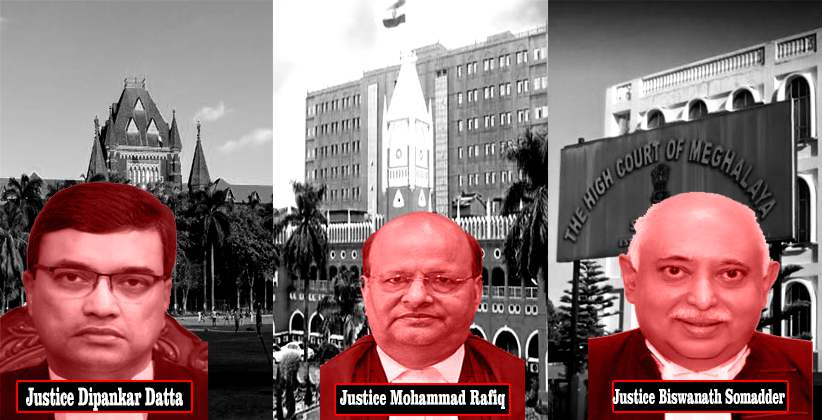
Justice Dipankar Datta (for himself and Ujjal Bhuyan, J.) - full endorsement on stare decisis grounds: Writing for two judges, Justice Datta mounted a comprehensive defence of Bangalore Water Supply, holding that Krishna Iyer, J.'s formulation “correctly interprets ‘industry’” and requires no reconsideration whatsoever. Tracing the doctrine's near half-century of application, the opinion held that what began as “an interim judicial formulation” had, through decades of legislative inertia, “acquired the character of settled law,” and that disturbing it now would serve no “practical, jurisprudential or doctrinal purpose.” In one of the opinion's more memorable formulations, the Bench observed that “institutional credibility lies in respecting finality, not in perpetuating doubt.” Justice Datta treated the fourth question, on the scope of the ‘sovereign functions’ exception as rendered redundant by this full concurrence with the original ruling.
Justice Joymalya Bagchi - agreeing with the outcome, but for reasons closer to the dissent: Justice Bagchi's opinion is perhaps the most interesting for readers trying to map where the Bench truly divided. He agreed with the Chief Justice and Justice Narasimha that the reference was validly made. But on substance, he sided with Justices Nagarathna and Datta in rejecting the majority's reformulated triple test, holding that Krishna Iyer, J.'s original formulation “exhibits a rare felicity in judicial interpretation” and that criticism accusing it of converting “every organised human endeavour into an industry” is “misplaced,” since the test already carves out exceptions for casual, non-systematic activities. He further held that the concept of State sovereignty has undergone a “jurisprudential contraction” in a constitutional democracy, so that welfare schemes are not automatically shielded merely because they serve a public or charitable purpose. Yet despite this alignment with the dissenting reasoning, Justice Bagchi ultimately joined the Chief Justice and the majority on the operative outcome that the Bangalore Water Supply ratio should be confined to disputes pending under the repealed ID Act, while the Industrial Relations Code, 2020 is interpreted independently and afresh.
Conclusion:
Stripped of its five-opinion architecture running to hundreds of pages, the practical takeaway for litigants is straightforward, even if the path to it was not: the Bangalore Water Supply Triple Test continues, in substance, to govern industrial disputes that arose and remain pending under the now-repealed Industrial Disputes Act, 1947.
No pending case is to be reopened in light of the majority's “hypothetical” reformulation, and no closed matter is disturbed. Equally, none of the five opinions permit the decades of ‘industry’ jurisprudence built around Section 2(j) to dictate how courts read the differently worded definition in Section 2(p) of the Industrial Relations Code, 2020 that exercise, all nine judges agree, must begin on a clean slate.
What divides the Bench is not the destination but the map: whether the exercise of reconsideration was necessary at all (Nagarathna and Datta, JJ. say no), whether it had become moot by the time it reached the Court (Narasimha, J.), whether the original test needed only cosmetic refinement (the majority), or whether it needed no refinement but should still yield the same practical result (Bagchi, J.).
The reference stands answered, with no order as to costs.
Case Title: State of Uttar Pradesh vs. Jai Bir Singh, Civil Appeal No. 897 of 2002 (with connected appeals)