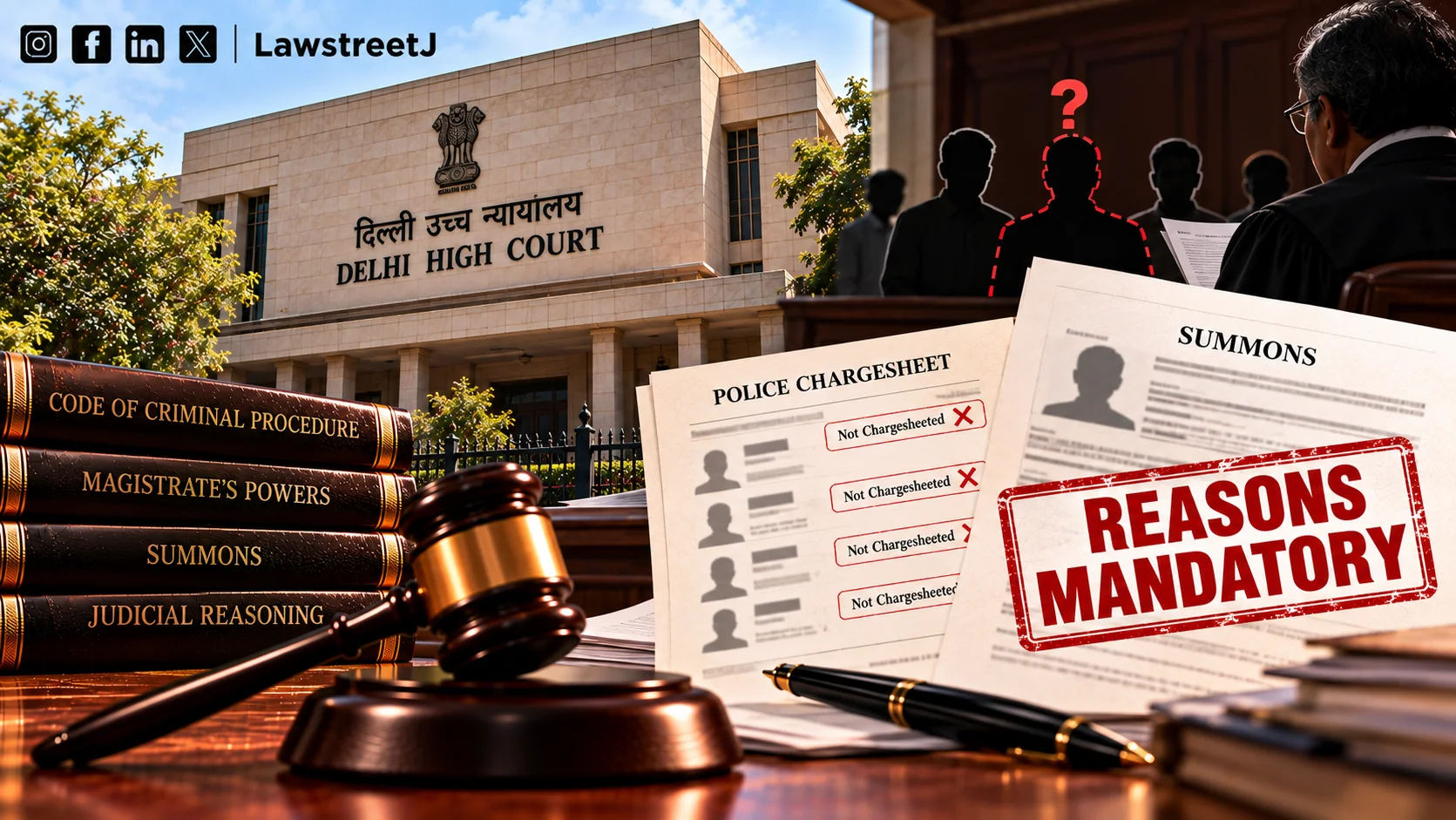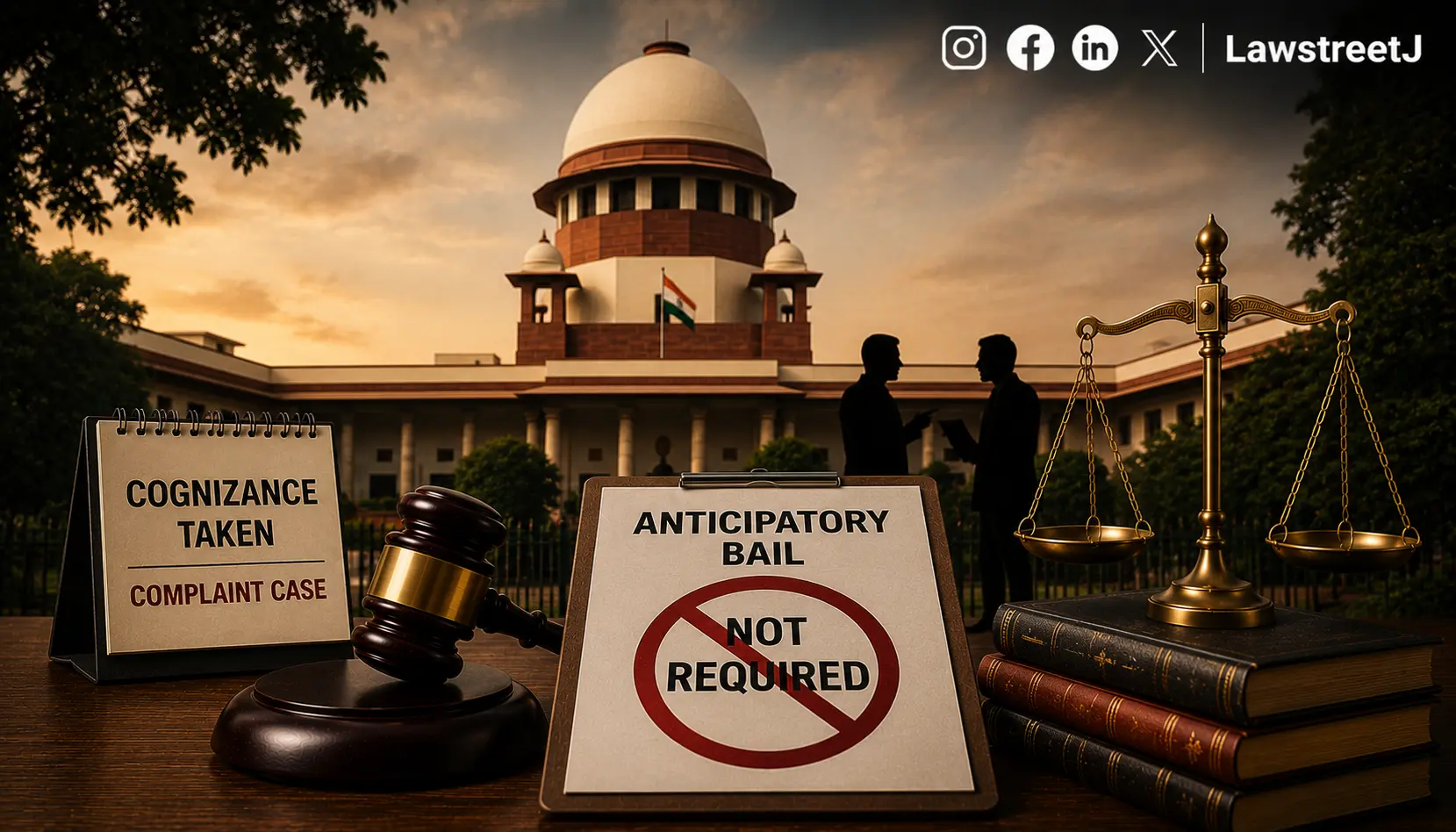
New Delhi: The Supreme Court has held that in a private complaint case filed before a judicial magistrate, an accused need not seek anticipatory bail once the magistrate takes cognizance of the complaint and issues summons, since the police have no power to arrest an accused in such proceedings unless a non-bailable warrant has been issued.
A bench of Justice Ujjal Bhuyan and Justice Arun Palli was hearing a special leave petition filed challenging an order of the High Court of Judicature at Patna, arising out of a private complaint, ending before the learned Chief Judicial Magistrate, Madhubani, Bihar.
Allowing the petition, the Court reiterated its earlier observations in SLP (Crl.) No. 16221/2015, where it had noted a recurring problem in the States of Bihar and Jharkhand of accused persons approaching courts for anticipatory bail in private complaint cases, without any basis for apprehending arrest by the police. The Court had explained that once a magistrate takes cognizance on a private complaint and issues process, all that is required of the accused is to appear and join the proceedings, and that the police have no role to play in such matters.
Referring to Section 87 of the Code of Criminal Procedure, 1973, the Court reiterated that a warrant can be issued in lieu of, or in addition to, a summons only where the accused has absconded or is likely not to obey the summons, or has failed to appear despite due service. Absent these contingencies, the Court held, there is no occasion for the police to arrest an accused in a complaint case. Illustrating the point further, the Court had earlier explained that even where a magistrate orders a police inquiry under Section 202 of the CrPC before issuing process, the police cannot arrest the accused during such inquiry. The answer is an emphatic "NO", the Court had observed, adding that police has no powers to arrest even during the course of the inquiry under Section 202 of the CrPC.
Applying this position to the facts at hand, the Court held that there was no question of the petitioners being taken into custody by the police in the complaint case pending against them. The impugned order of the High Court dated 05.05.2026 was accordingly set aside, and the special leave petition was allowed, with pending applications, if any, disposed of.
Appearances: Mr. Prabhat Ranjan Raj, AOR, appeared for the petitioners; Mr. Manish Kumar, AOR, with Mr. Ayush Tiwari and Mr. Divyansh Mishra, Advocates, appeared for the State.
Case Title: Ram Pukar Yadav & Anr. versus The State of Bihar & Anr., SLP (Crl.) No. 11260 of 2026