New Delhi: The Supreme Court has declared the Uttar Pradesh Qualifying Service for Pension and Validation Act, 2021 and the Uttar Pradesh Entitlement to Pension and Validation Act, 2025 ultra vires the Constitution, holding that the retrospective exclusion of work-charged, temporary, daily-wage and muster-roll service from qualifying service for pension, once an employee is regularised, cannot be sustained merely by a new statutory definition or by validating past denials of pension.
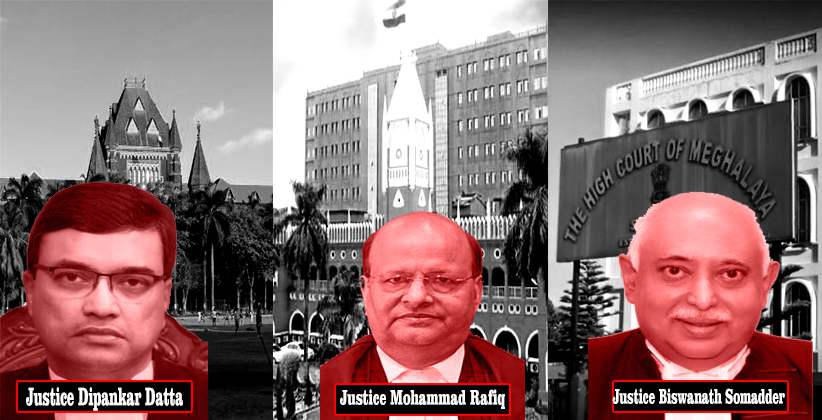
A Bench of Justice Dipankar Datta and Justice Satish Chandra Sharma, in a reportable judgment authored by Justice Datta, delivered the judgment on 18 November 2026 (2026 INSC 1252) in W.P.(C) No. 1458 of 2020 and a large batch of connected matters.
The batch comprises writ petitions and civil appeals by employees and retired employees of Uttar Pradesh departments, including the Public Works, Ground Water and Irrigation departments, who were engaged between the late 1970s and mid-1980s in work-charged establishments and later regularised, along with appeals by the State and contempt petitions. The question was whether service rendered before regularisation could be counted as qualifying service for pension, given Rule 3(8) of the Uttar Pradesh Retirement Benefits Rules, 1961 and Regulation 370 of the Civil Service Regulations.
The Court recalled that, in Prem Singh v. State of Uttar Pradesh (2019), it read down Rule 3(8) and held that service in a work-charged establishment is qualifying service for pension, restricting arrears to three years preceding the date of the petition. The State’s review was dismissed on 13.02.2020, and the State then promulgated an Ordinance in 2020 operating retrospectively from 1961, replaced by the Validation Act, 2021, and again, in 2025, by an Ordinance that became the Validation Act, 2025 (U.P. Act No. 5 of 2026), which introduced the expression “substantive appointee” and a validating provision notwithstanding any court judgment.
The Court grouped the petitions into three categories: the direct challenges to the Ordinance and the validating Acts (12 petitions), individual employees whose claims had been rejected by the High Court (5 petitions), and the State’s appeals against High Court judgments favouring employees (7 petitions). The employees argued that Prem Singh is a constitutional determination, not an indulgence to a group of litigants, and that the State cannot retrospectively erase service it had accepted and regularised. The State defended the legislation, and retired Public Works Department personnel were impleaded in the matter.
On the main questions, the judgment examined whether the validating Acts were a true validation or a “disguised perpetuation of the exclusion”, whether the mandamus in Prem Singh had attained finality between the parties, the independent test of challenge under Articles 14 and 21, and whether regularisation obliterates the “birthmark” of earlier service. It held that the legislative measures, enacted after the judgment crystallised the legal position, could not be used to undo the ratio of Prem Singh, which had not been validly dislodged.
Describing the controversy in its prologue, the Court said that novelty of form does not mean novelty of substance, and that “the bottle may have changed but the wine it holds remains vintage”, as the proceedings were a new form of an old, continuing grievance. It added that the dispute turned less on facts than on principles of constitutional importance, namely the limits of legislative power after a judgment of the Court has finally settled the law.
On relief, the Court directed that the claims of eligible work-charged employees be considered in the light of Prem Singh. Each retired employee may approach the competent authority with full particulars of service, and the authority must decide within six months of receipt, and extend the benefits where due. Pension is to be calculated with monetary benefits restricted to three years preceding the institution of the writ petition in Prem Singh, though this restriction will not apply to heirs of employees who retired and died before the decision in Prem Singh, who must produce unimpeachable proof of their claim.
The Court added that a claim that seems prima facie unacceptable must be rejected only after a hearing and by a reasoned order, that the authority must give the employee a chart of all payments made, and that the State is not saddled with interest in view of the law it enacted, but must pay simple interest at 9% per annum if payment is not made in time. It set aside the High Court judgments under challenge in the employees’ appeals, allowed the writ petitions and civil appeals in Groups I and II, and dismissed the State’s appeals in Group III. It also examined why the three-year limit should continue, and held that Prem Singh, a three-Judge Bench decision, binds it on this point, though a later Bench decision in Maya Banerjee v. Union of India declined to apply it in a widow’s family pension case.
On the contempt petitions arising from the alleged non-compliance with Prem Singh, the Court said that the office reports did not establish that the complete amount due had reached every petitioner, nor a basis for a uniform finding of wilful disobedience, and refrained from conclusive findings. It granted the State one further and final opportunity of six months to pay the amounts due, with interest at 9% in default, and disposed of all pending contempt petitions, without prejudice to consequences on further non-compliance, which it said would be viewed extremely seriously and might amount to aggravated contempt.
Case Title: Uttar Pradesh Ground Water Department Non Gazetted Employee Association (Regd.) and Another v. The Chief Secretary and Others, Writ Petition (Civil) No. 1458 of 2020