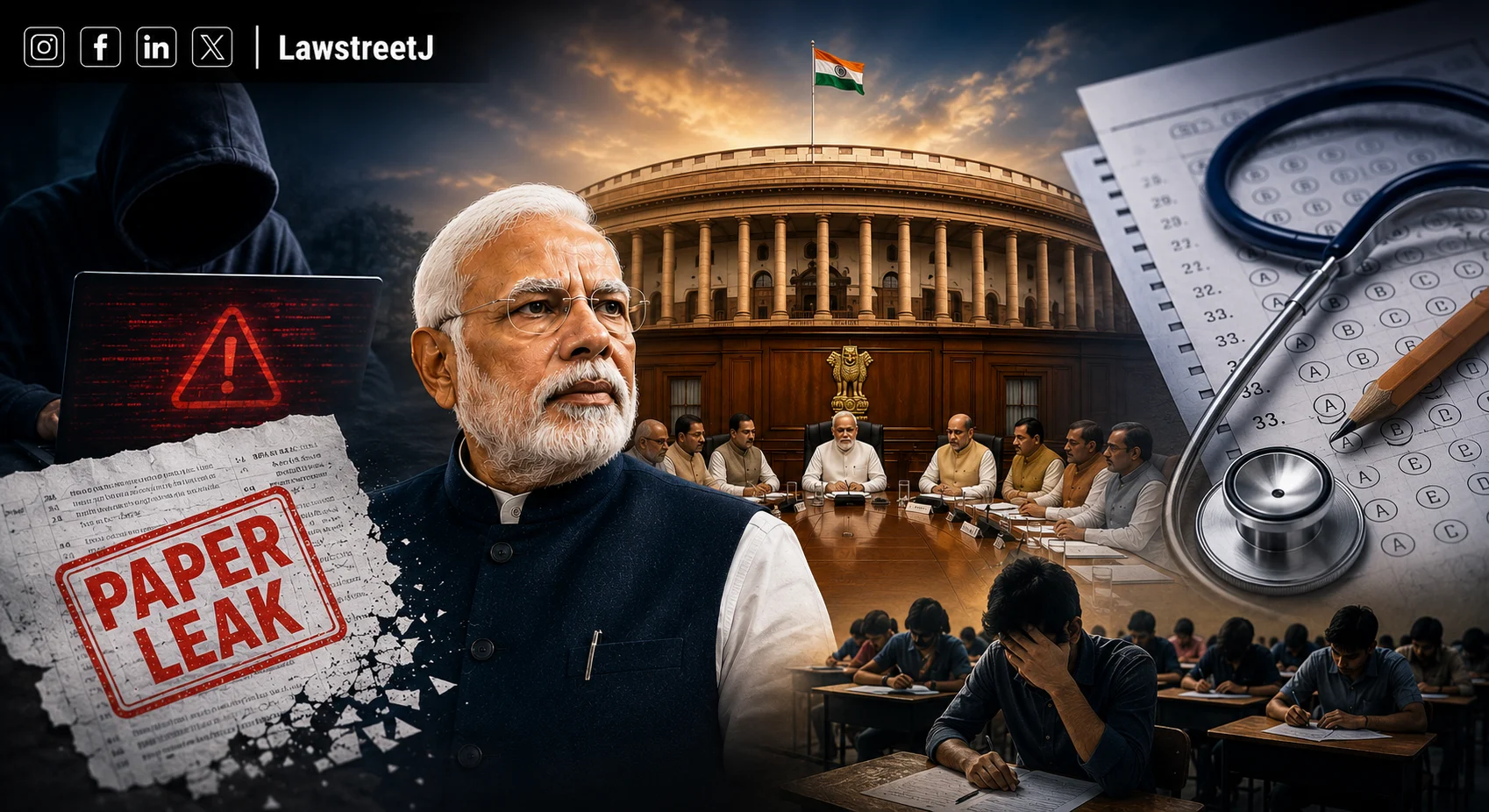
In a significant administrative move following widespread unrest over the conduct of competitive examinations, Prime Minister Narendra Modi on July 26, 2026, announced the formation of a multidisciplinary high-powered task force dedicated to examination reforms.

This decision comes in the immediate aftermath of the resignation of Union Education Minister Dharmendra Pradhan, who stepped down amid intensifying protests led by the Cockroach Janta Party (CJP) regarding the National Eligibility-cum-Entrance Test (NEET-UG) question paper leak. The Prime Minister stated that the task force is a critical step toward securing the future of students and establishing an examination framework that is "reliable, transparent," and fully leverages modern technology.
The government has appointed Nandan Nilekani, the co-founder of Infosys and former head of the Unique Identification Authority of India (UIDAI), to lead the six-member expert panel. Nilekani’s expertise in large-scale digital public infrastructure is expected to be central to creating an end-to-end encrypted platform for national examinations, potentially incorporating AI-based biometric verification to prevent impersonation. The committee’s mandate includes recommending structural, technological, and institutional changes to the National Testing Agency (NTA) to prevent malpractices such as paper leaks and digital interceptions.
The task force is comprised of experts from diverse critical domains, including security, space science, logistics, and academic administration. The members include former Indian Space Research Organisation (ISRO) chairman S. Somanath, former Intelligence Bureau (IB) director Tapan Deka, and IIT Madras director V. Kamakoti. Somanath is expected to contribute protocols modeled after space mission operations to ensure zero-defect standards, while Deka will guide the development of intelligence networks to track and pre-empt organised paper-leak criminal groups. V. Kamakoti will focus on the security of server infrastructure and computer-based testing (CBT) software.
Rounding out the panel are Anita Karwal, a former education secretary and ex-CBSE chairperson, and logistics expert Amrit Lal Meena. Karwal’s role involves refining academic policies, such as grace mark rules, and establishing standard operating procedures (SOPs) for test centres. Meena will focus on the physical chain of custody for examination materials, proposing GPS-tracked transportation and digital lock systems to secure materials in transit. The government intends for these multidisciplinary experts to address vulnerabilities at every stage of the examination lifecycle, from registration to result declaration.
Concurrent with the task force’s formation, the government has signaled a broader legal crackdown on examination fraud. In a video message addressed to the nation’s youth, Prime Minister Modi highlighted that those involved in tampering with students’ futures are already facing prosecution. He announced the establishment of fast-track courts to ensure speedy trials for those accused of examination malpractice. Furthermore, the government is moving to introduce new legislation in Parliament with stringent provisions aimed at dealing with irregularities and organised fraud in public examinations.
Also Read: Cabinet Approves Bill to Raise Paper Leak Fine to ₹10 Crore, Expand Anti-Cheating Law
The task force is expected to submit a comprehensive report outlining long-term roadmaps for reform. While a specific deadline for the report has not been made public, the Prime Minister has vowed that the recommendations will be implemented "at the earliest" to restore public confidence and ensure the credibility of upcoming national-level entrance examinations.


![Punjab & Haryana HC upholds disability pension rights, emphasises presumption of service related deterioration [Read Order]](/secure/uploads/2025/01/lj_5018_punjab_and_haryana.webp)

![Delhi HC Condemns “Shocking Victimisation” of Late IAS Officer, Directs Release of Retirement Dues [Read Judgment]](/secure/uploads/2025/06/lj_8928_Delhi_HC_Condemns.webp)