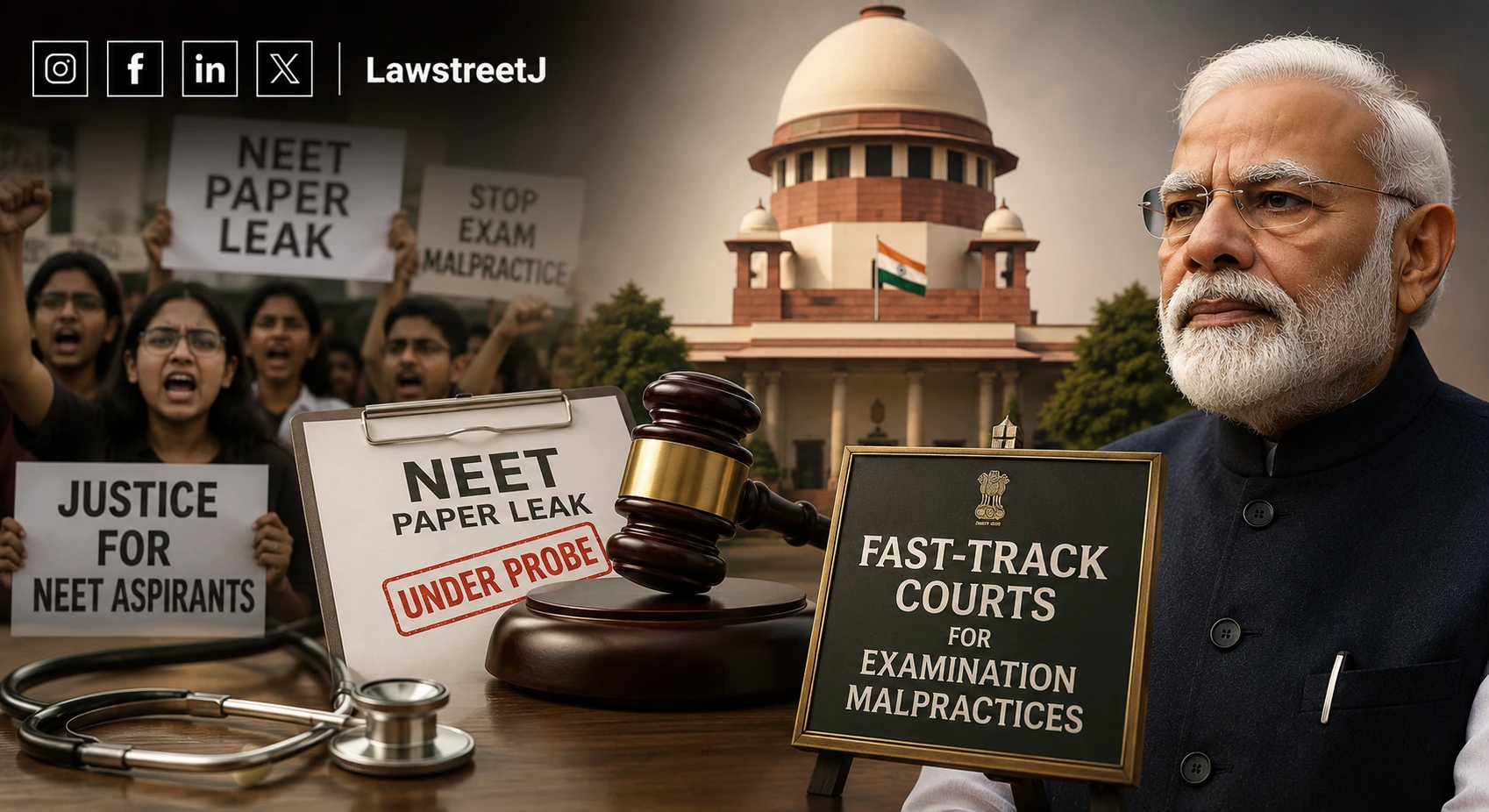
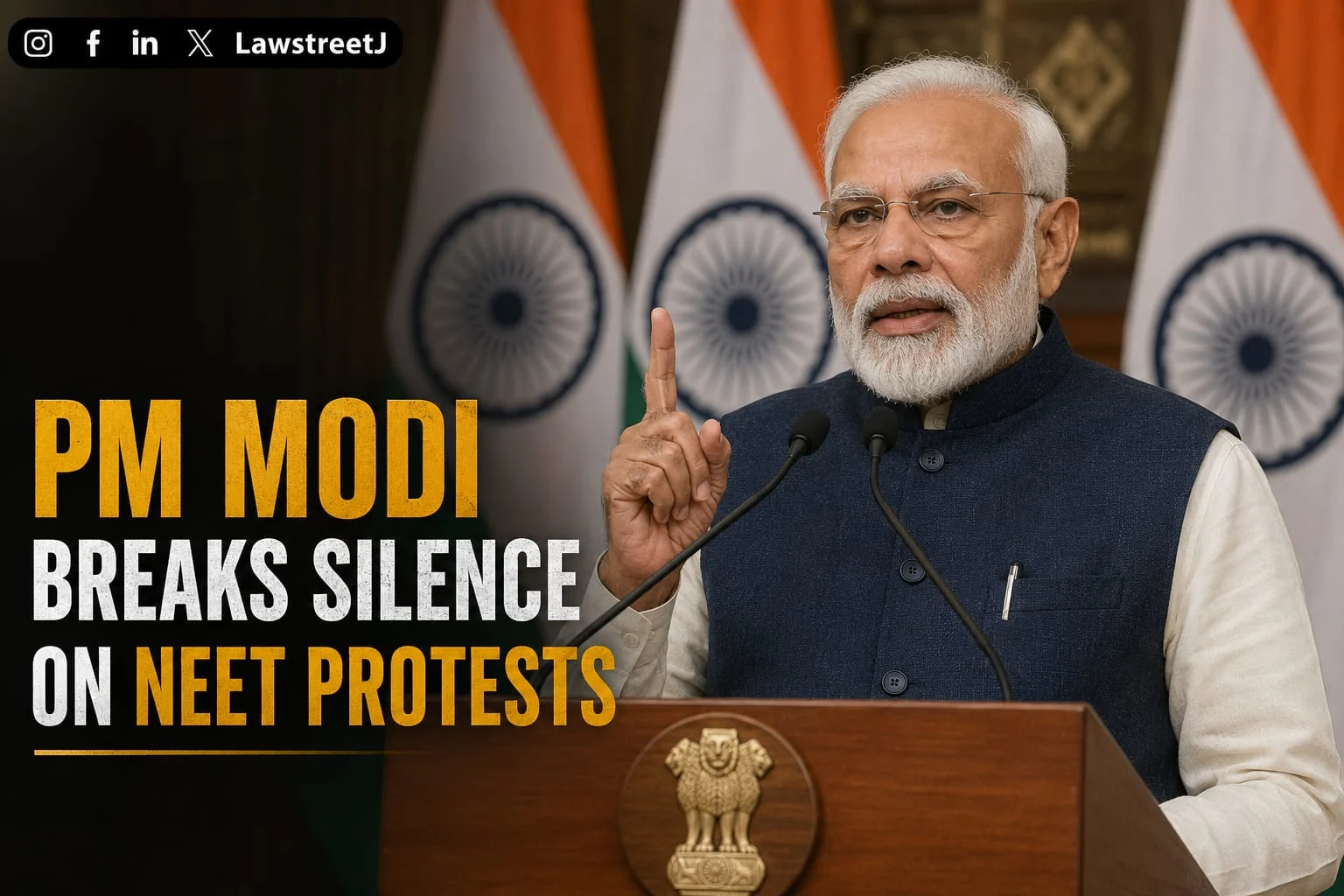
New Delhi: PM Modi announces the establishment of specialized fast-track courts to ensure swift and stringent punishment for individuals involved in examination paper leaks. This directive is a primary response to the legal complexities surrounding the NEET-UG 2026 examination and is designed to prioritize the welfare and future of the nation's youth. The Prime Minister asserted that the integrity of the competitive examination system is a top priority for the administration, warning that those attempting to jeopardize the prospects of students will not be spared by the judicial process.
The proposed specialized courts will operate under the legal framework of the Public Examinations (Prevention of Unfair Means) Act, 2024, which officially came into force on June 21, 2024. This legislation defines "unfair means" through a broad statutory scope, encompassing the leakage of question papers or answer keys, unauthorized assistance to candidates, tampering with computer networks, and the conduct of fake examinations. The penal provisions of the Act are notably rigorous, prescribing imprisonment for individuals ranging from three to ten years, with fines for organized crime reaching up to ₹1 crore. Service providers found complicit in malpractices can be barred from conducting public examinations for four years, in addition to facing significant financial penalties.
The Central Government has directed that these fast-track courts be established on a priority basis within specific jurisdictions, particularly those under the Bombay High Court (Aurangabad and Nagpur Benches), the Calcutta High Court, the Delhi High Court, and the Madhya Pradesh High Court. These regions were selected due to the high volume of reported examination-related offences and litigation. The courts are mandated to conduct trials on a day-to-day basis, with minimal gaps between hearings, aiming for the early delivery of verdicts to serve as an effective legal deterrent against organized examination syndicates.
Functionally, fast-track courts are designed to bypass the systemic backlogs prevalent in India's regular judicial system by focusing exclusively on a narrow category of time-sensitive offences. Unlike traditional trial courts that handle a diverse mix of civil and criminal cases, these specialized units will adjudicate only paper leak offences. Data on judicial performance indicates that specialized fast-track units demonstrate a significantly higher clearance rate, averaging about 9.5 cases per month, compared to the 3.3 cases typically cleared monthly by regular trial courts. These units are often created by State Governments in consultation with their respective High Courts and may utilize existing or retired judges to meet defined case-disposal targets.
The immediate judicial catalyst for this initiative is the ongoing Central Bureau of Investigation (CBI) probe into the NEET-UG 2026 paper leak, which was registered on May 12, 2026. The agency recently arrested the alleged kingpin, Shri P.V. Kulkarni, a Chemistry lecturer who reportedly had access to the question papers on behalf of the National Testing Agency (NTA). Investigation revealed that Kulkarni allegedly conducted illicit coaching classes at his residence in Pune during the last week of April 2026, where he dictated question banks that exactly tallied with the actual examination held on May 3, 2026. To date, 13 individuals have been arrested in connection with the leak across various locations, including Jaipur, Gurugram, Nashik, and Ahilyanagar.
Despite the goal of expedited justice, legal experts point to operational challenges, including a shortage of dedicated judges and the physical infrastructure required to support day-to-day trials. The efficacy of a fast-track court is intrinsically linked to the quality and speed of the preceding investigation; if charge sheets are delayed, the court's ability to deliver a timely verdict is limited. Furthermore, the Supreme Court ruled in the 2002 P. Ramachandra Rao case that it is not judicially permissible to set an absolute outer time limit for criminal proceedings, as courts must balance the need for speed with the necessity of maintaining rigorous evidentiary standards and constitutional due process.
The implementation of these courts represents a significant legal escalation in the State's response to examination malpractice. By prioritizing these prosecutions and limiting unnecessary adjournments, the Government aims to restore public confidence in the integrity of India's competitive examination system. The success of these judicial units will depend on coordinated efforts between investigative agencies and the judiciary to ensure that the pace of the trial matches the complexity of the digital and forensic evidence involved in modern organized paper leak rackets.


![Fast Track Courts offer hope for rape victims: Report [Read Report]](/secure/uploads/2024/09/lj_2545_WhatsApp_Image_2024-09-12_at_1.09.59_PM.webp)


.jpeg)