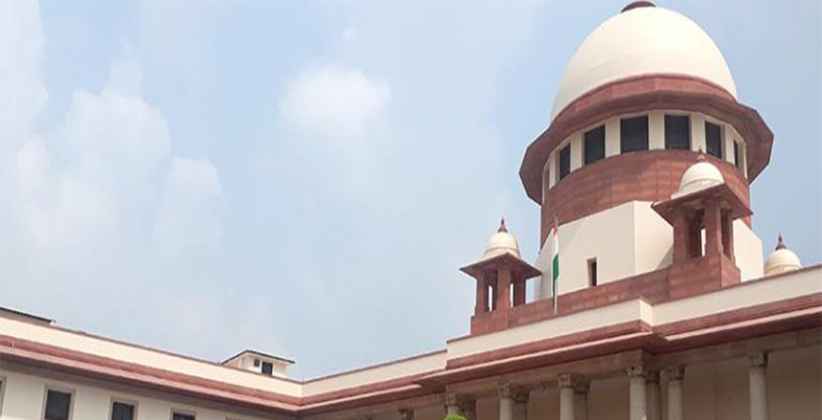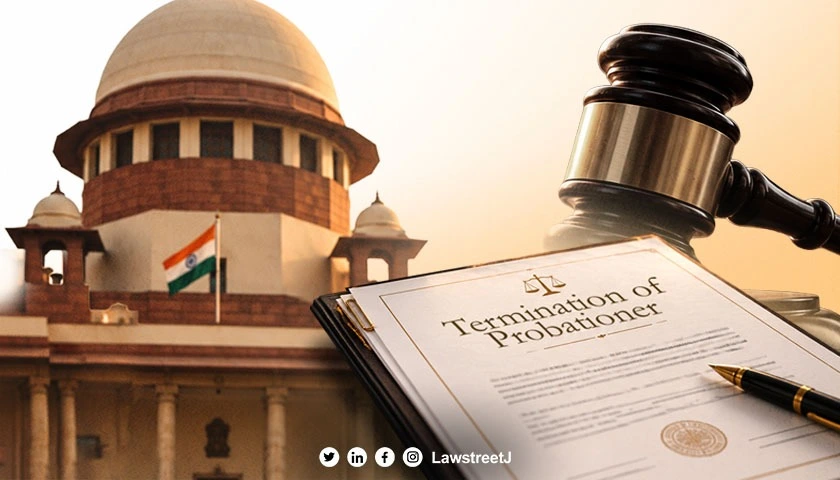
New Delhi: The Supreme Court has dismissed the appeal of an Associate Professor whose services at the Indian Institute of Science, Bangalore, were terminated during probation, and in doing so has laid down a structured set of parameters for courts to decide whether the discharge of a probationer is a simple termination or a punishment in disguise.
The Court held that a grievance, a complaint or an adverse perception, without more, remains only the motive and does not make the order stigmatic.
A Bench of Justice Dipankar Datta and Justice Sheel Nagu delivered the judgment on 16.11.2026 (2026 INSC 1218) in Civil Appeal No. 479 of 2018, filed by Dr. G. Srinivasan against the Union of India and the Institute. Appointed on a five-year contract with the first year on probation, he joined on 15.04.2011. His probation was extended by a year in June 2012 on the recommendation of a Committee of Professors, and a newly constituted Committee recommended on 26.03.2013 that his services be discontinued. By an office memorandum of 10.04.2013, issued under Regulation 13.5 of the Institute Regulations, his services were terminated with effect from 09.05.2013 on a month’s notice, without assigning reasons. The Karnataka High Court’s Single Judge and Division Bench dismissed his challenge in 2013.
Senior Advocate Jayant Bhushan, for the appellant, argued that the order was punitive in substance, being founded on findings recorded behind his back by a Committee influenced by the third respondent, the Chairman of the Centre, with whom he had pre-existing disagreements, that extending probation breached Regulation 13.3, and that Regulation 13.5, which permits discharge without reasons, is arbitrary. The Institute and the third respondent, through Senior Advocates S.S. Ramdas and Shanthkumar Mahale, argued that it was a termination simpliciter after an overall assessment of suitability.
Tracing the law from Ajit Singh, Samsher Singh, Gujarat Steel Tubes, Dipti Prakash Banerjee, Chandra Prakash Shahi and Pavanendra Narayan Verma, the Bench called it a classic motive-versus-foundation case and framed six parameters. First, probation is a period of trial for assessing suitability, and an unsuitable employee may be discharged without a formal inquiry. Second, a court should not ordinarily lift the veil, and may do so only within circumscribed limits to see whether unsuitability is the real ground or a cloak for punishment founded on specific misconduct, and not to re-appreciate suitability. Third, the motive-foundation test is substantive and not mechanical, and turns on the record as a whole.
Fourth, on stigma, the Court held that mere words such as ‘unsatisfactory’ or ‘unsuitable’ do not amount to stigma, which gains traction only when the order imputes something over and above unsuitability. It laid down three sequential questions: whether the order on its face carries an imputation, whether the material shows the foundation is a finding of misconduct and not an assessment of suitability, and whether that foundation visits the probationer with civil consequences affecting future employment. It held:
“Only if the answers to both the second and third questions are in the affirmative does the taint of stigma gain traction. A grievance, a complaint, or an adverse perception, without more, remains chaff.”
Fifth, the three-factor test in paragraph 21 of Pavanendra Narayan Verma (a full-scale formal enquiry, into allegations of misconduct, culminating in a finding of guilt) has not been overruled or doubted, but is only one non-exhaustive test, to be read with the stigma test and the object-of-inquiry test. Sixth, the final inquiry is whether, on a fair reading of the whole record, the termination was a bona fide assessment of suitability or a punishment for a specific act visited without an inquiry, which, in the latter case, cannot survive without due process.
Applying these, the Bench found that Regulation 13.5 expressly permits termination during probation without reasons, and that the appellant had not shown how it was arbitrary, and that a probationer cannot demand reasons in every case. It found no material that any specific allegation of misconduct was investigated and found proved, no formal enquiry, and nothing in the order attributing misconduct. Having examined the records on the alleged bias, it found that the Institute assessed suitability during probation. The plea on extension of probation also failed since the appellant accepted the extension, continued working and did not approach any court for a decision on his appeal. The Court distinguished the decisions relied on by him as having been rendered on different facts.
The Bench noted that the issue was now essentially academic, as the appellant’s five-year contract had practically expired before the special leave petition was filed in 2016, and that only his honour and reputation were at stake. It therefore refrained from discussing the underlying factual allegations, as observations on his conduct might affect his future prospects. The appeal was dismissed, with parties bearing their own costs.
Appearances:
For the Appellant: Mr. Jayant Bhushan, Senior Advocate.
For the Respondents: Mr. S.S. Ramdas, Senior Advocate (for the Institute), and Mr. Shanthkumar Mahale, Senior Advocate (for Respondent No. 3).
Case Title: Dr. G. Srinivasan vs. Union of India & Ors., Civil Appeal No. 479 of 2018, 2026 INSC 1218