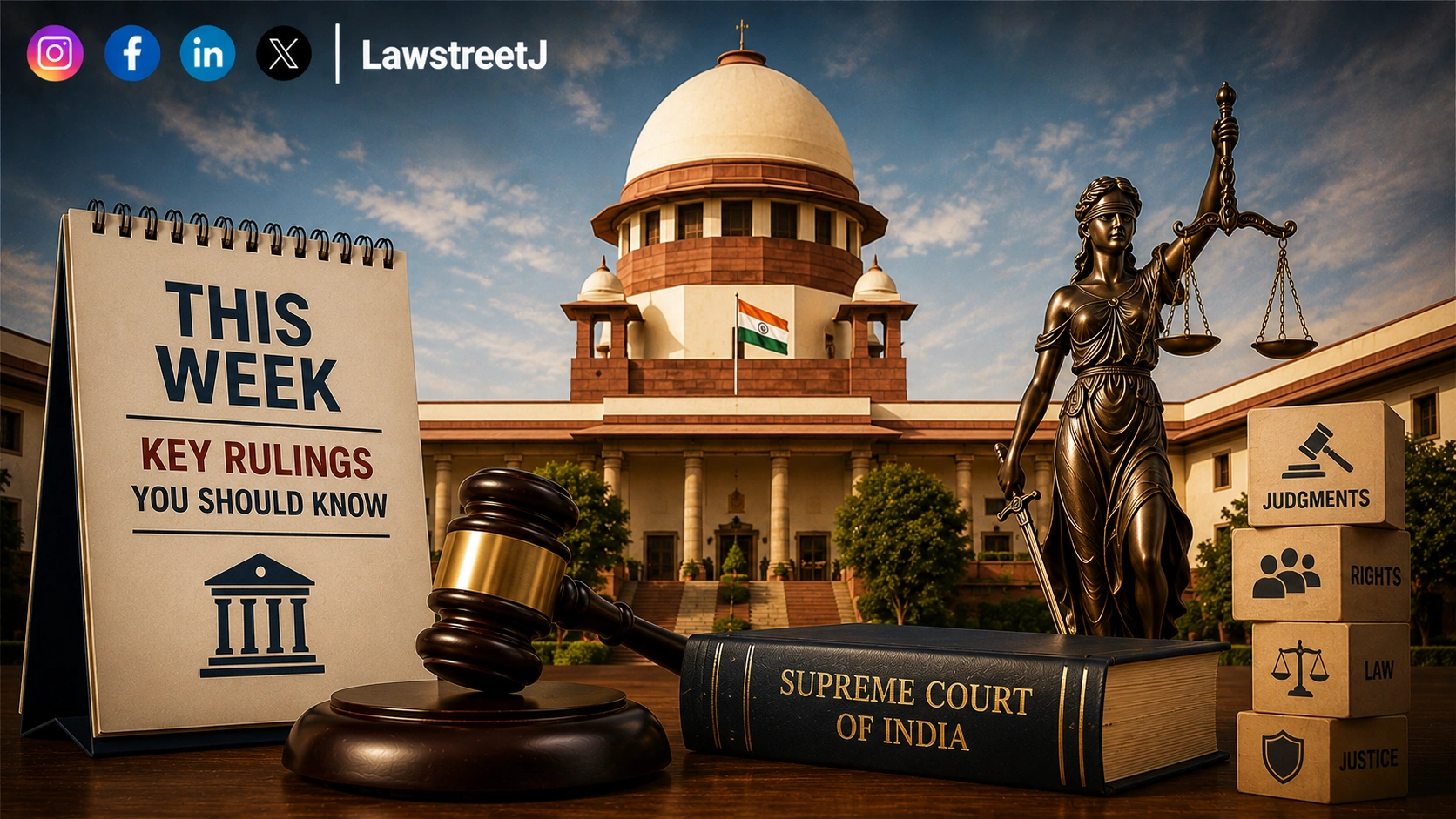
New Delhi: This week, the Supreme Court ruled on victims' rights, evidence and service law. It held that a victim is not a mere witness and can seek a speedy trial under Section 528 BNSS, and it upheld an acquittal in a double murder case, observing that an investigating officer's role is to collect evidence, not create it.
It quashed a rape case that it found arose from a consensual relationship, restored a cashier's acquittal in a criminal breach of trust case, and extended the retirement-day increment to Gujarat's daily-wage workers. In a motor accident matter, it ordered four key portals linked within four weeks, and in the suo motu Delhi-NCR case it pressed for proactive policing and real-time surveillance for women's safety. Here are the key rulings from the week.
Victim Can Seek Speedy Trial Under Section 528 BNSS, Cannot Be Treated As Mere Witness: Supreme Court
The Supreme Court set aside a Delhi High Court order that had limited a complainant's role to that of a witness and dismissed her plea as frivolous, with ₹10,000 costs. It held that a victim is a definite stakeholder in the criminal justice system and can move the High Court under Section 528 BNSS for an expedited trial. The trial court was directed to conclude the trial within one year. Read more
"IO's Role Is To Collect Evidence, Not Create It": Supreme Court Upholds Acquittal
The Supreme Court dismissed the State of Himachal Pradesh's appeal against the acquittal of a woman accused of murdering her step-mother and step-brother. It found the chain of circumstantial evidence incomplete and was critical of how the police recorded the statements of the taxi driver and hotel worker. The Bench also flagged missing call-record tower locations and doubts over the DNA evidence. Read more
Supreme Court Directs Linking Of VAHAN, SARATHI, eDAR And IIB Portals Within Four Weeks
In a motor accident claims matter, the Supreme Court directed the Union and the States to interlink the VAHAN, SARATHI, eDAR and IIB portals within four weeks. States that have not yet constituted Special Investigation Teams were given a last chance to do so. The Court also issued contempt notices to several insurance company heads for non-appearance and rejected Navi General Insurance's apology as merely cosmetic. The matter is next listed on 27 November 2026. Read more
Consensual Relationship Turned Sour, Complaint Filed To Coerce Marriage: Supreme Court Quashes Rape Case
The Supreme Court quashed an FIR and charge sheet for rape, holding that the parties were in a consensual relationship that turned sour and that no promise of marriage was alleged to have induced it. It noted the delay of over one and a half years in the rape allegation, the unreported hotel assault, and medical evidence that did not support the claimed pregnancies. The Bench concluded the complaint was filed to pressure the man into marriage and that a trial would serve no purpose. Read more
Daily-Wage Workers Can't Be Denied Retirement-Day Increment: Supreme Court Allows Gujarat Workers' Appeal
The Supreme Court held that skilled daily-wage workers of Gujarat's Irrigation Department, treated as permanent under a 1988 Government Resolution, are entitled to the increment due the day after their retirement and to pension computed with it. It set aside a Division Bench order that had denied the benefit merely because they were daily wagers, applying Mundinamani. The amounts must be released within 30 days, failing which 6% interest is payable. Read more
Entrustment And Dishonest Intention Must Be Proved To Convict For Criminal Breach Of Trust: Supreme Court
The Supreme Court restored the acquittal of a former Telephone Department cashier under Section 409 IPC, setting aside the Bombay High Court's reversal. The prosecution had not produced the original cashbook and registers that would show entrustment, so the trial court rightly drew an adverse inference. The Court also held that the High Court wrongly shifted the burden onto the accused and sentenced him without hearing him on sentence. Read more
"Instil Fear Among Anti-Social Elements": Supreme Court Seeks Proactive Police Action, Real-Time Surveillance For Women's Safety
In its suo motu case on Delhi-NCR sexual offences, the Supreme Court said police must prevent crimes and not merely catch offenders afterwards. It questioned the use of unmonitored CCTV cameras, suggested dedicated monitoring cells for real-time tracking, and called for intensified patrolling at railway stations, bus stands and campuses. The amicus pointed to a 39 percent vacancy in beat patrolling units, and the matter will be heard again in November 2026. Read more