New Delhi: The Supreme Court addressed significant questions during this week, ranging from the withholding of gratuity during a pending appeal against acquittal and the interim custody of a child born to unwed parents, to a contempt notice over a social media post targeting the Chief Justice of India, the limits of circumstantial evidence, the state of sanitation, and impleadment in suits under Section 92 of the Code of Civil Procedure.
Pending Appeal Cannot Delay Gratuity After Acquittal: SC
The Supreme Court has held that a pending State challenge to an acquittal, with no stay in operation, does not justify withholding a retired employee’s gratuity. A Bench of Justice Prashant Kumar Mishra and Justice Shree Chandrashekhar dismissed the appeals of the Delhi Development Authority in Delhi Development Authority v. Rajender Kumar Sharma (judgment of 16.11.2026). The DDA had withheld the gratuity of two retirees under Rule 69(1)(c) of the CCS (Pension) Rules, 1972, which bars payment until judicial proceedings conclude. They had been acquitted in 2017 in a corruption case over alleged fictitious slum dwellers in a relocation survey, and the State’s application for leave to appeal was pending in the High Court. The Court rejected the plea that the High Court’s earlier ruling in Kishan Lal Taneja was per incuriam and distinguished Bikram Chand Rana, where departmental proceedings had concluded while the trial was pending. It observed that "until then, the acquittal continues to hold the field," and that making elderly retirees wait for an uncertain period could render their benefits illusory. The gratuity must be released with interest, subject to an undertaking to refund it if the proceedings go against them. [Read Full Article]
SC Grants Interim Custody Of 4-Year-Old To Unwed German Mother
The Supreme Court has granted interim custody of a four-year-old boy to his German mother, holding that a pending guardianship petition does not render a habeas corpus plea for interim custody infructuous. A Bench of Justice Nongmeipakam Kotiswar Singh and Justice N.V. Anjaria delivered the judgment in Mother v. State of Goa & Anr. on 19.11.2026. The parents were unmarried, the father is Indian, and his guardianship petition is pending before the Family Court at Patiala House, New Delhi. Applying the tests for interim relief and relying on an assessment by NIMHANS, Bengaluru, the Court held that in the case of a child born to unwed parents, the mother has a better prima facie claim of custody, and found her parenting plan more concrete. The Court directed her to obtain a mirror order from a Singapore court within three weeks and deposit ₹1 crore with the Registry as security before relocating. The father gets daily video contact of at least 20 minutes and visitation in Singapore, and the child must be brought to India during longer school holidays. The mother must also obtain a psychological assessment of the child every six months. The Court transferred the habeas corpus petition from the Goa Bench of the Bombay High Court to itself under Article 142, and listed the matter on 07.12.2026 for compliance. [Read Full Article]
SC Issues Contempt Notice To Kerala Congress Office Bearers Over X Post Targeting CJI
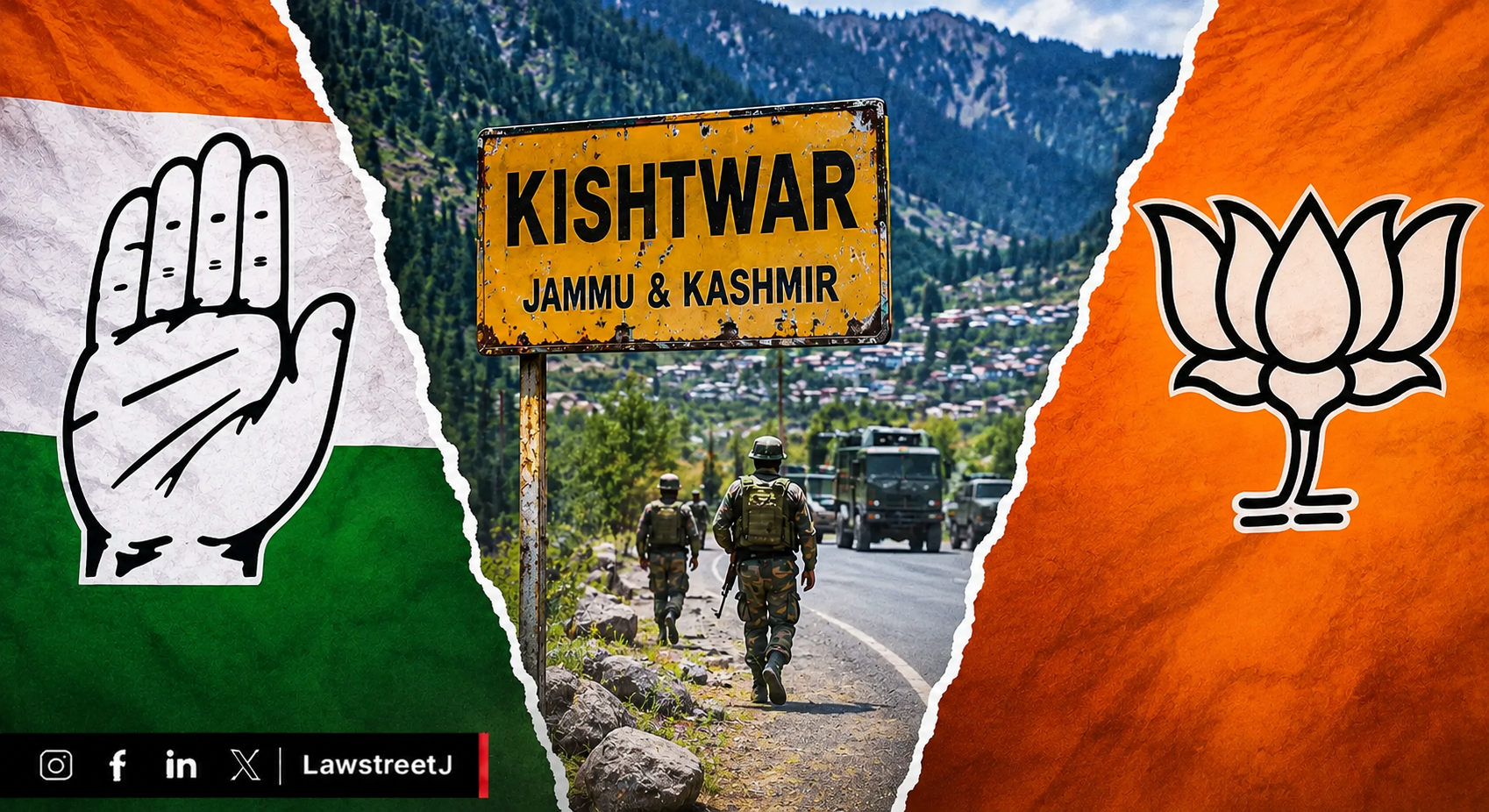
The Supreme Court has issued notice to all office bearers of the Kerala Pradesh Congress Committee asking why contempt proceedings under the Contempt of Courts Act, 1971 should not be initiated over a post on the party’s official X account addressed to the Chief Justice of India. The post stated that if law and order was not his domain, he should resign. A Bench of Justice Aravind Kumar and Justice Vipul M. Pancholi passed the order on 06.11.2026 in Vineet Jindal & Anr. v. Kerala Pradesh Congress Committee (W.P.(C) No. 1431/2026). The Court said it was examining whether to exercise its jurisdiction under Article 129 of the Constitution and expressed no view on the merits. It appointed Senior Advocates Arvind P. Datar and Gaurav Agrawal as amici curiae and asked the Attorney General to assist. Senior Advocate Ramesh Babu, for the respondent, accepted notice and offered an unconditional apology. The Court refused his request to limit the notice to the party president. It observed that "judgments are always open to criticism, however severe," but that "judicial restraint must never be mistaken for institutional weakness." Personal appearance was exempted for now, no finding of contempt has been recorded, and the matter is next listed on 15.12.2026. [Read Full Article]
Recovery Of Jewellery Alone Cannot Complete Chain Of Circumstantial Evidence: SC
The Supreme Court has set aside a murder conviction, holding that recovery of the deceased’s ornaments, by itself, cannot be stretched to infer guilt for murder. A Bench of Justice Prashant Kumar Mishra and Justice Vipul M. Pancholi allowed the appeal in Bheemanagouda @ Bheemajja v. State by Harapanahalli Police on 18.11.2026. A woman’s body had been found in an iron drum in 2013, and the Sessions Court convicted the appellant under Section 302 IPC largely on the recovery of ornaments, after rejecting the “last seen together” evidence because of a 58-day delay in recording two witnesses’ statements. The High Court upheld the conviction by relying on that same evidence, without explaining why it differed from the trial court. The Supreme Court found the motive was conjecture, as general knowledge of an illicit relationship is not proof of motive. It held that the Section 27 Evidence Act requirements were unmet, since a panch witness was not examined and a witness admitted the seizure contents were dictated by the investigating officer. Unexplained possession of the deceased’s property, it said, supports only a presumption of theft or receiving stolen property. Holding that "the chain of circumstantial evidence cannot be said to be complete and unbroken," it gave the appellant the benefit of doubt. The acquittal under Section 201 IPC stood. [Read Full Article]
“Bharat Is Now A Rich Country But Has Poor Sanitation Performance”: SC
The Supreme Court has observed that “Bharat is now a rich country but has poor sanitation performance,” and held that financial inability cannot excuse local bodies from providing basic amenities. A Bench of Justice S.V.N. Bhatti and Justice N.V. Anjaria passed the order on 17.11.2026 in Bhopal Municipal Corporation v. Dr. Subhash C. Pandey & Ors. (Civil Appeal No. 6174 of 2023), while reviewing a short-term report of the Supreme Court Monitoring Committee on the Solid Waste Management Rules, 2026. Relying on Municipal Council, Ratlam v. Vardhichand, it called poor sanitation a “manageable dereliction by all the stakeholders” working in isolation, and said “it is now or never.” It noted that about 400 districts have no special cells and that Railways have mapped only 630 of 8,809 stations to local bodies. The Court directed Chief Secretaries to have Collectors upload geotagged, timestamped photographs of waste facilities, ordered the Monitoring Committee to compile a district-wise status report, and directed Railways to achieve full compliance within eight weeks. It reiterated its direction to examine channelling CSR funds into compressed biogas and waste-to-energy plants. The matter is listed as part heard on 12.01.2027. [Read Full Article]
Section 92 CPC Suit Does Not Confer Automatic Right Of Impleadment On Devotees: SC
The Supreme Court has held that although a suit under Section 92 of the CPC is representative in nature, this does not confer an automatic right of impleadment on every devotee or member. A Bench of Justice Vikram Nath, Justice Sandeep Mehta and Justice Aparesh Kumar Singh decided Subhasindu Das & Ors. v. Bacchu Ranjan Das & Ors. (Civil Appeal Nos. 841–842 of 2023) on 19.11.2026, in a dispute over the management of Sri Guru Sangha, a society based in Kolkata. The trial court had appointed a Special Officer, later replaced her with a 13-member ad hoc committee, and rejected impleadment applications. The Calcutta High Court set aside those orders. The Supreme Court set aside the High Court’s interim order dated 26.09.2022 and restored the trial court’s order of 07.06.2022. It held that applicants must show under Order I Rule 10(2) CPC that their presence is necessary or proper, and that general allegations of collusion and mismanagement were insufficient. It also held that Article 227 supervisory jurisdiction is limited to patent jurisdictional error, perversity or grave miscarriage of justice. The Court declined to order an independent administrator and left grievances about the present arrangement to the trial court, saying its observations have no bearing on the merits. [Read Full Article]