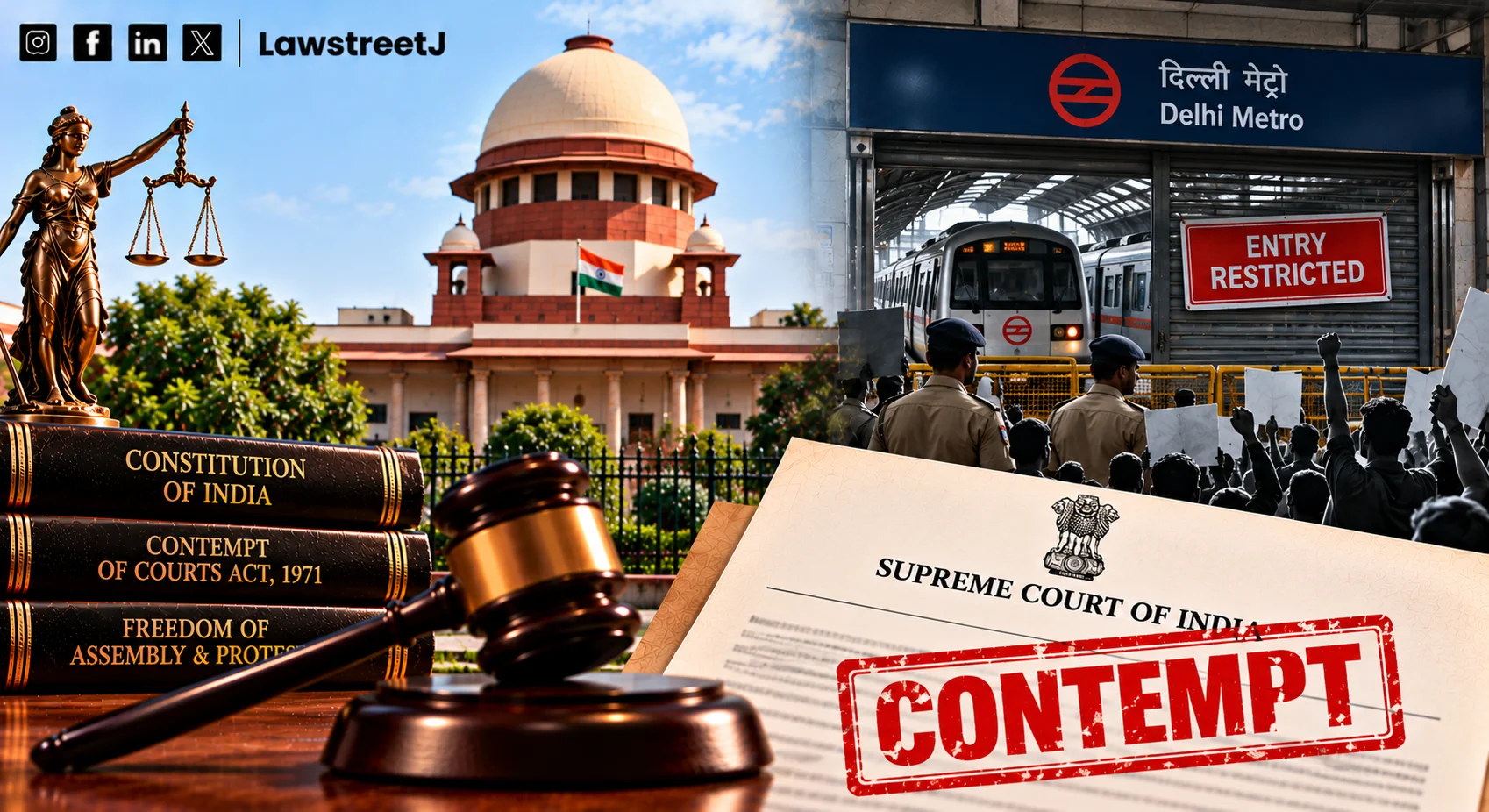
New Delhi: This week, the Supreme Court dealt with questions across criminal procedure, civil law, arbitration and service law. It held that a cheque-bounce notice received by the drawer's mother at his correct address is valid service, and that a compromise decree passed without impleading a necessary party is a nullity. It also ruled that cognizance under the BNSS begins only after the accused is heard, and that a Section 37 arbitration appeal cannot be treated as a Section 17 application. Separately, the Court took suo motu cognisance of recent rape cases in Delhi-NCR and ordered a four-week safety audit, and reaffirmed that a senior employee cannot be paid less than a junior in the same post. Here are the key rulings from the week.
Cheque-Bounce Notice Delivered To Drawer's Mother At Correct Address Is Valid Service: Supreme Court
The Supreme Court restored a Section 138 NI Act conviction, holding that a demand notice sent to the drawer's correct address and received by his mother is valid service. It applied the Section 27 General Clauses Act presumption and declared the Kerala High Court Division Bench ruling in M.D. Thomas per incuriam. The trial court's six-month sentence and ₹3 lakh fine were reinstated. Read more
Compromise Decree Passed Without Impleading A Necessary Party Is A Nullity: Supreme Court
The Supreme Court set aside a Telangana High Court order that had thrown out recall applications against a compromise decree in a partition suit. The legal heirs of a daughter of the propositus, who had a 1/4th share under the amended Section 6 of the Hindu Succession Act, were never impleaded, so the decree was a nullity. The Court held that Order XXIII Rule 3A CPC did not bar them, as they were not strangers to the suit, and remitted their applications to the High Court. Read more
Cognizance Begins With Judicial Satisfaction And Process, Accused Must Be Heard Under BNSS: Supreme Court
The Supreme Court held that cognizance was taken not when the trial court accepted a protest petition and recorded evidence, but when it later found a prima facie case and issued process. Since that happened after 1 July 2024, the accused had to be heard first under Section 223 BNSS. The order was confined to a summons simpliciter, and the accused must appear before the trial court within one month. Read more
Section 37 Appeal Cannot Be Converted Into Section 17 Application Before Tribunal: Supreme Court
The Supreme Court set aside a Bombay High Court direction that had sent a pending Section 37 appeal to a newly appointed Arbitral Tribunal, to be treated as a Section 17 application. Section 37 appellate jurisdiction vests exclusively in the "Court" under Section 2(1)(e), and a tribunal under Section 17 does not sit in appeal over a Section 9 order. The Court left the tribunal's constitution untouched. Read more
Supreme Court Takes Suo Motu Cognisance Of Delhi-NCR Rape Cases, Orders Four-Week Safety Audit
Taking up a series of sexual offences against women and minor girls in the NCR, the Supreme Court called them a systemic failure of law enforcement and tied the issue to Article 21. It ordered district-wise teams to map vulnerable spots and audit lighting and CCTV within four weeks, and sought status reports on existing safety mechanisms. It also asked for the cases to go to a Fast Track Special Court for trial, preferably within a year, and cautioned the media against disclosing victims' identities. The matter is next listed on 5 October 2026. Read more
Senior Employee Cannot Be Paid Less Than Junior Holding Same Post: Supreme Court
The Supreme Court set aside an Allahabad High Court order and directed pay parity for a senior college Reader who was drawing less than his junior after the junior got advance increments. It held the anomaly violates Articles 14 and 39(d), and that Government Orders must yield to equal pay for equal work. The financial benefits must be released within three months. Read more