New Delhi: This week, the Supreme Court ruled on election law, criminal procedure and questions of public policy. It held, prima facie, that courts can step in where widespread violence hampers the filing of nominations, and held that private citizens can complain against candidates for false election affidavits under Section 125-A of the RP Act. It directed the Centre to build a National Hash and URL List Database against child sexual abuse material and ordered a committee on pharmaceutical marketing practices.
The Court also held that a Magistrate can take cognizance despite a closure report, quashed an NDPS case against a user, ruled that IBC appeal limitation runs from the date the NCLAT pronounces its order, held that a convert to Islam cannot claim Backward Class Muslim status, and ruled that Section 17A of the PC Act does not shield a demand for a bribe. Here are the key rulings from the week.
Can Courts Intervene in Elections Over Widespread Violence? Supreme Court Answers
A Bench of Justice Joymalya Bagchi and Justice V. Mohana held, prima facie, that the bar on judicial interference once an election has begun does not stop courts from acting where widespread violence impairs the free filing of nominations. In its order dated 21 October 2026, it issued notice on the Yuvajana Sramika Rythu Congress Party’s plea against the Andhra Pradesh High Court and directed the State Election Commission to postpone the final candidate list till 25 October 2026 and decide by the next day whether to extend the nomination deadline in urban local bodies. The Director General of Police was directed to maintain security and CCTV coverage at nomination centres. The matter is listed on 27 October 2026.
Private Citizens Can Also File Complaints Against Candidates For False Election Affidavits Under Section 125-A RP Act: SC
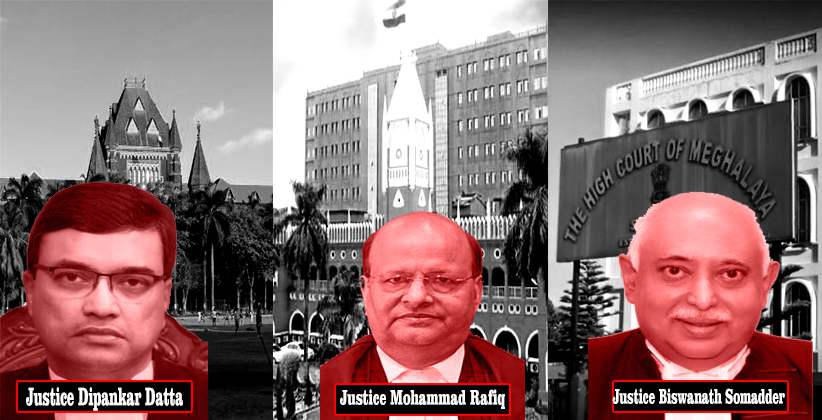
A Bench of Justice Dipankar Datta and Justice Sheel Nagu held in its judgment of 16 October 2026 that a private complaint under Section 200 of the Cr. PC alleging an offence under Section 125-A of the RP Act need not satisfy Section 195(1) of the Cr. PC. The Court reasoned that Section 125-A finds no place in Section 195 even though that provision was amended in 2006, four years after Section 125-A was inserted, so the omission was deliberate. It nonetheless upheld the Karnataka High Court’s quashing of the complaint against the Bidar legislator, since the allegation about his residential address had been prima facie rebutted.
‘Keeping Children Off Internet Is To Mistake The Victim For The Problem’: SC
A Bench of Justice J.B. Pardiwala and Justice K. Vinod Chandran took the matter into its own hands after finding “no progress worth the name” in compliance with its 2024 ruling in Just Rights for Children Alliance. It directed the Union to create a National Hash and URL List Database for detecting and removing child sexual exploitation and abuse material, with entries finalised by at least three trained human analysts. Intermediaries must report CSEAM of unknown origin within two hours of removal, and the Union was asked to consider exemplary fines. The Court declined to endorse age-based bans on children’s internet access. The matter is listed on 10 December 2026.
SC Orders Panel To Review Pharmaceutical Marketing Practices, Seek Recommendations Within Two Months
In its order dated 8 October 2026, a Bench of Justice Vikram Nath and Justice Sandeep Mehta directed the Union to constitute, within two weeks, the committee it had proposed to examine unethical marketing practices by pharmaceutical companies. The committee must make recommendations on a suitable statutory and regulatory framework within two months of its first meeting. The Court observed that the existing framework has not proved entirely effective, but declined to enter the domain of policy. The petition was filed by the Federation of Medical & Sales Representatives Association of India, and the matter is listed on 29 January 2027.
Magistrate Can Take Cognizance Despite Closure Report: Supreme Court
A Bench of Justice J.B. Pardiwala and Justice K. Vinod Chandran set aside a Patna High Court order that had quashed cognizance under Sections 302 and 201 IPC in a case of a boy’s drowning death. It reiterated that, on a closure report, a Magistrate may accept it, take cognizance on the material collected, or order further investigation. The Court found that the High Court misread the post-mortem findings and ignored the circumstances noted by the Sessions Judge, including that the accused was last seen with the boy. The accused must appear before the Magistrate within two weeks for committal proceedings.
Focus Should Be On Breaking Drug Supply Chain, Not Punishing Users: SC
The Bench of Justice J.B. Pardiwala and Justice K. Vinod Chandran quashed the arraignment of a woman accused under the NDPS Act in Sanjana Bhaskaran v. State of Telangana. The Court noted that no contraband was recovered from her and that no confession could be relied on. It observed that a user at the end of the chain is in one way a victim, and that prosecuting such persons can push them into the supply chain through associations formed in prison. The focus, it said, should be on curbing availability and breaking the supply chain.
IBC Appeal Limitation Runs From NCLAT Order Pronouncement, Not Certified Copy Receipt: SC
A Bench of Justice S.V.N. Bhatti and Justice N.V. Anjaria held that limitation for an appeal under Section 62 of the IBC begins on the date the NCLAT pronounces its order, not on the date a party chooses to obtain a certified copy. It dismissed the tax department’s appeal against a resolution plan for Samyu Glass Private Limited as time-barred. After excluding only the time requisite for the certified copy, the appeal was filed in 76 days, which was 16 days beyond the absolute outer limit of 60 days.
Convert to Islam Cannot Claim Backward Class Muslim Status: SC
A Bench of Justice Prashant Kumar Mishra and Justice Shree Chandrashekhar dismissed Tamil Nadu’s special leave petition and upheld the Madras High Court’s decision striking down G.O. (Ms.) No. 314 dated 9 March 2024. The Court held that pre-conversion backwardness cannot by itself be carried into a new religion and that conversion does not confer membership of a notified Backward Class Muslim community. It also held that a private religious body such as the Jamath cannot conclusively determine statutory backward-class status.
‘Demanding A Bribe Is A Pure Criminal Act’, Section 17A PC Act Not Applicable: SC
A Bench of Justice S.V.N. Bhatti and Justice N.V. Anjaria held that Section 17A of the Prevention of Corruption Act, 1988, which requires prior approval for investigation, does not apply to an allegation of demanding illegal gratification. Such a demand is unconnected with any recommendation or decision in discharge of official duties. It dismissed the appeal of a Rajasthan police constable, Tejaram, against the framing of a charge under Section 7 of the PC Act, and said the pending larger Bench reference on Section 17A had no bearing on the case.