New Delhi: The Supreme Court delivered several significant judgments during the week addressing corruption prosecutions, corporate criminal liability, employment-related equality, taxation, arbitration, and borrowers’ rights. The following seven rulings are notable for their legal principles and potential impact on future litigation.
Mere Payment to Intermediary Insufficient to Prove Public Servant Accepted Bribe: Supreme Court
The Supreme Court acquitted a former Railway Protection Force officer in two corruption cases, holding that the prosecution failed to establish the essential elements of demand and acceptance of illegal gratification beyond reasonable doubt. The Court reiterated that the mere recovery or payment of tainted money is insufficient to sustain a conviction under the Prevention of Corruption Act, 1988, unless the prosecution first establishes the foundational facts of demand and voluntary acceptance. The judgment also clarified that the statutory presumption under Section 20 can arise only after these foundational requirements are proved. Read Full Article
Equal Pay for Equal Work Not a Mechanical Rule; Prior Experience Can Justify Pay Difference: Supreme Court
The Supreme Court held that the doctrine of equal pay for equal work cannot be applied mechanically, dismissing appeals filed by directly recruited Higher Secondary School Teachers (Junior) in Kerala seeking parity with teachers appointed through transfer or promotion. The Court observed that differences in the mode of recruitment, qualifications, prior experience, and responsibilities may justify different pay scales, even where employees belong to the same cadre and perform similar duties. It held that complete parity must be established before Article 14 can be invoked to claim equal remuneration. Read Full Article
Financiers Cannot Repossess Vehicles by Force or Without Contractual Notice: Supreme Court
The Supreme Court addressed the legality of vehicle repossession by financial institutions, emphasising that contractual recovery rights must be exercised in accordance with due process and applicable contractual conditions. The ruling reinforces the principle that financiers cannot employ force or coercive methods to recover secured vehicles and must comply with relevant notice requirements. The decision is significant for borrowers’ rights and the regulation of recovery practices adopted by financial institutions. Read Full Article
Income Tax Settlement Commission’s Final Order Bars Subsequent Reassessment: Supreme Court
The Supreme Court examined the legal effect of a final order passed by the Income Tax Settlement Commission under Section 245D(4) of the Income Tax Act, 1961. The ruling addresses whether the Assessing Officer can subsequently initiate reassessment proceedings concerning an assessment year already covered by a settlement order. The decision is significant for determining the finality of settlement proceedings and the limits on the Income Tax Department’s power to reopen matters dealt with under the statutory settlement mechanism. Read Full Article
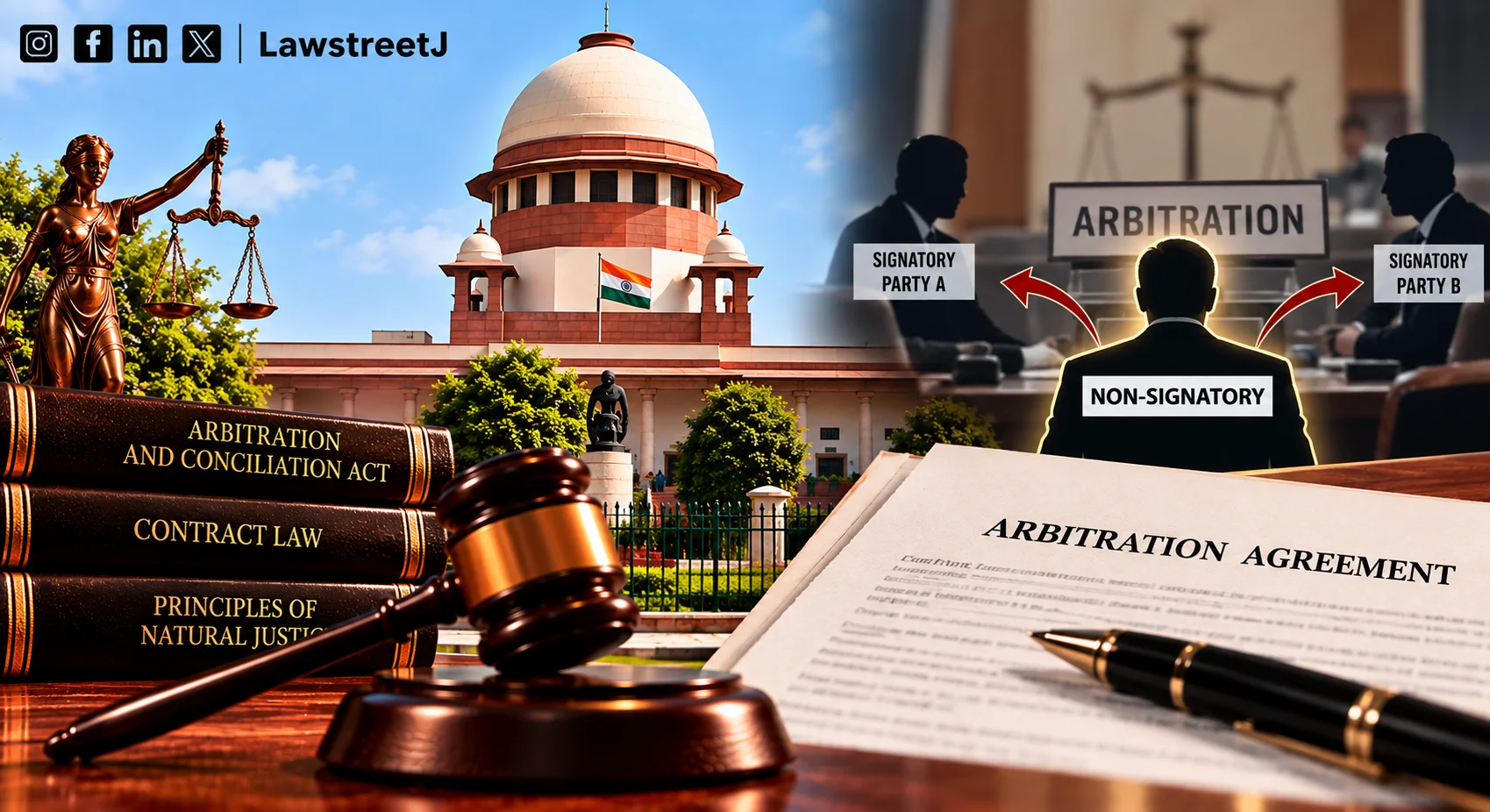
Arbitration Clause Extends to Personal Guarantee Integrated with Loan Agreement: Supreme Court
The Supreme Court considered whether an arbitration clause contained in a loan agreement could extend to a personal guarantee executed as part of the same transaction. The ruling examines the requirements for incorporating an arbitration agreement by reference under the Arbitration and Conciliation Act, 1996. The Court’s interpretation is significant for commercial lending arrangements, particularly where loan agreements, guarantees, and related contractual documents operate as interconnected components of a single transaction. Read Full Article
Electricity Dues Not Billed Within Two Years Barred Under Section 56(2): Supreme Court
The Supreme Court examined the limitation imposed by Section 56(2) of the Electricity Act, 2003, concerning the recovery of electricity charges that have not been billed within the prescribed period. The ruling addresses the circumstances in which electricity distribution companies can recover delayed demands and the statutory restrictions on disconnection or recovery of charges that have remained unbilled for an extended period. The decision has implications for electricity consumers and distribution licensees dealing with delayed billing disputes. Read Full Article
Courts Cannot Interfere With Exam Answer Key Unless Error Is Glaring and Apparent: Supreme Court
The Supreme Court reiterated that constitutional courts should exercise judicial restraint while examining examination answer keys prepared by expert bodies. The Court clarified that interference is justified only where an error is glaring, demonstrable, and apparent on the face of the record, rather than where the answer requires extensive reasoning or competing interpretations. The ruling reinforces the limited scope of judicial review in examination-related disputes and recognises the institutional expertise of examining authorities. Read Full Article